
Get the latest Boston sports news
Receive updates on your favorite Boston teams, straight from our newsroom to your inbox.
More than 9,000 readers voted. Here's who won best trade.

Embedded in the story of each championship in Boston’s decorated professional sports history have been crucial decisions behind the scenes that helped pave the way for the eventual celebratory duck boat parades.
And while free agent signings and draft picks produce their share of drama, few sports transactions create the kind of high-level excitement and intrigue as a trade.
Bill Russell in 1956, Pedro Martinez in 1997, and even Bill Belichick in 2000 were all acquired via trade before leaving their indelible marks on the local sports scene. Of course, not every deal worked out as well as those three did.
But in the pantheon of great trades made by New England teams over the years, it’s worth asking a basic question: Which one stands out? More specifically, which one was the best?
This year, Boston.com is giving readers the chance to determine a winner from a bracket of 16 historically successful trades in the region’s rich sports history.
How exactly do you define best? It’s an inevitably subjective question, necessitating a difficult comparison of deals that span different sports, eras, and individuals. Does “best” require that the trade led to a championship (or multiple championships?) Can it pertain to just the legacy of a single player or coach? Is it simply about who “won” the trade, and by how much?
We leave it to you, our readers, to vote in the round-by-round bracket to select the best trade.
From the original field of 16, the bracket will whittle itself down every 48 hours starting on the NCAA Tournament’s Selection Sunday (March 16), and concluding on Monday, March 24 when a champion is crowned.
In the spirit of both March Madness and the past years of this bracket format — a series that has included readers voting to determine Boston’s “best comebacks” and “best uniforms” — we expect (and hope) that there will be upsets. Let the madness begin.
Here’s the schedule of voting rounds:

The Bill Russell Trade: In terms of foundational trades — for the Celtics, Boston sports, and the NBA itself — few deals come close to the Bill Russell trade in 1956. It remains Red Auerbach’s masterpiece. Prior to Russell, the Celtics were good, but the prize of an NBA championship remained elusive. After getting Russell, Boston became synonymous with victory, rattling off 11 titles in 13 seasons. Even though both Cliff Hagan and Ed Macauley are also Hall of Famers, Russell stands head and shoulders above their legacies. His effect on and off the court as an advocate, a champion, a leader, and pioneer resonates to this day.
Trade details: Traded by the Hawks to the Celtics for Cliff Hagan and Ed Macauley.

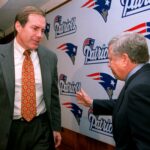
The Bill Belichick Trade: After a dramatic episode of the on-again-off-again “border war” between the Jets and Patriots flared up in 2000 (in which Belichick quit less than 24 hours after being “HC of the NYJ”), New England was finally able to hire the longtime defensive assistant to be the team’s new head coach. The compensation to acquire Belichick seemed steep at the time, involving a first-round pick (which the Jets used to eventually acquire two-time Pro Bowl defensive end Shaun Ellis). Yet the coach proved to be more than worth it over time, winning an unprecedented six Super Bowls, 17 division titles, and leading the Patriots to 13 appearances in the AFC Championship Game.
Trade details: The Patriots sent a first-round pick (16th overall) in the 2000 draft along with fourth and seventh-rounders in 2001 to the Jets for the rights to sign Bill Belichick, as well as a 2001 fifth-round pick, and a 2002 seventh-round pick.
The Bill Russell Trade: In terms of foundational trades — for the Celtics, Boston sports, and the NBA itself — few deals come close to the Bill Russell trade in 1956. It remains Red Auerbach’s masterpiece. Prior to Russell, the Celtics were good, but the prize of an NBA championship remained elusive. After getting Russell, Boston became synonymous with victory, rattling off 11 titles in 13 seasons. Even though both Cliff Hagan and Ed Macauley are also Hall of Famers, Russell stands head and shoulders above their legacies. His effect on and off the court as an advocate, a champion, a leader, and pioneer resonates to this day.
Trade details: Traded by the Hawks to the Celtics for Cliff Hagan and Ed Macauley.

The Pedro Martinez Trade: In search of an ace after the departure of Roger Clemens in 1996, the Red Sox struck gold with the acquisition of Pedro Martinez. Having already won a Cy Young Award with the Expos, the righthander hit his apex with the Red Sox. He won two more Cy Youngs, and posted some of the most statistically impressive seasons in decades (most of which was done during the so-called “Steroid Era” in baseball). His Boston tenure culminated with winning the 2004 World Series, capping one of the most beloved careers in Red Sox history.
Trade details: Traded by the Expos to the Red Sox for a player to be named later and Carl Pavano. The Boston Red Sox sent Tony Armas (December 18, 1997) to the Montreal Expos to complete the trade.
The Bill Belichick Trade: After a dramatic episode of the on-again-off-again “border war” between the Jets and Patriots flared up in 2000 (in which Belichick quit less than 24 hours after being “HC of the NYJ”), New England was finally able to hire the longtime defensive assistant to be the team’s new head coach. The compensation to acquire Belichick seemed steep at the time, involving a first-round pick (which the Jets used to eventually acquire two-time Pro Bowl defensive end Shaun Ellis). Yet the coach proved to be more than worth it over time, winning an unprecedented six Super Bowls, 17 division titles, and leading the Patriots to 13 appearances in the AFC Championship Game.
Trade details: The Patriots sent a first-round pick (16th overall) in the 2000 draft along with fourth and seventh-rounders in 2001 to the Jets for the rights to sign Bill Belichick, as well as a 2001 fifth-round pick, and a 2002 seventh-round pick.

The Robert Parish/Kevin McHale Trade: It’s not often that a single trade lands two future Hall of Famers, but that’s exactly what Red Auerbach and the Celtics front office pulled off when they shipped the No. 1 overall pick (plus a second first-rounder) to the Warriors in exchange for a young center named Robert Parish and the third overall pick (which Auerbach used to draft a power forward from Minnesota named Kevin McHale). The duo combined with Larry Bird to form the foundation of a new Celtics dynasty.
Trade details: Traded by the Warriors with a 1980 1st round draft pick (Kevin McHale was later selected) to the Celtics for a 1980 1st round draft pick (Rickey Brown was later selected) and a 1980 1st round draft pick (Joe Barry Carroll was later selected).
The Bill Russell Trade: In terms of foundational trades — for the Celtics, Boston sports, and the NBA itself — few deals come close to the Bill Russell trade in 1956. It remains Red Auerbach’s masterpiece. Prior to Russell, the Celtics were good, but the prize of an NBA championship remained elusive. After getting Russell, Boston became synonymous with victory, rattling off 11 titles in 13 seasons. Even though both Cliff Hagan and Ed Macauley are also Hall of Famers, Russell stands head and shoulders above their legacies. His effect on and off the court as an advocate, a champion, a leader, and pioneer resonates to this day.
Trade details: Traded by the Hawks to the Celtics for Cliff Hagan and Ed Macauley.

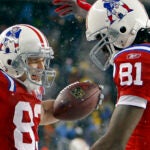
The Randy Moss Trade: Though it did not actually lead to another Super Bowl win, the Patriots’ acquisition of Randy Moss in 2007 for just a fourth-round pick remains one of the great steals in team history. Moss returned from Raiders exile and immediately reminded the NFL of his otherworldly ability. Alongside Tom Brady (and another member of this list, Wes Welker), he hauled in an NFL single-season record 23 touchdowns. In 52 career games with New England, Moss scored an astounding 50 touchdowns.
Trade details: Traded by the Raiders to the Patriots for 2007 4th round pick (110th overall, John Bowie).
The Pedro Martinez Trade: In search of an ace after the departure of Roger Clemens in 1996, the Red Sox struck gold with the acquisition of Pedro Martinez. Having already won a Cy Young Award with the Expos, the righthander hit his apex with the Red Sox. He won two more Cy Youngs, and posted some of the most statistically impressive seasons in decades (most of which was done during the so-called “Steroid Era” in baseball). His Boston tenure culminated with winning the 2004 World Series, capping one of the most beloved careers in Red Sox history.
Trade details: Traded by the Expos to the Red Sox for a player to be named later and Carl Pavano. The Boston Red Sox sent Tony Armas (December 18, 1997) to the Montreal Expos to complete the trade.

The Phil Esposito Trade: In terms of pure lopsidedness, few trades measure up to the scale of the deal the Bruins pulled off with the Blackhawks in 1967. In the three-for-three swap, the Bruins wound up with a clear advantage on all fronts. Both Ken Hodge and Fred Stanfield became valued contributors on multiple Stanley Cup-winning teams, with Hodge in particular thriving (topping 100 points in a season twice). The deal was highlighted by Phil Esposito, who emerged as the premier scorer of his era. The Hall of Famer won the Art Ross Trophy (for most points in the league) on five occasions, shattering numerous records in the process.
Trade details: Traded by the Blackhawks with Ken Hodge and Fred Stanfield to the Bruins for Gilles Marotte, Pit Martin and Jack Norris.
The Bill Belichick Trade: After a dramatic episode of the on-again-off-again “border war” between the Jets and Patriots flared up in 2000 (in which Belichick quit less than 24 hours after being “HC of the NYJ”), New England was finally able to hire the longtime defensive assistant to be the team’s new head coach. The compensation to acquire Belichick seemed steep at the time, involving a first-round pick (which the Jets used to eventually acquire two-time Pro Bowl defensive end Shaun Ellis). Yet the coach proved to be more than worth it over time, winning an unprecedented six Super Bowls, 17 division titles, and leading the Patriots to 13 appearances in the AFC Championship Game.
Trade details: The Patriots sent a first-round pick (16th overall) in the 2000 draft along with fourth and seventh-rounders in 2001 to the Jets for the rights to sign Bill Belichick, as well as a 2001 fifth-round pick, and a 2002 seventh-round pick.

The Kevin Garnett/Paul Pierce Trade: Recognizing that the 2008-era team’s window was closing, Celtics executive Danny Ainge and Boston ownership opted to trade the two aging superstars, Kevin Garnett and Paul Pierce, to the Nets for what effectively proved to be the foundation of the team’s next championship. Jaylen Brown (drafted third overall in 2016) was a direct outcome of the deal, while Jayson Tatum (picked third the next year) sprung indirectly from it after Boston shipped the No. 1 overall pick to the 76ers. The long-tail legacy — and the fact that Brown and Tatum are in their primes — means this trade could only move up the list in future years. Garnett and Pierce were gone from Brooklyn within two years of the deal, while Boston continues to reap the rewards.
Trade details: Celtics traded Kevin Garnett, Paul Pierce, Jason Terry, D.J. White, a 2017 1st round draft pick (Kyle Kuzma was later selected) and a 2017 2nd round draft pick (Sasha Vezenkov was later selected) to the Nets for Keith Bogans, MarShon Brooks, Kris Humphries, Kris Joseph, Gerald Wallace, a 2014 1st round draft pick (James Young was later selected), a 2016 1st round draft pick (Jaylen Brown was later selected), a 2017 1st round draft pick (Markelle Fultz was later selected) and a 2018 1st round draft pick (Collin Sexton was later selected). (BOS got 2017 No. 1 overall pick from BRK as result of pick swap)

The Kevin Garnett Trade: After more than a decade in the NBA doldrums, the Celtics jumped back into immediate contention when the trade with the Timberwolves was agreed to, and Kevin Garnett came to Boston. The former league MVP brought an infectious intensity and enthusiasm to his new team, combining with fellow stars Paul Pierce and Ray Allen to form a new “Big Three.” Getting Garnett led to a championship in 2008, years of success, and — even after Boston chose to trade him away in 2013 — a haul of draft picks that catapulted the team through a rebuild and toward yet another title.
Trade details: Traded by the Timberwolves to the Celtics for Ryan Gomes, Gerald Green, Al Jefferson, Theo Ratliff, Sebastian Telfair, a 2009 1st round draft pick (Wayne Ellington was later selected) and a 2009 1st round draft pick (Jonny Flynn was later selected).
The Robert Parish/Kevin McHale Trade: It’s not often that a single trade lands two future Hall of Famers, but that’s exactly what Red Auerbach and the Celtics front office pulled off when they shipped the No. 1 overall pick (plus a second first-rounder) to the Warriors in exchange for a young center named Robert Parish and the third overall pick (which Auerbach used to draft a power forward from Minnesota named Kevin McHale). The duo combined with Larry Bird to form the foundation of a new Celtics dynasty.
Trade details: Traded by the Warriors with a 1980 1st round draft pick (Kevin McHale was later selected) to the Celtics for a 1980 1st round draft pick (Rickey Brown was later selected) and a 1980 1st round draft pick (Joe Barry Carroll was later selected).
The Bill Russell Trade: In terms of foundational trades — for the Celtics, Boston sports, and the NBA itself — few deals come close to the Bill Russell trade in 1956. It remains Red Auerbach’s masterpiece. Prior to Russell, the Celtics were good, but the prize of an NBA championship remained elusive. After getting Russell, Boston became synonymous with victory, rattling off 11 titles in 13 seasons. Even though both Cliff Hagan and Ed Macauley are also Hall of Famers, Russell stands head and shoulders above their legacies. His effect on and off the court as an advocate, a champion, a leader, and pioneer resonates to this day.
Trade details: Traded by the Hawks to the Celtics for Cliff Hagan and Ed Macauley.

The Tuukka Rask Trade: In 2006, the Bruins traded goaltender Andrew Raycroft, the 2004 Calder Trophy winner as the NHL’s top rookie, for another goaltender, Finnish prospect Tuukka Rask. The deal, completed with the Maple Leafs, was not seen as a high-profile move at the time (the 19-year-old Rask had yet to play in North America). Yet as Raycroft failed to regain his earlier form, Rask became Boston’s all-time goalie wins leader with 308 (also winning the 2014 Vezina Trophy). The deal now looks even worse from a Toronto standpoint after it was later revealed that Boston was reportedly considering releasing Raycroft, and that he might have been available for nothing.
Trade details: Traded by the Maple Leafs to the Bruins for Andrew Raycroft.

The Jimmie Foxx Trade: In 1935, the Red Sox managed to get Jimmie Foxx — the best home run hitter of his era not named Babe Ruth — in return for a minor leaguer and a pitcher who led the American League in losses the following year (in what proved to be his final Major League season). Foxx, meanwhile, averaged 36 home runs per year in Boston over the next six seasons. His best year with the Red Sox came in 1938, when he clobbered 50 home runs, totaled 175 RBIs (no player has eclipsed that total since), and won the batting title with a .349 average.
Trade details: Traded by the Athletics with Johnny Marcum to the Red Sox for George Savino (minors), Gordon Rhodes, and $150,000.
The Randy Moss Trade: Though it did not actually lead to another Super Bowl win, the Patriots’ acquisition of Randy Moss in 2007 for just a fourth-round pick remains one of the great steals in team history. Moss returned from Raiders exile and immediately reminded the NFL of his otherworldly ability. Alongside Tom Brady (and another member of this list, Wes Welker), he hauled in an NFL single-season record 23 touchdowns. In 52 career games with New England, Moss scored an astounding 50 touchdowns.
Trade details: Traded by the Raiders to the Patriots for 2007 4th round pick (110th overall, John Bowie).
The Pedro Martinez Trade: In search of an ace after the departure of Roger Clemens in 1996, the Red Sox struck gold with the acquisition of Pedro Martinez. Having already won a Cy Young Award with the Expos, the righthander hit his apex with the Red Sox. He won two more Cy Youngs, and posted some of the most statistically impressive seasons in decades (most of which was done during the so-called “Steroid Era” in baseball). His Boston tenure culminated with winning the 2004 World Series, capping one of the most beloved careers in Red Sox history.
Trade details: Traded by the Expos to the Red Sox for a player to be named later and Carl Pavano. The Boston Red Sox sent Tony Armas (December 18, 1997) to the Montreal Expos to complete the trade.
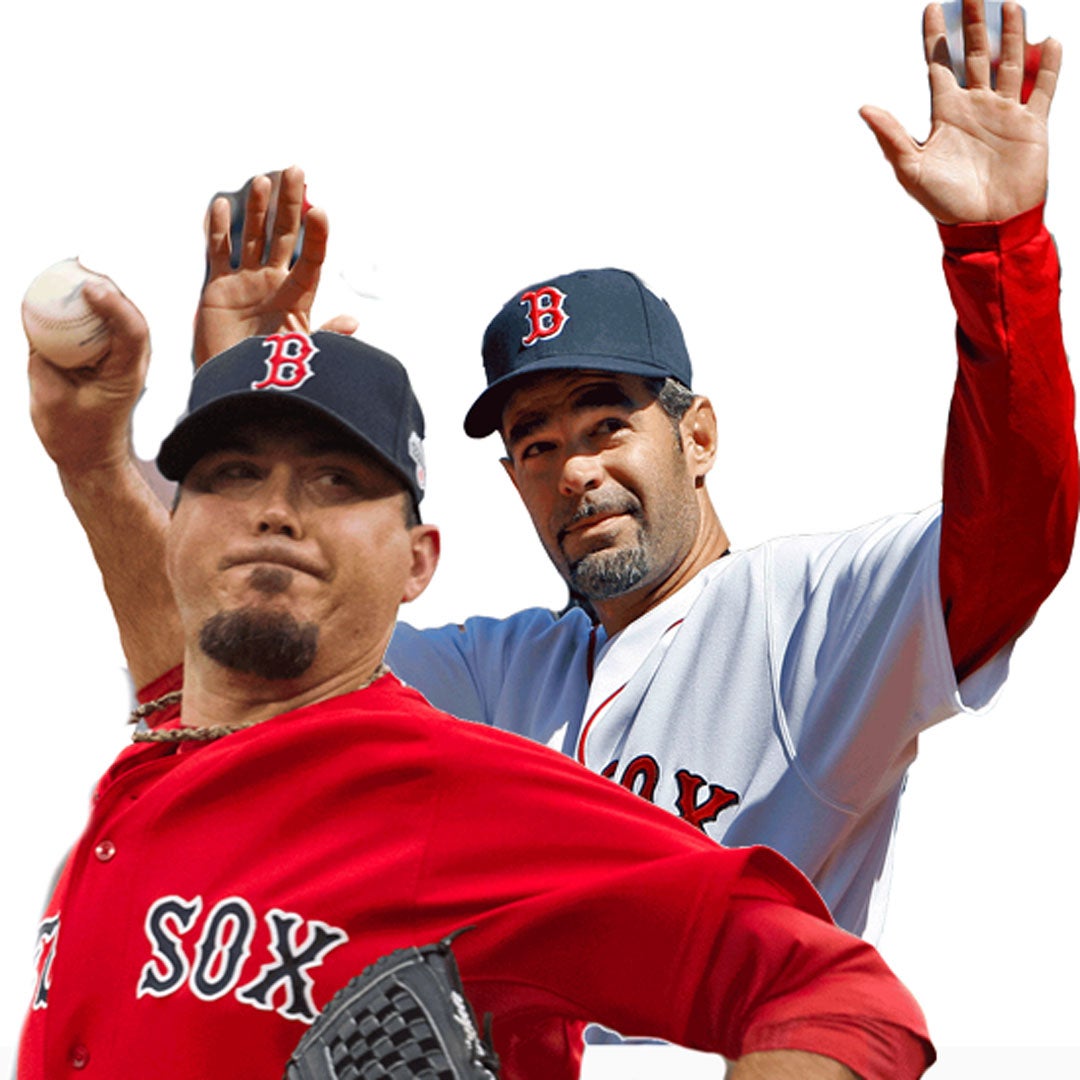
The Josh Beckett/Mike Lowell Trade: In a single trade, the Red Sox managed to get an ace in Josh Beckett and an all-around reliable third baseman in Mike Lowell. Both players featured prominently in the 2007 run to a World Series win, with Lowell being named Series MVP. The deal was far from one-sided, however, as Hanley Ramirez won Rookie of the Year in his first season with the Marlins, notching a trio of All Star appearances and a batting title along the way. Anibal Sanchez also went on to a successful 16-season MLB career.
Trade details: The Marlins traded Josh Beckett, Mike Lowell, and Guillermo Mota to the Red Sox for Jesús Delgado, Harvey García, Hanley Ramírez and Aníbal Sánchez.
The Phil Esposito Trade: In terms of pure lopsidedness, few trades measure up to the scale of the deal the Bruins pulled off with the Blackhawks in 1967. In the three-for-three swap, the Bruins wound up with a clear advantage on all fronts. Both Ken Hodge and Fred Stanfield became valued contributors on multiple Stanley Cup-winning teams, with Hodge in particular thriving (topping 100 points in a season twice). The deal was highlighted by Phil Esposito, who emerged as the premier scorer of his era. The Hall of Famer won the Art Ross Trophy (for most points in the league) on five occasions, shattering numerous records in the process.
Trade details: Traded by the Blackhawks with Ken Hodge and Fred Stanfield to the Bruins for Gilles Marotte, Pit Martin and Jack Norris.

The Wes Welker Trade: In one of the best trades in recent NFL history, the Patriots bought low on Wes Welker as a then-underutilized 25-year-old. He quickly became one of Tom Brady’s most trusted options, averaging 112 catches per season during his six-year run with New England. It remains one of the most prolific periods for any wide receiver in football history.
Trade details: Traded by the Dolphins to the Patriots for 2007 2nd round pick (60th overall, Samson Satele) and 2007 7th round pick (238th overall, Abraham Wright).
The Bill Belichick Trade: After a dramatic episode of the on-again-off-again “border war” between the Jets and Patriots flared up in 2000 (in which Belichick quit less than 24 hours after being “HC of the NYJ”), New England was finally able to hire the longtime defensive assistant to be the team’s new head coach. The compensation to acquire Belichick seemed steep at the time, involving a first-round pick (which the Jets used to eventually acquire two-time Pro Bowl defensive end Shaun Ellis). Yet the coach proved to be more than worth it over time, winning an unprecedented six Super Bowls, 17 division titles, and leading the Patriots to 13 appearances in the AFC Championship Game.
Trade details: The Patriots sent a first-round pick (16th overall) in the 2000 draft along with fourth and seventh-rounders in 2001 to the Jets for the rights to sign Bill Belichick, as well as a 2001 fifth-round pick, and a 2002 seventh-round pick.

The Curt Schilling Trade: After decades of falling short in the seemingly eternal quest to win a World Series largely due to a lack of pitching, the Red Sox acquired one of the best postseason starters of his era by landing Curt Schilling from the Diamondbacks. The veteran ace led the American League in wins (with 21) in 2004, and played a dramatic role — bloody sock and all — in the postseason run and eventual World Series win. He remained with the Red Sox through 2007, helping Boston win another title in the process.
Trade details: Traded by the Diamondbacks to the Red Sox for Mike Goss (minors), Casey Fossum, Brandon Lyon and Jorge De La Rosa.
The Kevin Garnett/Paul Pierce Trade: Recognizing that the 2008-era team’s window was closing, Celtics executive Danny Ainge and Boston ownership opted to trade the two aging superstars, Kevin Garnett and Paul Pierce, to the Nets for what effectively proved to be the foundation of the team’s next championship. Jaylen Brown (drafted third overall in 2016) was a direct outcome of the deal, while Jayson Tatum (picked third the next year) sprung indirectly from it after Boston shipped the No. 1 overall pick to the 76ers. The long-tail legacy — and the fact that Brown and Tatum are in their primes — means this trade could only move up the list in future years. Garnett and Pierce were gone from Brooklyn within two years of the deal, while Boston continues to reap the rewards.
Trade details: Celtics traded Kevin Garnett, Paul Pierce, Jason Terry, D.J. White, a 2017 1st round draft pick (Kyle Kuzma was later selected) and a 2017 2nd round draft pick (Sasha Vezenkov was later selected) to the Nets for Keith Bogans, MarShon Brooks, Kris Humphries, Kris Joseph, Gerald Wallace, a 2014 1st round draft pick (James Young was later selected), a 2016 1st round draft pick (Jaylen Brown was later selected), a 2017 1st round draft pick (Markelle Fultz was later selected) and a 2018 1st round draft pick (Collin Sexton was later selected). (BOS got 2017 No. 1 overall pick from BRK as result of pick swap)

The Jason Varitek/Derek Lowe Trade: One of the great deadline deals in Red Sox history, Boston sent relief pitcher Heathcliff Slocumb to Mariners in exchange for prospects Jason Varitek and Derek Lowe. While Slocumb managed just a 4.97 ERA in a season and a half with Seattle, Lowe and Varitek combined to make five All-Star teams during their successful careers in Boston. Lowe joined a short list of players to have separate seasons recording at least 40 saves and winning at least 20 games. Varitek became the Red Sox captain, overseeing two World Series titles.
Trade details: The Mariners traded Jason Varitek and Derek Lowe to the Red Sox for Heathcliff Slocumb.
The Kevin Garnett Trade: After more than a decade in the NBA doldrums, the Celtics jumped back into immediate contention when the trade with the Timberwolves was agreed to, and Kevin Garnett came to Boston. The former league MVP brought an infectious intensity and enthusiasm to his new team, combining with fellow stars Paul Pierce and Ray Allen to form a new “Big Three.” Getting Garnett led to a championship in 2008, years of success, and — even after Boston chose to trade him away in 2013 — a haul of draft picks that catapulted the team through a rebuild and toward yet another title.
Trade details: Traded by the Timberwolves to the Celtics for Ryan Gomes, Gerald Green, Al Jefferson, Theo Ratliff, Sebastian Telfair, a 2009 1st round draft pick (Wayne Ellington was later selected) and a 2009 1st round draft pick (Jonny Flynn was later selected).

The Dennis Johnson Trade: In answer to the Celtics’ need for better defense at the guard position, Red Auerbach sent Rick Robey and a pair of second-round picks to the Suns in exchange for 1979 Finals MVP Dennis Johnson, a first-round pick, and a third-round pick. Robey only played (parts of) three more seasons in the NBA after the deal, while Johnson became central to two more Celtics championships, notching several more appearances on both the NBA All-Defensive First and Second Teams along the way.
Trade details: Traded by the Suns with a 1983 1st round draft pick (Greg Kite was later selected) and a 1983 3rd round draft pick (Winfred King was later selected) to the Celtics for Rick Robey, a 1983 2nd round draft pick (Rod Foster was later selected) and a 1983 2nd round draft pick (Paul Williams was later selected).
The Robert Parish/Kevin McHale Trade: It’s not often that a single trade lands two future Hall of Famers, but that’s exactly what Red Auerbach and the Celtics front office pulled off when they shipped the No. 1 overall pick (plus a second first-rounder) to the Warriors in exchange for a young center named Robert Parish and the third overall pick (which Auerbach used to draft a power forward from Minnesota named Kevin McHale). The duo combined with Larry Bird to form the foundation of a new Celtics dynasty.
Trade details: Traded by the Warriors with a 1980 1st round draft pick (Kevin McHale was later selected) to the Celtics for a 1980 1st round draft pick (Rickey Brown was later selected) and a 1980 1st round draft pick (Joe Barry Carroll was later selected).

The Cam Neely Trade: The Bruins sent Barry Pederson, an established two-time All-Star, to the Canucks in exchange for talented youngster Cam Neely and the third overall pick in the 1987 NHL Draft. While Pederson’s point totals declined in each of his four seasons with Vancouver, Neely flourished and became one of the stars of his era (eventually winding up in the Hall of Fame). The Bruins also used the draft pick from the trade to select Glen Wesley, who wound up putting together a 20-year NHL career.
Trade details: Traded by the Canucks with 1st round draft pick in 1987 (Glen Wesley) to the Bruins for Barry Pederson.
Receive updates on your favorite Boston teams, straight from our newsroom to your inbox.
Readers Say
Sports News
Boston Celtics
Best trade bracket
New England Patriots


