
Boston Marathon organizers explain why they aren’t deferring your 2020 registration to 2021
If you were a runner who just barely made it in this year, you could be in danger of missing out next spring.
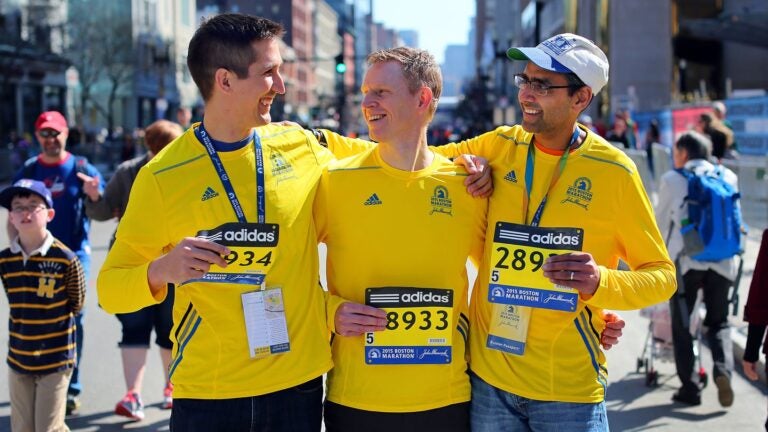
While many runners who qualified for this year’s Boston Marathon were cognizant of the real-world issues that ultimately forced the cancellation of the 2020 race, many also voiced concern Thursday they could get shut out of the 2021 event.
The Marathon has strict qualifying policies that vary according to age group but are designed to limit official runners in an attempt to keep the course manageable. When it comes to 2021, the Boston Athletic Association said it plans to honor qualifying times. But at the same time, according to Thursday’s announcement, anyone who qualified for 2020 — and made the cutoff to get an official bib number — isn’t necessarily guaranteed one for 2021. While refunds have been offered to runners, there will be no deferments.
That’s something that shouldn’t be an issue for faster runners. But if you were a runner who just barely made it in this year, you could be in danger of missing out next spring.
“As one who himself tried and failed to qualify for Boston before ultimately making it, I can understand the emotions associated with all of that,” Tom Grilk, the CEO of the BAA, said Thursday. ”But what we have done is to be accommodating as possible, given the circumstances.
“There’s simply no way I could see us giving people a deferment to another year. We can’t even begin to define what the environment will look like a year from now. That was one of the reasons why we decided to give people their money back if they want and move forward and not take away from the people the results of the very good work they have done.”
Ashland’s Jessica Popik, who has run nine consecutive Bostons and posted a personal best of approximately 3 hours 23 minutes in 2019, was one of several runners Thursday who said they weren’t on the same page with the BAA when it came to the policy.
“I don’t think it would be fair if they were to change the rules for people who wanted to run in 2020 but couldn’t qualify for whatever reason in 2021,” Popik said. “I don’t think it’s fair to have people who put in work for this year be denied the opportunity to run. And then potentially denied the second opportunity to run the race they have trained and competed for.”

The finish line of the Boston Marathon on Boylston St. remains unpainted as the event has been pushed back due to concerns over the COVID-19 epidemic. (Blake Nissen/ For The Boston Globe)
One thing that should make runners feel better is the fact many other marathons that serve as potential qualifiers for Boston could also pull the plug on their 2020 races. For example, if the London Marathon (which was pushed back from April 26 to Oct. 4 but is still on the calendar), Chicago Marathon (still scheduled for Oct. 11), and New York City Marathon (set for Nov. 1) join Boston in canceling, the field of potential qualifiers for a 2021 race in Boston would theoretically remain static.
“That absolutely might happen,” Grilk said. “Then, there’s the fact that the people who qualified for 2020 might choose not to run for a number of reasons, and then, more spaces would open up.”
One other possibility is that the BAA could expand the field to give special accommodations for those who qualified in 2020, but might not qualify for 2021. Last year, the field was increased from 30,000 to 31,500. In 2014, it was expanded to approximately 36,000 — an expansion of roughly 9,000 runners — to make room for the more than 5,000 who were on the course when two bombs went off in the 2013 race, and for many of those wanting to run as a tribute to the victims. And in 1996, on the 100th anniversary of the race, the field grew to accommodate a record 38,708 runners.
It’s a plan Popik could get behind.
“I would like to see them do something similar to what they did in 2014, when they made accommodations for people who couldn’t finish,” she said. “I would like to see something like that.”
In the end, Grilk said the BAA is simply trying to make the best of an uncertain situation.
“The biggest problem here is that we just don’t have the benefit of any data from the past to guide us,” he said. “One craves the ability to make data-driven analysis, and if you don’t have data to work with, it’s impossible.”


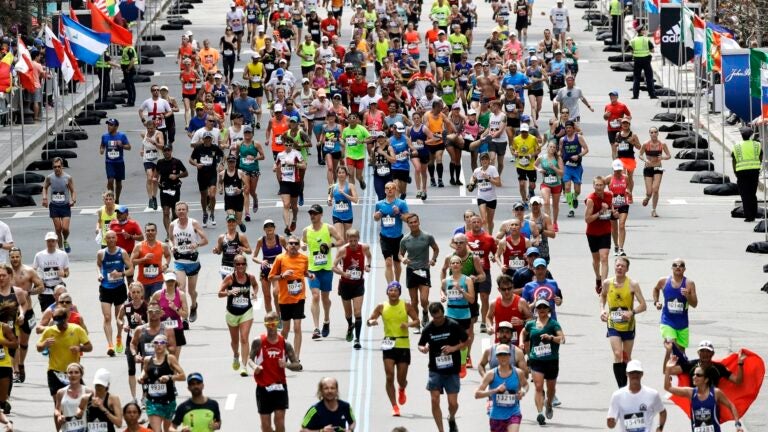


To comment, please create a screen name in your profile
To comment, please verify your email address
Conversation
This discussion has ended. Please join elsewhere on Boston.com