
FanDuel launches petition to keep daily fantasy sports legal
One of the leaders in the controversial industry has gone into campaign mode.
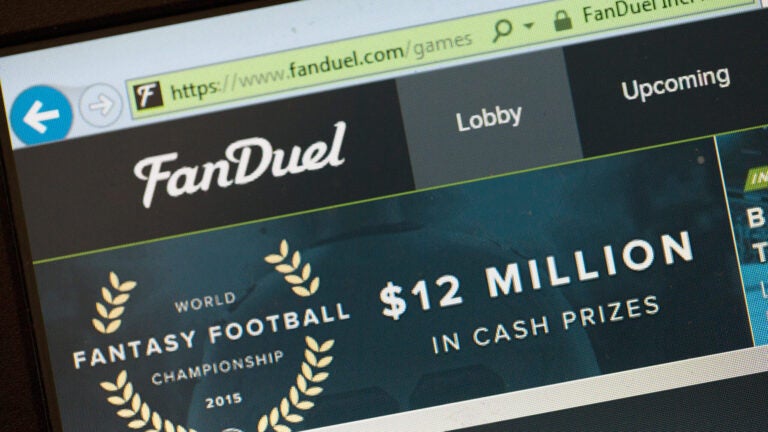
New York-based daily fantasy sports website FanDuel has launched an online petition to protect its industry after recent heavy scrutiny.
The petition reads: “There are many problems facing our nation, but passionate sports fans that want to connect with our favorite players and teams is hardly one of them. … I oppose any measure that would ban online fantasy sports. And to anyone looking to end this game I say: Let us play!’’
In addition to the petition, FanDuel is also encouraging users to tweet using the hashtag #LetThemPlay. That hashtag has in the past been used in youth sports circles, encouraging overzealous parents and coaches to allow children to simply enjoy the games.
FanDuel and its Boston-based competitor DraftKings have contended they offer games of skill rather than games of chance, an interpretation that would make them legal in most states. FanDuel’s petition doubles down on this characterization, saying: “Fantasy sports is fundamentally a test of knowledge.’’
The petition asks its signers to submit their zip codes. FanDuel said in a release that it “is developing tools to allow our players the opportunity to contact their elected officials directly and let them know why fantasy sports are important to them.’’
Daily fantasy sports are paid games in which players are tasked with selecting real-life athletes to represent their teams. They can win or lose money based on how well the players perform in their games.
The contests have been compared by many to a form of sports betting, a label that has been contested by the industry but that some regulators say is accurate. Last week, the gaming board in Nevada—the focal point of U.S. gambling—ordered daily fantasy sports companies to stop operating in the state unless they obtain proper gaming licensure.
While FanDuel’s incessant television advertisements focus on the amount of money users have won, the new petition makes no mention of the games’ financial elements.
The petition tactic is similar to one often used by Uber, another well-funded, controversial company whose legality resides in gray areas of the law. When faced with potential transportation-related regulations the company does not support, Uber circulates petitions among users, flooding inboxes of regulators with constituent support for the service. The company did so in Massachusetts in September, ahead of a hearing on a bill the company strongly decries.
The best bars for watching the Patriots:
[bdc-gallery id=”109509″]




To comment, please create a screen name in your profile
To comment, please verify your email address
Conversation
This discussion has ended. Please join elsewhere on Boston.com