
UNC, Mo’Ne Davis Cases Poke Latest Holes in NCAA’s Fading Fairy Tale
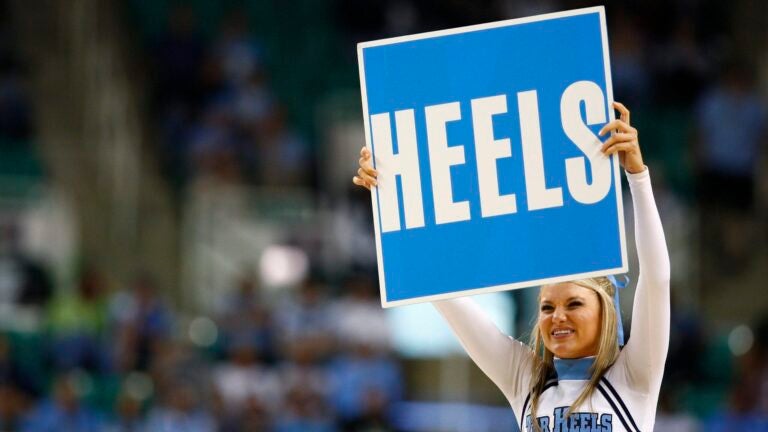
The slow-motion train wreck of an academic scandal involving athletes at the University of North Carolina is just the latest example of something that all rational observers have known for decades: The NCAA’s insistence on maintaining the illusion of its foundational fairy tale—i.e., the myth of the student athlete — does more harm than good, at nearly every turn.
The UNC case has been unfolding for at least two years. Given the pace of such investigations, it is likely nowhere near its conclusion. So who knows when we’ll get to anything near the bottom of this particular cesspool, in which players seem to have been given sham grades, for taking fake classes, for at least the past 18 years.Things like this don’t go on for that long without lies and bribes and threats and cover-ups all the way up and down the chain of command, but I have no abiding interest in who gets punished, or when. I don’t even want to single out North Carolina, because this is so clearly the fault of the NCCA’s policy of indentured servitude masquerading as some quaint and noble — and deeply un-American –notion of amateurism.
The party line goes like this: All colleges and universities make it a point to foster as many diverse sets of skills and interests as possible. Say you’re really good at math, but can’t quite afford the quarter-million-dollar tariff for a top-flight college degree. No problem! MIT will give you a scholarship. But what if your particular talent happens to lie in a traditionally less-academically oriented field, such as, say, oh, being 6-foot-9 with a condor’s wingspan, a 38-inch vertical leap, and 6 percent body fat? Well then perhaps, when you’re not busy studying the Classics, you might care to play a bit of recreational basketball for a team like the Tar Heels. You’ll take all the same classes as your fellow students, play some ball on the side, and then when you graduate … well that’s up to you. You’ll probably become a teacher or a veterinarian or, I dunno, maybe a professional basketball player.
Every single male basketball player enrolling in a top-25 school enters with a realistic chance to play for money when his NCAA career’s over. Of course only a handful make the NBA, but just by virtue of landing a scholarship at a perennial powerhouse like UNC, a player has been deemed talented enough to have a shot to at least continue his career in an overseas professional league once he leaves college. So they’re not all going to make eight or nine figures in the NBA, but there’s not much wrong with spending your twenties earning a few hundred thousand bucks a year in Europe.
But in order to maintain NCAA eligibility for long enough to get the necessary experience and exposure to qualify for a professional career, players must either have natural academic gifts commensurate to their physical ones, or they have to game the system. How can you fault any teenager who chooses the latter?
It’s insulting for the NCAA to pretend that their highest-profile athletes are students in anything remotely resembling the standard sense. I’m not talking about the kids on the crew and gymnastics teams, who are more likely to be fully qualified students who also happen to be blessed with the skill and determination to excel in their chosen sport on the side (not because rowers are smarter than dunkers, mind you, but because they don’t make any money for the school, so if they weren’t academically qualified they wouldn’t be there in the first place). I’m talking about the kids who get churned through the basketball and football factories, working for free, while their coaches, athletic directors, and universities get rich on their sweat, yet who are barred from profiting in any way from their athletic prowess.
That’s the un-American element of it. What other part of our national ethos, outside of the NCAA’s crooked, self-serving insistence on its antiquated definition of amatuerism, would suggest that it should be against the rules for University of Georgia running back Todd Gurley to sell his autograph to the highest bidder? Yet here he is, sidelined in the midst of a suddenly derailed Heisman campaign, ineligible to make more money for his school this year because he had the gall to line his own pockets a bit in the process.
Big-time, revenue-generating NCAA athletes should be paid. Period. And they should also be allowed to major in their sport. College has long since ceased to be an intellectual playground where rich kids learn Greek and read poetry to better prepare themselves for cocktail party conversation after a short day’s paper-shuffling at the family firm. We go to school to learn how to make money. College is now vocational school. Some of us go to learn medicine, others accounting, and others basketball.
The shameful part of this UNC scandal isn’t that some kids did what they had to do to keep the “academic’’ distractions at bay while they focused on their chosen job-training regimen. The shameful part is that the NCAA devalues their path in life– by refusing to let them officially declare themselves basketball majors–while simultaneously making obscene profits off these mandatory unpaid internships.
The most decent thing the NCAA has done lately is declare that South Philly Little League sensation Mo’ne Davis will not have her future eligibility threatened by profits from her recent Chevrolet commercial. Davis has publically stated that she wants to play point guard for UConn, aka, help pay head coach Geno Auriemma’s seven-figure salary, and the NCAA has graciously ruled that they won’t start cracking down on her right to do so until she’s in high school. While this is certainly good news, and, to be fair, a reasonable rule-bending gesture on the NCAA’s part, it also serves to highlight the absurdity of the rules that needed bending in the first place.
In what other legal line of work does an exceptionally talented American need a non-governmental ruling body’s permission to get paid?




To comment, please create a screen name in your profile
To comment, please verify your email address
Conversation
This discussion has ended. Please join elsewhere on Boston.com