What to look for in Olympic speedskating
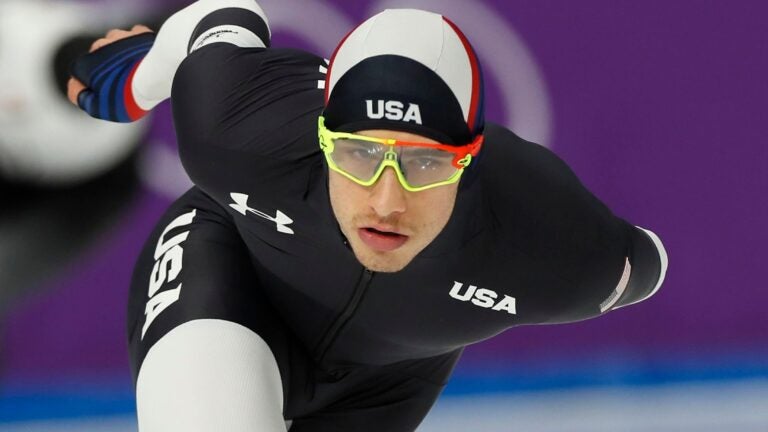
PYEONGCHANG, South Korea — Retired speed skater Apolo Ohno is the most decorated US Winter Olympian of all time. Although his last Winter Games was 2010 in Vancouver, he will keep a close eye on these PyeongChang Olympics as athletes compete for medals across eight short-track events.
Here is what Ohno, an analyst here for NBC, suggests casual viewers watch for in a speedskating race and which teams to watch for at these Games:
Q. How crucial is the start?
A. “The 500 meters, the start is critical. The faster the athlete, obviously, the bigger likelihood of them winning or at least advancing to the next round, so it’s very important to have big start in short-track speedskating. It’s really, really important to do so. If you win the start in a race in the 500 meters, you have a 75 percent chance or greater of winning the race. So the start is huge. So that’s why you’ll see athletes super explosive and concentrating.’’
Q. Why do the skaters keep their arms behind their back?
A. “That’s to minimize the upper body movement and also save energy. But when the sport starts to get really crazy, you’ll see athletes swinging those arms.’’
Q. When are the most moves made?
A. “Watch for the last 3½ laps of the race. That’s when a lot of the movement is going to happen.’’
Q. What happens on the final lap?
A. “That’s when you’ll see outrageous passes. Hail Mary moves from athletes, and it can be fun and it can also be very dangerous for many.’’
Q. How important is patience when calculating when to make a move?
A. “A lot of it’s got to do with patience. I think that when you watch these athletes compete, patience is something that is critical. Not going too early, not going too late. A lot of times you’ll see an athlete really wait until that last one lap to make their move. Basically, out of a race, let’s call it 1,000 meters, it’s just 2½ minutes long, you’ll see an athlete wait until the last 8½ seconds of a race to make a move. So you can imagine just how perfect that move has to be.’’
Q. Do athletes study each other’s tendencies?
A. “For me, I studied every single athlete extremely detailed. I was studying their behaviors, their tendencies. I knew when they felt really good on the ice. I knew when they were having a bad day. I knew when they were tired. No one wants to show anything. It’s a poker game. So your ability to read the other athletes and their movements and their behaviors and their patterns and their little tick is the difference between winning and losing because that gives you information about the other player that maybe sometimes they don’t even know they do, which I became very good at when I was training.’’
Q.Which are the teams to watch for?
A. “I think the Dutch team on the men’s side. The Korean team is going to be very strong because they always are. They’ve been dominant for some years. I think we’ll see some extraordinary things happen really from the Dutch, the Canadians, the Chinese, and Koreans, and also the Americans.’’
Q. What about the American teams?
A. “It’s a very young team. A lot of them, this is the first Olympic team they made, but this is the chance at putting themselves on the mark and they do have a chance to medal. The men’s side for the relay, on the women’s side we’ve got Maame Biney, who is this great story. And I’m hoping that she’s going to do some spectacular things up there . . . They’re fun. They’re exciting. I know they’re going to put on a great show.’’
Q. Why are these Olympic races different than World Cup competitions?
A. “The Olympic Games is unlike any other competition in the world, so just because you haven’t performed well in World Cups doesn’t mean you can’t perform well in the Olympic Games because I’ve seen the world’s greatest athletes crack under pressure when they should’ve won and I’ve seen underdogs win races that they absolutely would never have and they didn’t even after the Games. So it’s once in a lifetime thing, so that’s why the Games is so special . . . Anything can happen on this day. And if you believe that and that gives you hope and desire and the will to make something special happen.’’