
Boston hosted the Olympics before…sort of
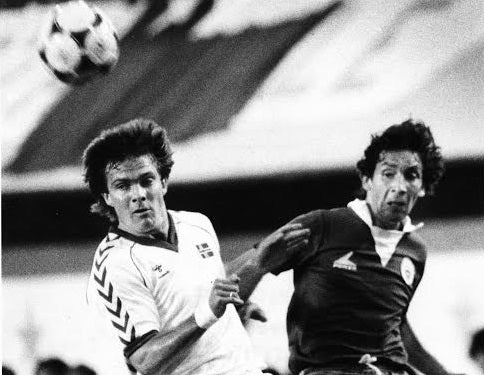
If Boston’s Olympic bid succeeds, it won’t be the first time the city has witnessed the Games. Boston – actually, Allston – hosted the Olympics before, complete with Opening Ceremonies, the Olympic flame, parachutists, and politicians.
You might not remember, unless you were among the 29,240 spectators in attendance for the Chile-Norway soccer match at Harvard Stadium on July 29, 1984. Sure, it wasn’t a full-blown Olympics, with new stadiums and major infrastructure projects. But Boston’s mini-Olympics provided a taste of what to expect from a lengthy international competition, including high-level security, political protests, and ticket snafus.
Hank Steinbrecher, for one, has vivid memories of the event.
“George Bush was running for vice president that year,’’ said Steinbrecher, the Boston venue director in 1984. “And I’m on the stage with him and Michael Dukakis and Ray Flynn (Boston mayor). And I see everyone’s wearing flak jackets under their suits. Except me. I thought to myself, ‘the SOB had better be a good shot.’ ‘’
As the event went on – there were six matches at Harvard Stadium, involving silver medalists France, plus Cameroon, Canada, Chile, Iraq, Norway and Qatar – Steinbrecher contended with protests against the Saddam Hussein regime in Iraq and thousands of disgruntled customers whose tickets never arrived.
“There was an insurgent group in the stadium and they were wearing paper bags over their heads, saying death to Saddam,’’ Steinbrecher recalled in a recent interview. “I decided they had overstepped their bounds and I told security to give them a choice: take off the bags and watch the game or keep them on and go outside and don’t watch the game.
“The Olympics are not for politics. The next day they said we violated civil liberties. But looking back it was an incredibly naïve time. We were really young to be pulling this off. What experience did I have running an Olympic venue? We were rolling the dice.’’
As for the ticket problems: “All the tickets were purchased through LA using credit cards, and the tickets were mailed out. And I’m sitting in Boston getting more [pissed off] every day, wondering where are my tickets? What we ended up doing was printing up duplicates and letting them in. Everything worked out okay but we were pulling the hair out of our heads, calling on the telephone and faxing.
“After the Olympics were over and they were breaking up the rooms in LA, we found 3,000 tickets to Boston in a DHL envelope behind a filing cabinet in a ticket office.’’
So, just how did Boston earn its place in the ’84 Olympic Games?
“We sought them out, there was no bidding,’’ said Alan Rothenburg, soccer commissioner for the LA Olympic Organizing Committee. “We took the initiative. We decided we couldn’t stay in LA for the preliminary rounds; there weren’t enough stadiums. So, as long as we have to leave, let’s take it back East and give people a taste of it.
“It was a pretty easy choice, actually. We didn’t feel New York was right, and the obvious choices were Harvard, with its great history, and the Naval Academy, being in the D.C. area.’’
But Boston did have to clear a major hurdle due to the dimensions of the Harvard Stadium playing field. Local organizers had to convince officials the field was at least 67 yards wide, the minimum for a FIFA-sanctioned international soccer match. When FIFA inspector Walter Gagg viewed the tape measure, it did indeed register 67 yards – but it was later revealed the tape had been spliced to add four yards. Even now, Steinbrecher said he would not comment on the field’s dimensions.
“We had to do a little convincing there,’’ Rothenberg said. “It was snowy and windy that day and things kept getting knocked off when they measured.’’
Rothenberg said he did not know about tampering with the tape measure.
“They somehow waived it,’’ Rothenberg said of the width requirement. “The same thing happened in the 1994 World Cup bidding. Some of the stadiums were questionable and FIFA was giving us a hard time, but we told them some of the preliminaries for Italy [1990] weren’t World Cup regulation width … ‘’

Norway’s Arve Saeland chases ball towards goal as Qatar’s Adel Malalla hases him
Soccer became the highest-attended event at the ’84 Olympics, with matches in Annapolis, Boston, Pasadena, and Stanford drawing 1,422,605 spectators. The six matches at Harvard Stadium, involving silver medalists France, plus Cameroon, Canada, Chile, Iraq, Norway and Qatar, drew more than 135,000 fans.
Those numbers convinced FIFA to consider the US as host to the 1994 World Cup, paving the way for the founding of MLS, plus the hosting of the 1999 Women’s World Cup.
“It was the first time soccer outdrew track and field [1,129,485 spectators], which was the prime event in the Olympics,’’ Rothenberg said. “Without soccer in ’84, we wouldn’t have had the World Cup in ’94, the Women’s World Cup in ’99, MLS. Before that, the USSF [US Soccer Federation] tried to convince FIFA to hold the World Cup here and they [FIFA] were scared to death they were going to see empty stadiums everywhere. But the Olympics were not just sold out, Stanford and the Rose Bowl had 100,000. So, they realized, okay, if we bring the World Cup to the US there won’t be empty stadiums.’’
The ’94 World Cup set attendance records, six matches at Foxboro Stadium attracting more than 324,000 spectators over a two-week span.
“Sepp Blatter [FIFA president] has said on many occasions the awarding of the World Cup to the US was predicated on the success of the 1984 Games,’’ said Steinbrecher, who was coaching Boston University’s soccer team before being appointed venue director. “There were [101,799] at the final and almost every venue was sold out, and everything went smoothly.
“We had had Olympics before, but this was the first live soccer event held from sea to shining sea. And this was all before computers. It was a shock to FIFA, a real shock. We fought right from the very beginning. We said if you put the right teams in and market it properly this will sell out. It was a no-brainer as far as I was concerned.’’
Rothenberg, who became CEO of the ’94 World Cup and now directs a sports consulting firm in Los Angeles, said he was unsurprised by Boston’s opposition to the 2024 Olympics.
“I hope for the best for Boston and the USOC,’’ Rothenberg said. “To put it in some perspective, I don’t remember a case where the Olympics were welcomed with open arms by citizens of a city bidding for them. As it gets closer and closer, enthusiasm builds.
“We had [resistance] in LA before we had a referendum. We had the referendum before we bid, and it passed only because we said there would be no public money spent. And they said go ahead with your Olympic folly.’’
The LA Olympics turned out to be massively popular, with organizers showing the Games could be a financial success. And, without having to make a bid or being asked if the city even wanted the Games, Bostonians played a part.



To comment, please create a screen name in your profile
To comment, please verify your email address
Conversation
This discussion has ended. Please join elsewhere on Boston.com