
Boston Olympics Poll Shows (Some) Support
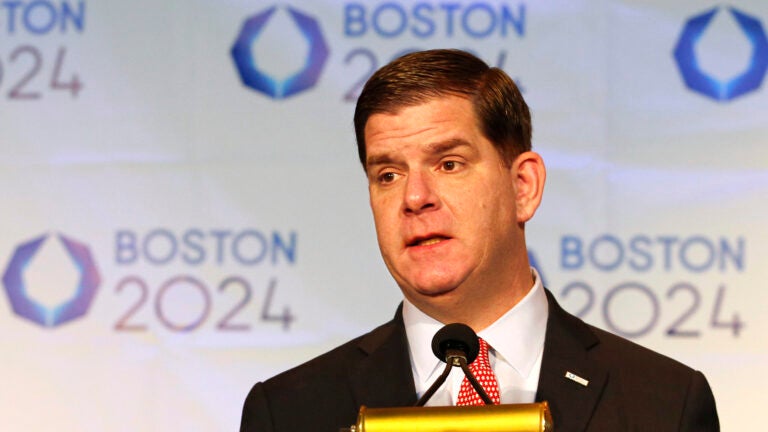
Much of the debate over Boston’s Olympic ambitions has focused on the lack of public input in the bidding process. Another thing that has been lacking to this point has been a measurement of public support for the proposal. The Boston Globe ran a poll in June that showed a split opinion on whether Boston should bid. There’s been a lot of talk about the bid since then, with little in the way of polling.
Organizing group Boston 2024 and Mayor Marty Walsh have both said they believe there’s public support—Walsh said last week he’d be willing to bet on it. And the United States Olympic Committee said, prior to picking Boston as the country’s bidding city, that public support was a big factor in choosing between the Hub, San Francisco, Los Angeles, and Washington, D.C., so you’d assume they had some grounds by which to say Bostonians were at least interested in the idea.
A new poll was released this week by Sage Systems, a Boston-based campaign consulting firm. The poll of 1,600 Massachusetts residents, first reported by the Globe, found majority support for the bid, 55.3 percent to 39.6 percent, with 5 percent undecided.
The numbers weren’t significantly different when whittled down to 482 Boston residents, with 53.7 percent to 40.4 percent support.
The Globe’s Shirley Leung notes that this isn’t really an overwhelming figure:
By comparison, Boston’s 55 percent in favor would be tepid on the world stage. Take, for example, the public opinion polls from the candidate cities for the 2012 Summer Olympics, which were eventually awarded to London.
According to an IOC report, local support for the Games was as follows: 91 percent in Madrid, 85 percent in Paris, 77 percent in Moscow, 68 percent in London, 59 percent in New York.
But it is still majority support. However, there’s a big caveat. When the poll asked Massachusetts residents how they’d feel if public money went into the bid, the numbers shifted significantly—with 60.8 percent against the bid, compared to 32.9 percent in favor.
That point leaves room for further questions about public support.
Boston 2024 has repeatedly said public money won’t go toward the operating budget for the Games, saying venue construction and other hosting costs would be covered privately. There are numerous skeptics of that notion, but let’s say it’s doable.
There would still be federal money going toward security costs. That’s money that would go to any U.S. Olympics, so hey, maybe it doesn’t quite register in local minds.
The public would also be called upon to cover infrastructure costs. True enough, there are big infrastructure plans in the state’s future as it stands. But if a project that wouldn’t otherwise happen is done specifically to serve the Olympics (like, for instance, developing the land surrounding a venue), or if a project that would otherwise happen is put on hold due to Olympics-related infrastructure improvements, does the public see that as taxpayer money going toward the bid? And if so, does it change anybody’s opinion?
It’s hard to say, because Sage’s survey didn’t quite make the distinction. The text of the question simply read: “Would you support or oppose Boston’s bid for the Olympics if taxpayer dollars were used to back the 2024 Olympic bid?’’
A couple of other interesting survey points:
When asked whether they thought infrastructure and site construction expenditures would “produce a lasting economic benefit’’ for Boston, about 45.4 percent said ‘Yes,’ losing out to the 48.4 percent who said ‘No.’
Respondents were also asked to determine which of two ideas they agreed with the most: Whether the Olympics would bring a long-term economic benefit, or whether “the bid will come at the expense of other worthwhile causes like education, housing and transportation.’’ The first statement garnered 23 percent agreement, compared to 54.4 percent for the latter. And 22.4 percent said they were unsure.
The public opinion question remains pretty murky.




To comment, please create a screen name in your profile
To comment, please verify your email address
Conversation
This discussion has ended. Please join elsewhere on Boston.com