What happens to your brain after a football hit
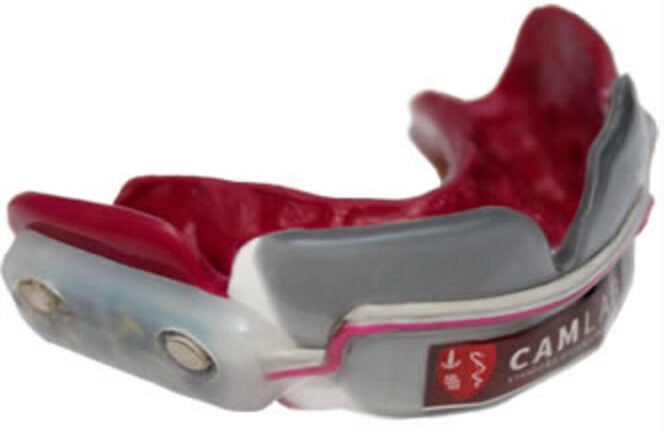
When the receiver took a blow to his head several years ago, it was just one of many concussions that have occurred throughout college football and the NFL. But what made this one different was that this player was wearing a mouth guard with motion sensors. The information from those sensors has given researchers a more detailed and precise window into what was happening within the player’s brain in the milliseconds after the hit.
One common belief has been that just after a person’s head (or helmet) makes contact with something — an air bag, a wall, another person — the brain bounces around in the skull like an egg yolk in a shell, leaving bruises on the brain’s outer surface, or gray matter. Now, though, many scientists and medical experts think this understanding is incomplete.
Yes, there is some movement in the skull, but the real damage from concussions, they say, occurs deeper in the brain — in the white matter — as a result of fibers pulling and twisting after impact. To stick with the food analogy, think of Jell-O, not an egg. You know what happens when you take a plate of Jell-O and give it a hard shake? The stretches and contortions approximate what is happening to the wiring in the brain.
To better track the brain’s reaction to hits, scientists in several labs have been working on a variety of mechanisms, some of which are moving away from those connected directly to a football helmet because the helmet can move independently of the skull. “The forces you’re measuring with those are not really exactly what the brain is seeing,” said Dr. Robert Cantu, clinical professor of neurosurgery at the Boston University School of Medicine.
The mouth guard that was used was developed by bioengineer David Camarillo and his team at the Cam Lab at Stanford. Camarillo and others have speculated that the most damaging blows are those that cause the head to snap quickly from ear to ear or those that cause a violent rotation or twisting of the head through a glancing blow. “The brain’s wiring, essentially, is all running from left to right, not front to back,” Camarillo said, referring to the primary wiring that connects the brain’s hemispheres. “So the direction you are struck can have a very different effect within the brain. In football, the presence of the face mask can make that sort of twisting even more extreme.”
These revelations are a powerful indication that football helmets as they are designed do not protect players from concussions and long-term brain disease like chronic traumatic encephalopathy, or CTE. But Camarillo and others hope that as more data becomes available and as more is learned about the brain’s inner turmoil during hits to the head, helmet design will improve.
But scientists also commonly think this kind of brain disease is caused not only by severe concussive hits, but also by the accumulation of more minor blows. Consider the sort of line-of-scrimmage battle that happens on almost every play in football and does not seem nearly as bad as the concussive hit a receiver may take. But data from a single game showed that one college offensive lineman took 62 of these smaller blows to the head.
And remember: That was 62 times in a single game. Hits of this magnitude can happen hundreds, if not thousands, of times to college and NFL players during practices and games throughout their careers. The design of helmets — even the safety design of automobiles — still has a long way to go to protect people from brain disease incurred from severe and not-so-severe hits to the head.