
Should the Patriots use their franchise tag? Here are 3 potential options.
The Patriots have until March 5th to make a decision on the franchise tag.
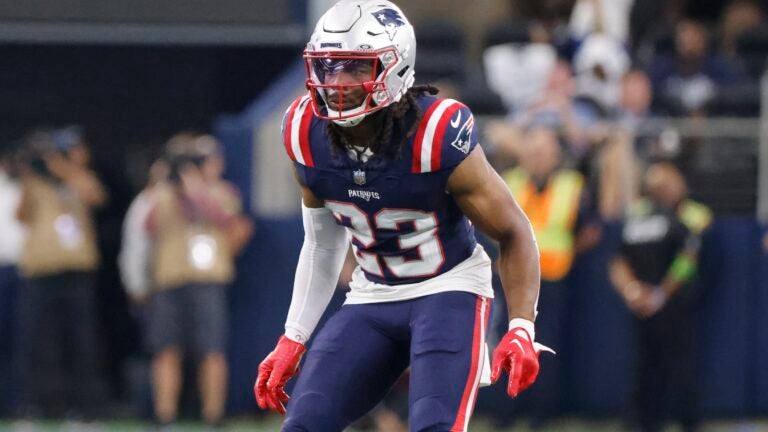
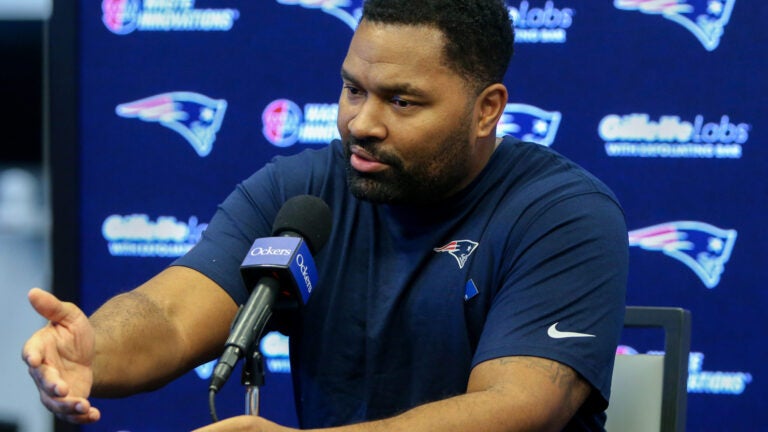
The Patriots have a two-week window where they can decide whether or not to use their franchise tag.
The window opened on Feb. 20, and the deadline is March 5th.
A franchise tag is a tool that teams can use to prevent one unrestricted free-agent per year from leaving.
The duration of franchise tag deals are one year. The salary amounts to the average of the top-five salaries at a player’s position, or 120 percent of the player’s previous salary, whichever is higher.
Teams are not obligated to use their franchise tag, which brings us to the question: Should the Patriots use the tag, and if so who should get it?
Here are a handful of New England’s upcoming free agents who might be considered for the franchise tag, along with some notes on why other notable free agents might not be a great fit for it.
Kyle Dugger
Position: Safety
Estimated tag value: $16.2 million, per Spotrac
2023 stats: 109 total tackles, seven passes defended, two interceptions, 1.5 sacks, one forced fumble.
The case for: Safety is a position that’s in the middle of the pack in terms of how much a franchise tag would cost, and Dugger brings a lot of value.
The versatile safety played on 97 percent of New England’s snaps last season and tallied 109 total tackles. ESPN listed Dugger as one of the top 25 available free-agents in the league. Considering Dugger’s production, along with Jabrill Peppers’s play, an argument could be made that safety was New England’s strongest position group last year.
Dugger scored a pair of touchdowns on defense in 2022, helping the team set a franchise record for most defensive touchdowns in a season.
The case against: Safety is already a position of strength for the Patriots, who have more pressing needs on offense.
It’s a huge jump in salary. Dugger would make almost twice as much next season ($16.2 million) than he has during his entire four year career with the Patriots ($8.3 million).
Even if they do buy another year with the franchise tag, the Patriots have to figure out their end game with Dugger. He’s turning 28 in March, and they’ll have to evaluate how many more productive years he’ll have left that will be worth the bigger salary.
Hunter Henry
Position: Tight end
Estimated tag value: $12 million, per Spotrac
2023 stats: 42 catches for 419 yards and six touchdowns.
The case for: Henry was a team captain last year, and one of the team’s most reliable receiving targets on a struggling offense.
He led the team in touchdown catches and finished in the top-three for catches, targets, and yards.
Henry’s average annual salary is $12.5 million, so franchise-tagging him wouldn’t take much more than he’s already making.
The case against:
While Henry caught the second-most touchdowns among tight ends in the NFL last season, the rest of his numbers aren’t spectacular.
Baltimore’s Mark Andrews, who missed seven games, finished with more catches and more yards. So did Jonnu Smith, whom the Patriots traded for a seventh-round draft choice.
The Patriots need all the help with explosive plays that they can get. Henry was their highest-paid receiving option last year, and his longest catch went for 24 yards.
Mike Onwenu
Position: Offensvie tackle
Estimated tag value: $19.9 million, per Spotrac
2023 stats: 15 starts, played 93 percent of New England’s offensive snaps, three sacks allowed, graded out as the No. 29 tackle in the NFL per Pro Football Focus.
The case for: The Patriots need offensive line help and letting Onwenu walk won’t improve the situation.
The versatile lineman began the season playing guard, but stepped in at right tackle when injuries and illness ravaged the position.
At age 26, he’s still on the younger side and should have a number of productive years left barring injuries.
The case against:
Onwenu’s rookie deal was worth less than a million annually. He’d get bumped up to just shy of $20 million if the Patriots offer him the franchise tag.
With the Patriots’ offensive line woes in mind, the team could already be considering improving the position through the draft.
Other notable free-agents
Trent Brown: Injuries limited Brown to 11 games including eight starts last season. Brown’s size and talent are a plus, but there are questions about whether he’ll be back.
Kendrick Bourne: Though he was the Patriots’ most productive receiver while he was healthy last year, he’s coming off of an ACL tear and his production has not historically matched that of a top-tier receiver.
Ezekiel Elliott: Elliott was once one of the premier running backs in the NFL, but wear and tear has taken its toll on his game. He became available last year after Dallas cut him, then he averaged career lows in yards, carries, attempts, yards per carry, touchdowns, and first downs during his first year with the Patriots.
Josh Uche: Uche showed flashes as a pass-rusher in 2022 with 11.5 sacks, but his numbers dipped in 2023. Linebacker is the second-most expensive position to franchise a player at behind quarterback.




To comment, please create a screen name in your profile
To comment, please verify your email address
Conversation
This discussion has ended. Please join elsewhere on Boston.com