This chart shows exactly how the Patriots’ game plan worked
New England won the war of attrition.
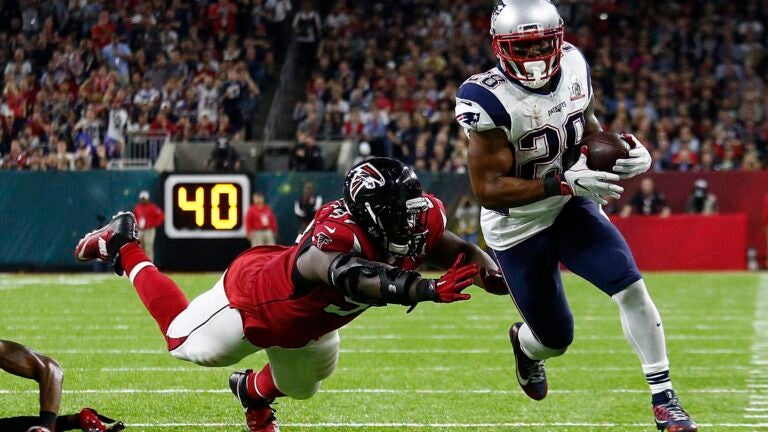
To successfully mount the greatest comeback in Super Bowl history, the Patriots put a new spin on a classic game plan.
The term “ball control offense” conjures up classic football images of a run-heavy style where a team is content to produce yardage in short bursts of three yards and a cloud of dust. For Tom Brady and the Patriots offense, they ended up taking a radically different route to the same conclusion.
Brady passed a Super Bowl record 63 times as the Patriots frantically scrambled back from a 25-point second-half deficit, yet New England still dominated time of possession in comparison with the Falcons. The Patriots held the ball for 40 minutes, 31 seconds, compared with only 23 minutes, 27 seconds for the Falcons. New England’s total fell only two seconds short of the Super Bowl record (set by the New York Giants in Super Bowl XXV).
More than mere time of possession, the Patriots also ran a ludicrous number of plays. Totaling 93 by the end of the game, it was another Super Bowl record. Brady kept New England’s offense on the field in both halves, spraying passes around the field with his characteristically accurate short passing.
The result was a major depletion of Atlanta’s most important defensive priority: getting to Tom Brady. Here’s a chart from Pro Football Focus that shows how the Falcons’ pass rush decreased in productivity in each quarter:
The Falcons D was on the field for 99 snaps. They only blitzed Tom Brady on five of 70 drop backs. The result? This. pic.twitter.com/pGF5gXfpOf
— PFF (@PFF) February 6, 2017
While it’s obviously natural that defensive players should get tired as the game progresses, the Patriots’ ability to keep their offense on the field exacerbated this issue for the Falcons. As compared with Super Bowl XLIX, the erosion of Atlanta’s pass rush was even more pronounced.
Conversely, it allowed the Patriots’ defense to remain rested. And as Brady and the offense began to stage a comeback, Atlanta’s final four possessions of the game totaled 16 plays for only 44 yards and zero points (including Dont’a Hightower’s crucial strip-sack).
It was a game where patience and experience won the day in dramatic fashion. By the fourth quarter, the Falcons’ pass rush was effectively neutralized through fatigue. Brady was free to direct the aerial comeback. The Patriots won the war of attrition, and in so doing, the Super Bowl.