
Scientists whose work led to Tom Brady’s Deflategate suspension speak out for first time
The team, which stands by its work, says it ran tests for months.
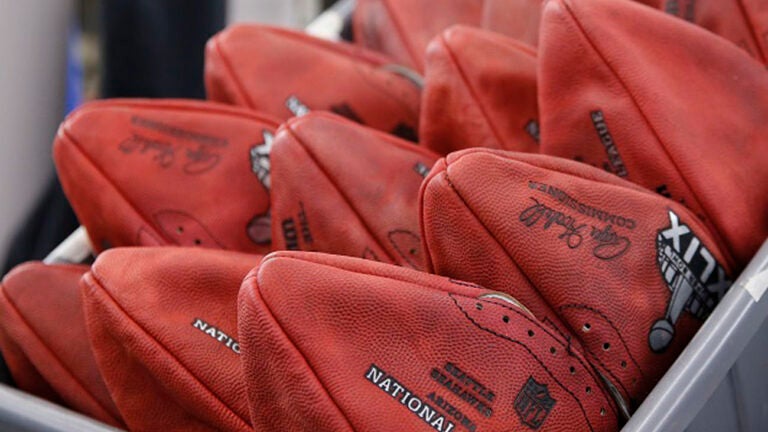
Aerospace engineer John Pye was working on a project for Britain’s Ministry of Defense when he got a call asking him to investigate the air pressure in some footballs.
Pye was part of a team of scientists called upon by the NFL in the Deflategate scandal that has cost Patriots quarterback Tom Brady the first four games of the 2016 season. And for the first time, in a New York Times story published Wednesday, Pye and other researchers who completed the science portion of the Wells Report — the document that laid out the NFL’s case for finding Brady and the Patriots guilty — are speaking out.
Almost two years later, the scientists are standing by their work.
“I would feel bad if I thought I made a mistake or I thought I overlooked something,” Pye tells the Times. “But we made measurements and put the facts out, and it went from there.”
The Times story outlines the methods Pye and a team of scientists used to determine whether the balls Brady and the Patriots used during the 2015 AFC Championship Game could have deflated without human interference, including setting up conditions nearly identical to those at Gillette Stadium that January day.
“We knew this was going to get a lot of scrutiny, from your eighth-grade science classes to your physics professors,” Pye said. “So we wanted to try to answer all those questions.”
Thousands of articles have been written about the Deflategate scandal since, including some discrediting the work and independence of the scientists hired by the NFL through a company called Exponent. An MIT professor’s lecture outlining a theory that debunks the NFL’s science has gotten nearly 75,000 views on YouTube.
Robert Caligiuri, who set up Exponent’s Deflategate study, still stands by the work.
“What disappoints me the most from the scientific community is they said we didn’t do things that we did,” he told the Times. “And it’s in the report. I believe in the scientific method. I believe in challenging what people say. That’s all part of the verification and validation process. I have no problem with that. But if you’re going to look at what someone else has put forward as a hypothesis, a theory or experimental verification, you have to understand what they did, and then work from there. And I’m not sure that everybody did that.”
You can read the complete New York Times story here.
Timeline of the Deflategate scandal
[bdc-gallery id=”106353″]





To comment, please create a screen name in your profile
To comment, please verify your email address
Conversation
This discussion has ended. Please join elsewhere on Boston.com