
What comes next for Tom Brady?
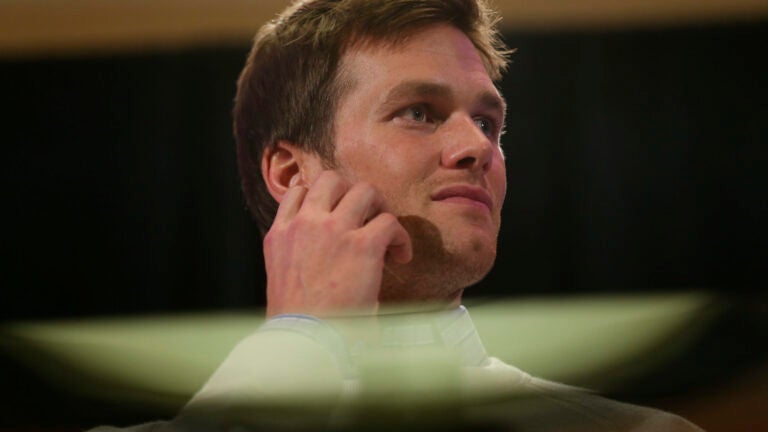
After six months and a 20-page letter from NFL Commissioner Roger Goodell Tuesday explaining his reasoning for upholding Tom Brady’s suspension, it may seem like the Deflategate saga has gone on long enough. But actions taken by the NFL and expected to be taken by Brady’s representation suggest the battle is far from over.
Shortly after its announcement, the NFL went on the offensive, filing a motion to confirm Goodell’s arbitration decision in a U.S. District Court in New York. It’s notable for two reasons, attorney Alan Milstein said: it was likely made to pre-empt a filing by Brady and the NFLPA to have their appeal heard in a more sympathetic court, and it wasn’t a legal necessity.
“This is kind of bizarre because the NFL doesn’t need this award confirmed the way you would a money judgment,’’ said Milstein, who represented former Ohio State football player Maurice Clarett in his suit against the NFL in 2003. “It’s very clever on the part of the NFL, because they know Brady would go to Minnesota or maybe even Boston.’’
Legal experts have speculated the NFLPA would seek to have its appeal heard in Minnesota District Court, which has a history of siding with NFL players in disputes against the league. It last did so in February when federal judge David Doty overturned a suspension for Minnesota Vikings running back Adrian Peterson, who pleaded no contest to misdemeanor assault charges for hitting his four-year-old son with a switch. By filing in New York, the NFL has gotten the first say in where the hearing will be held.
The NFL’s ruling doesn’t preclude Brady and the NFLPA from filing elsewhere, which NFL.com’s Ian Rapoport says they plan on doing Wednesday. Should they do so, each court would decide on its own whether to hear the case or defer to the other.
While its filing first may give the NFL an advantage, this doesn’t guarantee that the case is heard in New York, Milstein said. Having decided multiple NFL arbitration appeals before, the Minnesota court could decide it’s the proper forum to hear the case. And because the NFL is based in New York and Brady’s hearing was held there, the Manhattan court has a similar claim, making it hard to say now where the appeal will be held. It’s also possible that both courts opt to hear the case and even render opposite decisions that would have to be settled in U.S. District Court, but Milstein believes such an outcome to be unlikely.
Story continues after gallery
Other punishments handed out by Roger Goodell
[bdc-gallery id=”121318″]
Wherever he’s heard, Brady will be represented by attorney Jeffrey Kessler, a notorious thorn in the NFL’s side.
Michael McCann, an attorney and director of the Sports and Entertainment Law Institute at the University of New Hampshire, told Boston.com in May that Kessler is among the lawyers best equipped for a fight against the NFL.
“(Kessler’s) real strength would be if Brady later on sues,’’ said McCann. “We don’t know if it’s going to happen, but if it does, I think Kessler would be a very intimidating lawyer…Brady retaining Kessler has a signaling effect to the NFL.’’
Kessler previously opposed the league in the lawsuits that led to the creation of free agency, ended the 2011 NFL lockout and led to the establishment of a new collective bargaining agreement, and aided the successful appeals of Saints linebacker Jonathan Vilma, Peterson and Ravens running back Ray Rice.
Brady is also likely to petition whichever court hears the case for an injunction, which, if granted, would allow him to stay on the field while his case plays out in court. Should it be granted, Brady could move to have his case heard in federal court as soon as possible, or delay it until after the season, according to NFL.com. The former move brings some risk, as a judgment in the NFL’s favor during the season would mean Brady serves his suspension at that point. It’s also not certain he’ll get an injunction at all, according to Tulane University director of sports law Gabe Feldman.
“(Brady has) a lot of obstacles to get back on the field and the key one is trying to get a quick release, and the quick release would have to come through an injunction,’’ Feldman told NFL Network. “It’s very difficult for anyone to get a court to grant an injunction — very high standards — and it’s particularly high in this case where you’d be asking a judge to interfere with the Commissioner’s internal decision.’’
The next forum is unlikely to be a full courtroom drama with witness testimony and a discovery phase in which both sides introduce their evidence, Milstein said. More likely, the judge will look at the evidence weighed by the NFL in its initial ruling and the appeal and decide whether three things are the case: that Goodell was biased in his ruling, that it was arbitrary and capricious of the NFL to declare Brady guilty, or that the four-game ban itself was arbitrary and capricious. If Kessler and the NFLPA’s attorneys prove any of the above, the suspension will be overturned, Milstein said.
Having tried many such arbitration appeals, Milstein knows well how difficult it is to get such a decision overturned. But given NFL players’ high success rate in past arbitration appeals, Brady is in a good position.
“You have a history of these arbitrations being overturned, so I don’t think that bodes well for this one (being upheld),’’ Milstein said. “I think it’s going to get overturned.’’


To comment, please create a screen name in your profile
To comment, please verify your email address
Conversation
This discussion has ended. Please join elsewhere on Boston.com