
Study: NFL’s Deflategate report is ‘deeply flawed’
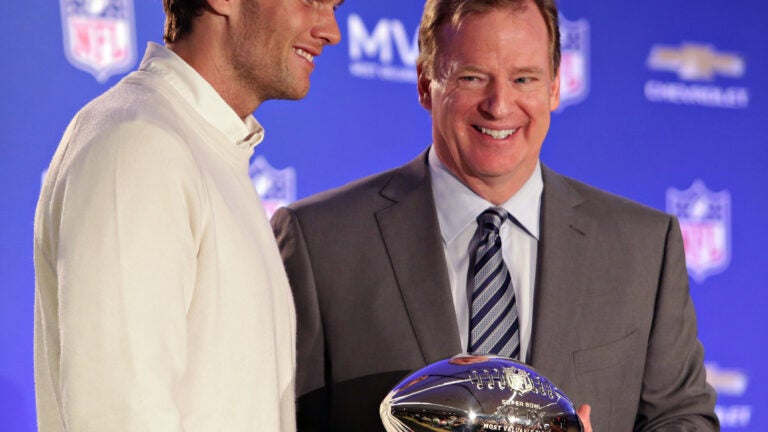
Tom Brady may have some new talking points for the appeal of his Deflategate suspension.
A study conducted by the American Enterprise Institute determined NFL-appointed investigator Ted Wells’ Deflategate report is “deeply flawed’’ and “relies on an unorthodox statistical procedure.’’ The study — written by Kevin A. Hassett, Joseph W. Sullivan, and Stan A. Veuger — questions both the report’s methodologies and findings. The American Enterprise Institute is a public policy research think tank based in Washington, DC.
From the AEI study’s abstract:
In the current “Deflategate’’ controversy, the New England Patriots have been accused of illicitly deflating footballs before the start of their 2015 American Football Conference championship game against the Indianapolis Colts. The National Football League and the lawyers it hired have produced a report—commonly known as the “Wells report’’—that has been used to justify penalties against the Patriots and quarterback Tom Brady. Although the Wells report finds that the Patriots footballs declined in pressure significantly more than the Colts balls in the first half of the game, our replication of the report’s analysis finds that it relies on an unorthodox statistical procedure at odds with the methodology the report describes.
Regarding the air pressure measured in the footballs at halftime of the AFC Championship Game, the authors of the study contend the Wells report misunderstood the significance of the inflation drops between Patriots and Colts footballs.
From the AEI study’s abstract:
It also fails to investigate all relevant scenarios. In addition, it focuses only on the difference between the Colts and Patriots pressure drops. Such a difference, however, can be caused either by the pressure in the Patriots balls dropping below their expected value or by the pressure in the Colts balls rising above their expected value. The second of these two scenarios seems more likely based on the absolute pressure measurements. Logistically, the greater change in pressure in the Patriots footballs can be explained by the fact that sufficient time may have passed between halftime testing of the two teams’ balls for the Colts balls to warm significantly, effectively inflating them.
Read the full AEI study
Based on the Wells report’s findings that it was “more probable than not’’ that Patriots staffers intentionally deflated footballs before the AFC Championship Game and that it was likely that Brady was “at least generally aware’’ of such activity, the NFL levied punishments against the team and quarterback. The NFL fined the Patriots $1 million and docked the team its first-round selection in the 2016 NFL draft and fourth-round selection in the 2017 draft. The league also suspended Brady for the first four games of the 2015 season. He has appealed that punishment.
In an opinion piece published Friday in The New York Times, two of the authors of the study called on the NFL to consider their findings when hearing Brady’s forthcoming appeal. The writers noted that they had previously produced a study on the New Orleans Saints’ Bountygate scandal that was a factor in NFL punishments being overturned.
From “Deflating Deflategate’’ in The New York Times:
Our recommendation? When the NFL hears [Tom] Brady’s appeal of his suspension later this month, it should proceed with the knowledge that the Wells report is unreliable.
In denying a request by the NFL Players Association to recuse himself from Brady’s appeal, league commissioner Roger Goodell stated that he is open to hearing new evidence in the matter.
“As I have said publicly, I very much look forward to hearing from Mr. Brady and to considering any new information or evidence that he may bring to my attention,’’ Goodell wrote in a letter to the NFLPA. “My mind is open; there has been no ‘prejudgment’ and no bias that warrants recusal.’’
Deflategate Timeline:
[bdc-gallery id=”106353″]



To comment, please create a screen name in your profile
To comment, please verify your email address
Conversation
This discussion has ended. Please join elsewhere on Boston.com