
The 6 biggest misconceptions about Deflategate
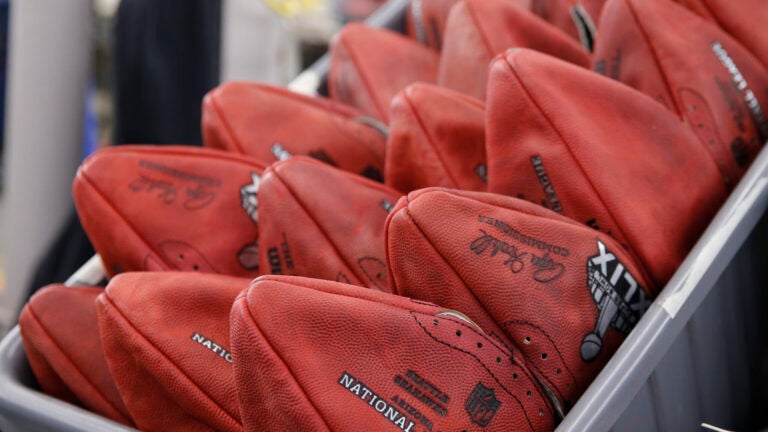
With the 243-page Ted Wells report and Roger Goodell’s authoritative punishment of the Tom Brady and the Patriots spawning thousands of articles, some misconceptions have emerged surrounding the Deflategate scandal. Whether born from the emotions of fans or the team and the league trading barbs through the media, these misconceptions cloud an already complicated situation. We’ve identified six misconceptions about Deflategate, and have provided corrections and explanations for each.
1. It doesn’t matter because the Patriots would have beaten the Colts anyway
Those defending the Patriots in the scandal are quick to point out the lopsided 45-7 final score, as well as the 28-0 margin the Patriots outscored the Colts by in the second half (with properly inflated balls) in the AFC Championship Game. That point is well made. But the NFL was not investigating the impact a slightly underinflated football had on the outcome of the game, just whether the Patriots’ footballs were underinflated and, if so, if the deflation was deliberate.
In its statement on the punishment, the NFL says, “It is impossible to determine whether this activity had an effect on the outcome of games or what that effect was. There seems little question that the outcome of the AFC Championship Game was not affected.’’
2. Brady is innocent because the NFL didn’t “prove’’ his involvement with “hard evidence’’
This investigation was not a criminal investigation, nor does the case have the same standards for proof as a criminal trial.
On page one of the report, it states the investigation surrounded the Policy on Integration of the Game and Enforcement of Competitive Rules.
“Under the policy, the standard of proof required to find that a violation of the competitive rules has occurred’ is a ‘Preponderance of the Evidence,’ meaning that, ‘as a whole, the fact sought to be proved is more probable than not,’’’ the first footnote says.
This verbiage means that when it is found to be more probable than not that Brady was at least generally aware, that’s the investigators’ way of announcing a guilty verdict.
3. Ted Wells asked for Tom Brady to hand over his cell phone
A widespread myth surrounding the report is that the NFL wanted Brady to forfeit his cell phone so investigators could examine its contents. Page 21 of the report expressly states that is not the case. While the NFL requested to see copies of any texts or emails relevant to the preparation of game balls, they did not ask Brady to hand over his phone.
“It would be limited strictly to responsive materials and would not involve our taking possession of Brady’s telephone or other electronic devices,’’ the report states.
4. The Patriots cooperated fully
In addition to Brady’s unwillingness to cooperate, the Patriots refused multiple requests by investigators for a follow-up interview with Jim McNally.
“Counsel for the Patriots apparently refused to even inform McNally of our request,’’ page 20 of the report says. “We believe the failure by the Patriots and its counsel to produce McNally for the requested follow-up interview violated the club’s obligations to cooperate with the investigation under the Policy on Integrity of the Game & Enforcement of League Rules was inconsistent with public statements made by the Patriots pledging full cooperation with the investigation.
Patriots owner Robert Kraft pledged full cooperation on the Friday following the AFC Championship Game.
“I instructed our staff to be completely cooperative and transparent with the league’s investigators,’’ Kraft said in a statement. “During the three days they were here, we provided access to every full- and part-time employee the league’s representatives requested to speak with and produced every communication device that they requested to search.’’
Timeline of Deflategate
[bdc-gallery id=”106353″]
5. The Wells Report can be entirely dismissed because of Exponent’s controversial history
Exponent, the scientific consulting firm hired to handle the experimental aspects of the report, has a spotty history. The controversial group was profiled in depth here.
That said, the Wells report is not anchored by Exponent’s findings. In fact, the report goes so far as to distance itself from the experimental evidence (which does include “assumptions’’) produced during the investigation.
“In reaching the conclusions set forth in this Report, we are mindful that the analyses performed by our scientific consultants necessarily rely on reasoned assumptions and that varying the applicable assumptions can have a material impact on the ultimate conclusions,’’ page 13 of the report states. “We therefore have been careful not to give undue weight to the experimental results and have instead relied on the totality of the evidence developed during the investigation. Even putting aside the experimental results, we believe that our conclusions are supported by the evidence in its entirety.’’
6. It’s just about deflated footballs
Yes, the Patriots broke the rules and their footballs were not inflated up to NFL standards. But as many are quick to point out, similar ball-tampering incidents earned slaps of the wrist from the NFL.
The NFL treated the Patriots as a repeat offender and referenced Spygate in its statement regarding the Deflategate punishment. The NFL also referenced the Patriots lack of cooperation with the investigation as a reason for such harsh discipline.
Rules were broken, and the investigators found Brady culpable, but the severity of the sanctions against the player and the team have more to do than reduced PSI levels.



To comment, please create a screen name in your profile
To comment, please verify your email address
Conversation
This discussion has ended. Please join elsewhere on Boston.com