
The NFL’s Women Problem, Part 4,391: Cheerleader Pay Is Terrible
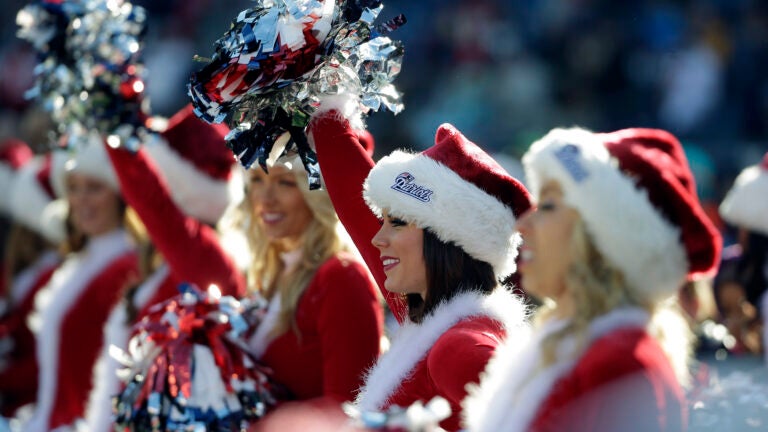
According to the Patriots official website, cheerleader Kelly (no last names are provided, for spooky and obvious reasons) from Scottsdale, Arizona, has two master’s degrees and is working toward her PhD. She hopes to become a cognitive neuroscientist, so perhaps she joined the cheerleading squad for the bird’s-eye view of traumatic brain injury unfolding in real time. Two-four-six-eight! How many fingers am I holding up?!
Or maybe she’s just a big football fan, or a really enthusiastic person. There are plenty of compelling reasons for someone like Kelly to become a cheerleader. I happen to be one of those uptight, joyless people who find traditional cheerleading to be cheesy at best and exploitative at worst, but far be if from me to tell any woman what her part-time job should be. Kelly’s resume suggests she is much smarter than I am, and it’s her mind, body, and time in question; I respect her right to lead cheers.
But whatever Kelly’s motivations may be, I think it’s safe to assume money is not among them, though she’s better compensated than many of her peers around the league. The average NFL cheerleader earns less than $1,000 a season , which generally works out to below minimum wage when all of their work hours are honestly accounted for. Patriots Vice President of Media Relations Stacey James reports that Kelly and her coworkers do much better than that, with none of them earning less than $2,000 since the current squad was assembled in May.
So Kelly’s got it relatively good, but NFL cheerleaders on the whole are getting shafted. Even though a cheerleading career offers benefits that extend beyond mere dollars, it’s not unreasonable to expect that they be paid a legal wage. Five different NFL teams have recently been sued for violating wage laws, and the Buffalo Jills (ugh) disbanded this year in the wake of a lawsuit and waves of negative publicity over not only their paltry pay but also the absurd demands placed on the cheerleaders.
This report last week in the New York Times corroborates Deadspin’s April post revealing the Jills had their entire bodies micromanaged by the team. The squad’s handbook contains these, among other gems: “When menstruating, use a product that [sic] right for your menstrual flow. A tampon too big can irritate and develop fungus. A product left in too long can cause bacteria or fungus build up. Products can be changed at least every 4 hours. Except when sleeping, they can be left in for the night.’’ The Jills were not paid the legal minimum wage (one member of the squad told the Times she made $420 for more than 800 hours of work), but they did get free 6th-grade health class refreshers.
While the Patriots are to be commended for paying cheerleaders about twice the gong rate, it should be noted that, according to Forbes, the team is currently worth $1.5 billion, which means Robert Kraft’s 1994 investment of $172 million has paid off rather handsomely. There are 28 cheerleaders listed on the team website, meaning it would cost $280,000 to pay them each, say, $10,000 per season to not only perform at games but also conduct all their various community outreach programs. That is a ton of money in the real world, and peanuts in the NFL. Kraft has $280k in his couch cushions, which is a good thing, because he pays Danny Amendola slightly more than that every single week.
The Patriots treat their cheerleaders better than the market seems to demand. But this is a league-wide issue. If the NFL is at all serious about making amends with female (and sentient male) fans appalled by its traditionally laissez faire attitude toward domestic violence, paying cheerleaders a reasonable wage would be a nice start.




To comment, please create a screen name in your profile
To comment, please verify your email address
Conversation
This discussion has ended. Please join elsewhere on Boston.com