
Split Down the Middle: Home Cooking Can Result in Playoff Leftovers
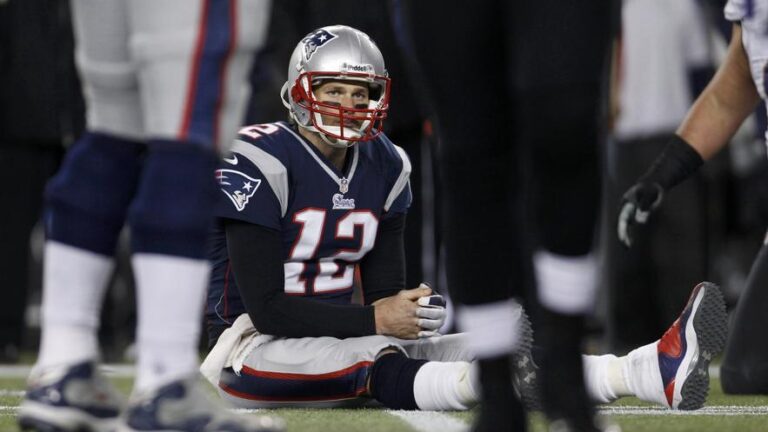
There were a lot more passes thrown, and it sure was windier, but in retrospect, the Patriots’ thumping of the Broncos last Sunday bore a striking resemblance to last January’s AFC Championship Game. In each one, the home team took control of the game in the second quarter and by the end of the third, the visiting team’s Hall of Fame quarterback was trying to bail the Titanic with a teaspoon. Tom Brady spent most of the day in December watching on the sidelines. Peyton Manning spent most of his day in Foxborough on third or fourth and long. Same difference.
Home team is the essential phrase in the above paragraph. The assumption that whichever AFC team has home field advantage for the championship game NEXT January has colored NFL punditry since before the 2014 season began, and has only grown stronger as the season’s progressed. New England is now the consensus choice to reach the Super Bowl thanks to its thrashing of Denver in the friendly confines of Gillette Stadium.
This assumption is logical, but as can happen with logic, it’s not supported by evidence, at least not postseason evidence. Home field advantage has been an enormous factor in teams’ success in the first half of the 2014 regular season. Over the past 10 years, however, it has been no guarantee of a Super Bowl appearance and even less of a guarantee of a Super Bowl win.
The Patriots and Broncos are two of the seven NFL teams not to have lost a home game this year (the Saints, Packers, Eagles, Bengals and Cardinals are the others). Five of the seven have the best records in the league. Six of them lead their divisions. The exception, the Packers, have only had three home games so far.
New England has enjoyed a 33-3 record at home in the last four and a half seasons. That’s one big reason the Pats have had either a bye week, complete home field advantage or both every year since 2009 and are likely to have one or both again. But when the playoffs have started, that .917 winning percentage takes a notable drop.
Counting the 2009 season divisional round loss to the Ravens, New England is only 4-3 in its last seven postseason games at Gillette. In 2011, the Pats had total home field advantage and made the Super Bowl against the Giants. I forget. Who won that one?
The decline in the advantage of home field in the playoffs is not confined to the Patriots. It hits everyone. In the past decade, starting with the Patriots’ 2004 Super Bowl title, 20 teams have reached the Super Bowl. Ten of them had home field advantage throughout the playoffs either due to having the best regular season record or a prior playoff loss by the number one seed. That’s exactly half. Fifty percent is not much of an advantage in most competitions.
And of course, nobody wants to just be in the Super Bowl. Nothing’s worse than losing it. The Patriots’ two losses to the Giants remain the most maddening defeats in franchise history.
In the past 10 seasons, teams who had the home field throughout the playoffs have won the Super Bowl three times. Only once, when the Steelers beat the Cardinals in Super Bowl LXIII, has a team who never packed a bag to get there defeated a team that won a playoff game on the road. The opposite has happened four times. Astute Super Bowl handicappers give a team with a road playoff win extra credit, or should.
Football is our most overthought sport, and home field advantage is one of those things which receives far too many brainwaves from fans and commentators. Gillette Stadium isn’t a tough place to win on the road because of the crowd, one of the more subdued in the league, or the cold weather, as it’s just as hard to win there in pleasant September as horrid December. It’s hard to win there because the Patriots have been an outstanding team for the last five years. It isn’t the altitude that makes Mile High Stadium a snake pit for visitors. It’s been John Elway and Manning. Minus them, it’s been just another football field.
The relative decline in home field advantage in the playoffs stems from an equally basic concept. Every team in the playoffs is good, or at least not poor. It’s the Jets and Raiders of the world who’ve caused those gaudy home field records for winning teams in 2014. Come January, they’re not around anymore. And even to get to a game with the number one seed, a team has to have won one or perhaps two playoff games already, prima facie evidence it’s playing well.
Don’t get me wrong. In a sport that calls itself a game of inches, ANY advantage should be seized and cherished. If the Pats finish with the best record in the conference, they will have earned whatever advantage Gillette Stadium will offer them.
If half the teams with home field advantage reach the Super Bowl, that’s the same odds as the coin toss. Winning the coin toss is also an advantage for a football team. It’s not one many people bet on, though.





To comment, please create a screen name in your profile
To comment, please verify your email address
Conversation
This discussion has ended. Please join elsewhere on Boston.com