
Sign up for the Today newsletter
Get everything you need to know to start your day, delivered right to your inbox every morning.
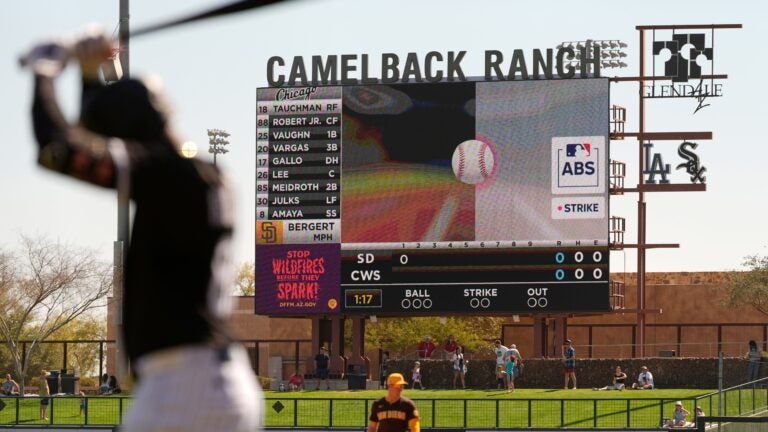
The Boston Red Sox open their 2026 season Thursday against the Cincinnati Reds with a notable change to the game: MLB’s new Automated Ball-Strike Challenge System.
The system, commonly referred to as the ABS Challenge System, allows players to challenge an umpire’s ball-or-strike call in real time, aiming to ensure accuracy and add an element of strategy to the sport.
Powered by T-Mobile, the ABS Challenge System tracks the precise location of each pitch relative to the batter’s individualized strike zone. When a challenge is initiated, the result is transmitted over a 5G network and displayed almost instantly on stadium videoboards and broadcast feeds.
The technology has been tested in the minor leagues since 2022 and was used during Major League spring training in 2025.
The Red Sox got an early look this year during the Grapefruit League play: In a game against the Minnesota Twins in early February, cleanup man Willson Contreras challenged a strike-three call that was overturned to a ball in the first inning.
Each team begins a game with two challenges. If a challenge is successful — meaning the original call is overturned — the team retains it. If the call stands, the challenge is lost.
Additional challenges are awarded in extra innings.
Only the batter, pitcher, or catcher can initiate a challenge, and they must do so immediately by tapping their helmet or cap. Managers and other players are not permitted to assist, and umpires can deny a challenge if they believe outside input influenced the decision.
Not every ballpark will feature the system. While the ABS Challenge System will be available in all standard MLB stadiums, it will not be used during certain special events — including the Mexico City Series, the Field of Dreams game, and the Little League Classic — due to technical limitations.
Ballparks will display the number of remaining challenges for each team using “ABS” indicators, and each review is designed to take only seconds before play resumes.
For broadcasters, MLB has issued new guidance: While networks may still display a strike zone graphic, they are being asked to not visually distinguish between balls and strikes within that box.
Beyond accuracy, the system introduces a strategic element. Because challenges are limited, players must decide when it’s worth risking one — weighing early-inning calls against potentially more consequential moments later in the game.
Get everything you need to know to start your day, delivered right to your inbox every morning.


Be civil. Be kind.
Read our full community guidelines.To comment, please create a screen name in your profile
To comment, please verify your email address