Paul Zimmerman (Dr. Z) revolutionized analyzing the NFL
“I can’t imagine modern NFL analysis without Dr. Z."
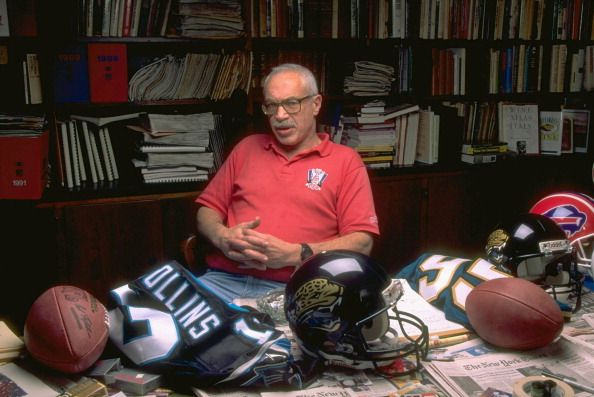
There might be as many informative and valuable approaches to covering the NFL these days as there are plays in a typical team’s playbook.
There’s the Adam Schefter-type of information broker, deep-diving analytics wizards at Pro Football Focus and Football Outsiders, the X’s-and-O’s decipherers such as USA Today’s Doug Farrar and Boston Sports Journal’s Greg Bedard, masters of context such as ESPN’s Bill Barnwell, storytellers such as The Ringer’s Kevin Clark and ESPN’s Seth Wickersham, plus all of the conventional beat writers and columnists. While the NFL itself has significant issues, this is a golden age for coverage of the league.
But no one, now or ever, has been as ahead of his time or more detailed in his analysis as Paul Zimmerman.
Zimmerman, known as Dr. Z to his legion of dedicated readers during his decades at Sports Illustrated, died Thursday at age 86. He had suffered a series of strokes in recent years, the first in 2008, that had rendered him unable to speak.
Zimmerman was opinionated and notorious among colleagues for refusing to back down from a football argument he believed in. Nor should he have, for long before the All-22 video was available to any writer or fan with an interest, Zimmerman was known for taping games and meticulously breaking down the nuances, particularly interior line play.
The news of his death was confirmed on Twitter late Thursday afternoon by his longtime colleague at the magazine, Peter King.
The tributes from those he influenced soon followed.
“I can’t imagine modern NFL analysis without Dr. Z. He was the first to do what most of us do, and he did it better than most of us ever will. A truly unique voice,’’ wrote Farrar (@NFL_DougFarrar), author of a book Dr. Z surely would have loved, “Genius of Desperation: The Schematic Innovations that Made the Modern NFL.’’
Wrote Clark (@bykevinclark): “In the summer of 2012, before I started writing about football for the first time that fall, I read Dr. Z’s book and then I read probably 50 Dr. Z SI articles. It made me infinitely smarter about the sport and how to approach the sport. He ruled.’’
Added Wickersham (@sethwickersham): “There was nothing like sitting next to Dr. Z in the press box. He had charts, pens, highlighters, notebooks, grunts, mutterings, and a stopwatch. He was covering a game you didn’t know existed. He also felt no guilt about his materials invading your space. He had earned it.’’
Zimmerman’s seriousness of study and deep knowledge of the sport — he had played at Stanford and Columbia and wrote the still-relevant “A Thinking Man’s Guide To Pro Football’’ in 1971 — gave distinction to his work at Sports Illustrated. There was no conventional wisdom in his educated opinions, which is what made his season-end All-Pro team selections so anticipated and fascinating. He informed readers which unheralded players ought to be heralded.
But he could tell the reader what made a great player great, too. The quintessential Zimmerman feature for SI might have been his August 1981 cover story on John Hannah, which featured the Patriots guard’s masked face close up under the headline: “The Best Offensive Lineman Of All Time.’’ If anyone was qualified to make such a distinction, it was Dr. Z.
Wrote Zimmerman: “You want to know who’s the best of them? The very best? Now how can someone pick something like that? The mere act of it would be an insult to so many players who were so great in their eras. You say I must? OK, fasten your seat belt. The greatest offensive lineman in history is playing right now and probably hasn’t even reached his peak. He is John Hannah, the left guard for the New England Patriots, out of Alabama.’’
“He stands 6-2½ and his weight fluctuates between 260 and 270 (no lineman can honestly claim only one weight). He is 30 years old and is in his ninth year and is coming off the best season he ever had.’’
Zimmerman, who had covered the Joe Namath Jets for New York newspapers, started at Sports Illustrated in 1979. Later in his career, and perhaps surprisingly, he was one of the early adapters to writing on the Internet, with a popular mailbag column on SI.com that was both cantankerous and sentimental (especially when he wrote lovingly about his wife, Linda).
One annual column that I always devoured was his rankings of the network broadcasts teams. Because he taped as many games as he could and watched them with his meticulous eye, he was as quick to identify a poseur in the booth as he was one along the offensive line.
His opinionated nature could lead him amusingly down the wrong path from time to time — during a brief foray into television during ESPN’s 1983 NFL Draft coverage, he was famously skeptical of a Dolphins first-round pick named Dan Marino.
But more often than not, he was on-point right up until his career ended. In one of his final columns, he predicted not only that Giants would defeat the undefeated Patriots in Super Bowl XLII, but nailed how they managed to pull it off — not with skill-position star power but with their defensive line overwhelming the Patriots’ blockers.
Dr. Z always did know to look inside for the answers.