Fox and others will feel pain of U.S. absence at World Cup
Next summer’s World Cup has lost a star attraction.
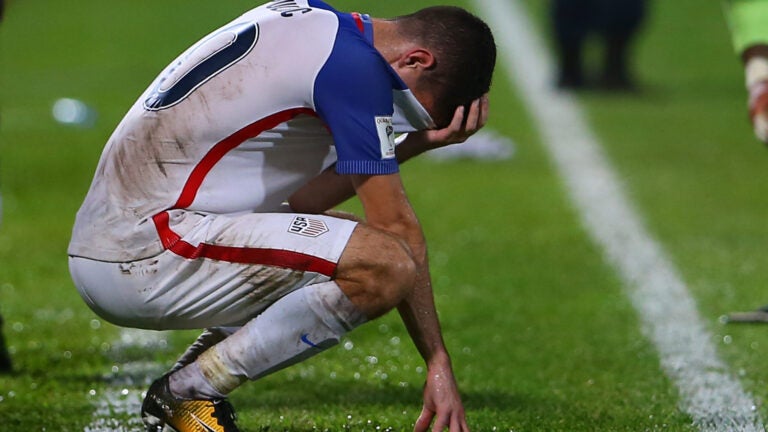
The U.S. men’s soccer team crashed out ingloriously Tuesday night, losing to Trinidad and Tobago, 2-1, and failing to qualify for the event for the first time since 1986. Players, coaches and fans were distraught. And, corporate sponsors were left calculating how many people in the immensely valuable U.S. market would consequently tune out next summer.
The World Cup is an unusual event for corporate sponsors. When they sign deals, they generally don’t know who will be competing. Coca-Cola, for instance, signed a 16-year extension of its agreement with FIFA, soccer’s global governing body, in 2005, a deal that takes it through the 2022 World Cup. Coca-Cola signed that extension without even knowing where the 2018 and 2022 World Cups would take place, much less which teams would participate.
In 2011, Fox paid more than $400 million for the English-language broadcast rights in the United States for the 2018 and 2022 World Cups — four times as much as ESPN had paid to broadcast the 2010 and 2014 Cups. Verizon and Volkswagen signed up to sponsor Fox’s halftime and postgame shows.
A portion of the audiences for those shows was lost Tuesday night when the United States bowed out. Even a riveting tournament next summer will not attract the same number of casual viewers who would follow the U.S. team.
Stefan Szymanski, co-author of “Soccernomics” and a University of Michigan professor, said that the financial impact on World Cup broadcasters in the United States — Fox and Telemundo — would be the largest.
ESPN broadcast all 64 World Cup games from Brazil in 2014, averaging 4.6 million viewers. Games not featuring the United States averaged just 3.9 million viewers. The four U.S. — against Ghana, Portugal, Germany and Belgium — accounted for almost 20 percent of ESPN’s total World Cup viewers.
Telemundo, which paid $600 million for the American Spanish-language rights to the 2018 and 2022 World Cups, will also be negatively impacted, though not nearly as much. In 2014, the four U.S. matches accounted for about 9 percent of Univision’s total World Cup audience. Fortunately for Telemundo, Mexico advanced to play in Russia.