
Even if baseball ain’t what it used to be, the hope of an opener endures
First pitch for the Red Sox' home opener against the Minnesota Twins is scheduled for 2:10 p.m.
COMMENTARY
Today is a day to celebrate.
It is a simple, straightforward idea at a time when we could use the chance to not think for a few hours. The 111th season of baseball at Fenway Park is scheduled to begin this afternoon, and if only for a day, anything beyond that is gravy.
Cincinnati’s staged a parade on Opening Day for more than a century, which really feels like an idea Boston would’ve tried to swipe by now. The April average temperature here being south of 50 degrees probably plays a part in not. And I suppose, the Sox already did sort of swipe it by making Truck Day a thing, in which case forget I said anything.
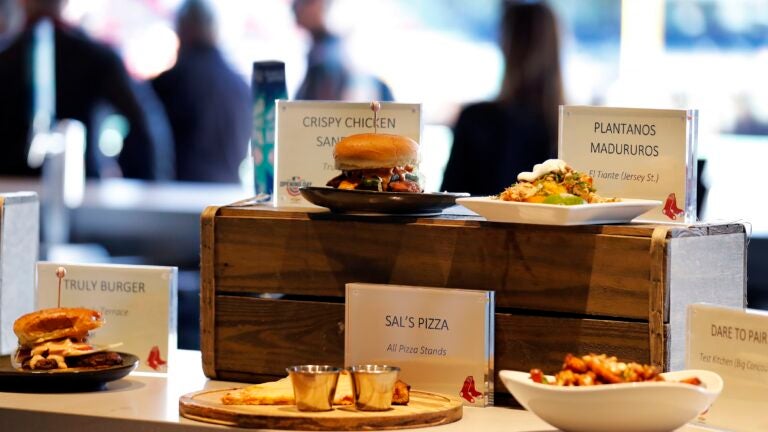
Fenway will appear its usual resplendent self this afternoon, and not just because most of us will view it through the lens of NESN’s shiny new studio in the brand-new 550 Feet From Home Plate Pavilion. Cash is now verboten at the newly carbon-neutral bandbox, and I encourage you to workshop that into a joke about the insufficient extension offers for Xander Bogaerts and Rafael Devers on your own time.
Today is about hope. Giant flagged hope. Fenway green hope. That the starting pitching won’t be as putrid (5.20 ERA, into the bullpen by the fifth half the time) as it was the opening week. That the defense (outside of Christian Arroyo learning right field on the fly) and bullpen will keep outperforming.
That the surprising uplift of last season isn’t replaced by water finding its level. That we’ll still have to pay attention to the Sox after Patriots training camp starts.
That the big ovation some foundational names get this afternoon are superseded by even louder ones in 2023, when they’re still here.
Even by home opener standards, it’s going to be a lot. It’s One Boston Day. It’s Jackie Robinson Day, with every team this year not only wearing his No. 42, but in Dodger blue. Even the opponent will add to the festivities, given the Twins pulled off the shocker of the winter by giving Carlos Correa $35.1 million each of the next three years if he opts to stick around.
“It tells you all you need to know about what they’re thinking upstairs,” Twins reliever Tyler Duffey told reporters last month. “They want to win right now.”
Because they have to. Minnesota’s brass is as aware as anyone that Correa could be a short-timer thanks to two opt outs in a three-year deal. They might only have him for 2022, so swing for the fences.
Who might the Red Sox not have after 2022? Take your pick. J.D. Martinez, Nate Eovaldi, and Kiké Hernández are free agents. Bogaerts, as you’re already sick of hearing, will almost certainly join them. Devers can hit the open market after the 2023 season, which means the chances of “losing him for nothing” grows with each missile he sprays somewhere.
The 2022 Red Sox are not swing-for-the-fences built. They have won four world championships since the Twins won their last playoff game. Success forever worth savoring, but success that allows the play to be sustainability, and not just when it comes to fakakta carbon credits.
“When you’re talking extensions and doing things early, so to speak, you’re adding more variables. There’s risk that gets shared when you do those things. There’s upside that gets shared,” Sox architect Chaim Bloom told WEEI on Thursday, speaking generally about negotiating long-term extensions. “There’s just much more potential, even if the desire is there and the player wants to be here and we want the player here, there’s just much more potential for people to see the world differently.”
This certainly isn’t just a Boston problem. My goodness, Aaron Judge is seeing the world differently to the tune of betting he’ll get Mike Trout money. Players standing up in a system built on undercompensating them in the early years and saying “I want what I deserve” is a wonderful ideal.
And yet unless you’re in Los Angeles, the only franchise which seems able/willing to bring back their stars in free-agent bidding wars, it means more new generations coming through the ranks. It means more goodbyes. It means the Jon Lester the Cub and Mookie Betts the Dodger and on and on.
Heck, even the Trevor Story signing can be viewed through a team-friendly lens. Ken Rosenthal’s latest from The Athletic stresses that “Story, Red Sox people believe, might have commanded $200 million on the open market if he had not been coming off an off year both offensively and defensively.”
In other words, they got a deal. That’s why he’s here.
Oh, Chaim. Even if the player wants to be here and we want the player here … good grief.
This really is a sport that’s gotten too smart for its own good.
We’ve spent the last few days batting around Dodgers manager Dave Roberts pulling Clayton Kershaw after seven perfect innings and just 80 pitches. To be clear, I get why — Kershaw himself put an 85-pitch limit on his outing. Given the shortened spring training, I especially understand it, and I suspect you do too given it barely registered a blip when San Diego yanked pitchers with active no-hitters on back-to-back days last week.
But that’s the thing. It’s become conventional wisdom. That’s depressing. In the last three years, 15 starters have been pulled with an active no-hitter of at least six innings, including Nick Pivetta last June. (Tanner Houck was pulled after five no-hit last October.)
In almost every case, we got it. I just … I hate this is what the game’s evolved to.
At least days like this one endure, as they have since people were crowing that Fenway was the “most modern of sports stadiums” because it was a comfortable place to watch a grueling 2 hour, 36 minute, 11-inning game. Times change. Teams change. Not always for the better.
But the hope of an opener endures.




To comment, please create a screen name in your profile
To comment, please verify your email address
Conversation
This discussion has ended. Please join elsewhere on Boston.com