
Outstanding series ‘The Clubhouse: A Year with the Red Sox’ to debut on Netflix with revealing look at players’ psyche
"Maybe, just maybe, it will inspire a little more empathy for those ballplayers who appear to have it all and live in constant fear of letting it slip from their grasp."
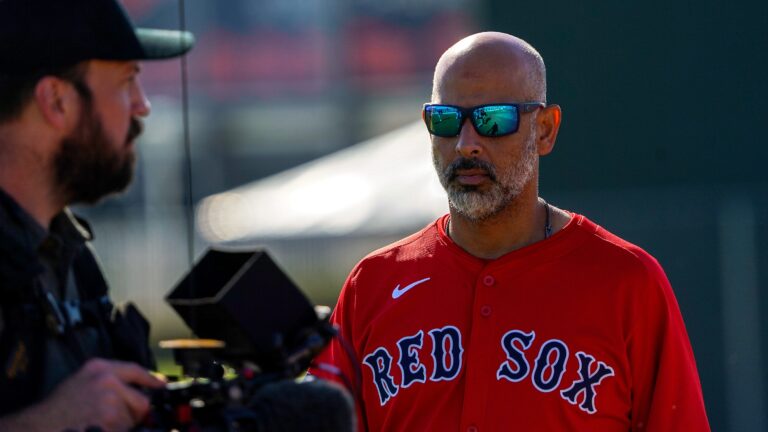
More with the Red Sox
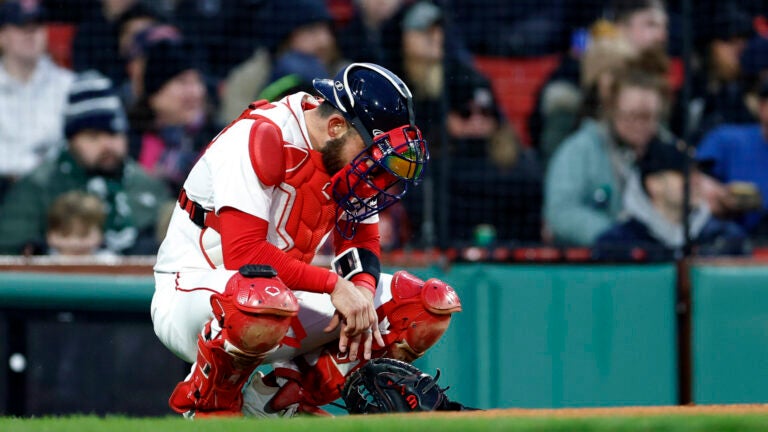
The broadest revelation in “The Clubhouse: A Year with the Red Sox,” Netflix’s outstanding, almost all-access series on the 2024 ball club that premieres Tuesday, is this:
The loudest beer-fueled leather-lung in the Fenway bleachers is not nearly as hard on Red Sox players as many are on themselves.
Those players, fluctuating between elite-athlete confidence and paralyzing self-doubt depending upon how they fared in their last at-bat or half-inning, curse at and insult themselves much more.
From our couches and box seats, it’s easy to envy ballplayers — the fame, the money, the Little League dreams come true for the gifted and fortunate few.
Hopefully that envy will be accompanied by greater collective empathy after fans watch “The Clubhouse,” which provides the deepest look at athletes’ doubts, pressures, and bouts of loneliness I’ve ever seen presented in a sports documentary. I can’t think of anything that comes close.
So if you were among those wondering how the ‘24 Red Sox — who were the epitome of mediocre, finishing with an 81-81 record, the franchise missing the playoffs for the fourth time in five years — would manage to be interesting over eight episodes and nearly eight hours, the answer is in the candor, particularly in regard to mental health.
Amid the aforementioned broad revelation is a stunning and specific one that became public Monday morning when Netflix’s embargo on the documentary’s contents was lifted. Red Sox outfielder Jarren Duran said in Episode 4 that he attempted suicide during the 2022 season.
Duran has been a complicated figure since he was first called up in 2021. He is a dazzling talent who emerged as an All-Star last season. His willingness to use his platform to talk about his mental health struggles — though never before in the terrifying detail that he does in the documentary — has surely helped many people. He was also caught on a field microphone calling a heckler a homophobic slur last season, and the words came out of his mouth with ease, as if they had been said before. His shame in the aftermath was palpable and seemingly sincere.
“The Clubhouse” does an exceptional job of parsing Duran’s complications, in large part because Duran almost treats the camera as if it were a counselor.
“It’s an everyday battle to tell myself that I should be proud of myself,” he says.
Duran has genuinely endearing moments, too, whether making time for familiar autograph seekers after a game, or fixing his old-school Ford Bronco after it breaks down outside of Fenway. And he cares. During a rainy late-season game when the Red Sox’ playoff hopes are dangling by a thread and Rafael Devers and Kenley Jansen are absent from the dugout, he shouts, “There’s Kenley sitting in his [expletive] underwear. Raffi’s sitting in his locker. … Like, those are the guys we [expletive] need out here.”

Perhaps fans will like Duran better after this, and perhaps some won’t. But everyone should have a better understanding of how he became who he is, and his quest for betterment.
“The Clubhouse” spends most of its time navigating among a half-dozen or so players at different stages of their career. Duran is the budding star, Cam Booser is the feel-good story, Tyler O’Neill is the free agent-to-be, Triston Casas is the injured guy in purgatory, and Brayan Bello is the enigma.
A later episode spends some time in Portland with prospects Marcelo Mayer, Roman Anthony, and the since-traded Kyle Teel, the latter of whom is amusingly reminiscent of a character in Richard Linklater’s college baseball movie “Everybody Wants Some!!”
Casas is probably second only to Duran in terms of face-time in the doc, and I’m very curious to see how he is perceived after this. He’s vulnerable, cocky, and insightful (he has an excellent explanation of why the MLB season has to be 162 games) and it’s difficult to tell how authentic any of it is.
Perhaps the most poignant scene in the documentary involves a conversation between Bello and manager Alex Cora, who has an uncanny knack for recognizing a player’s emotional needs at a given moment.
Bello is struggling with his stuff on the mound, and his anxiety is compounded by the loneliness of being in Boston without his wife and daughter, with the former being turned down for a visa. Cora’s fatherly conversation with Bello — in a Fenway Park empty except for a chattering tour guide in the background — is one of many examples of him being straightforward but patient with players who aren’t patient with themselves. He tells them he loves them often. Dick Williams probably wouldn’t understand.
The focus on a few specific players does give the documentary sort of an unbalanced lineup. We hear from injured pitcher Lucas Giolito more than we do Devers and Jansen. Jansen’s departure before the season ends is not a topic, nor were the negotiations before Cora’s contract extension in July. The peek inside Craig Breslow’s office during the trade deadline is more cursory than revelatory. And the Red Sox’ fringy playoff contention was played up a little more dramatic than it actually was.
But those are modest nitpicks from a long season. “The Clubhouse” is not “Ball Four” when it comes to candor, because nothing nowadays would be allowed to be, but is the most honest and insightful look at the pressures ballplayers face that has ever been filmed.
When the season’s final out was recorded, and Duran embraced his fellow outfielders while saying, “I wish we had baseball tomorrow,” I knew and appreciated where he was coming from in more ways than I ever would have anticipated.
Maybe, just maybe, it will inspire a little more empathy for those ballplayers who appear to have it all and live in constant fear of letting it slip from their grasp.





To comment, please create a screen name in your profile
To comment, please verify your email address
Conversation
This discussion has ended. Please join elsewhere on Boston.com