
Trying to make sense of Rafael Devers’s reaction to the Alex Bregman signing and other thoughts on the happenings at Fenway South
Kind of weird, isn’t it, this unfamiliar feeling in February that the Red Sox are actually going to be good?
More with the Red Sox
Playing nine innings while wondering if the upcoming Netflix docuseries will change current perceptions of any Red Sox players…
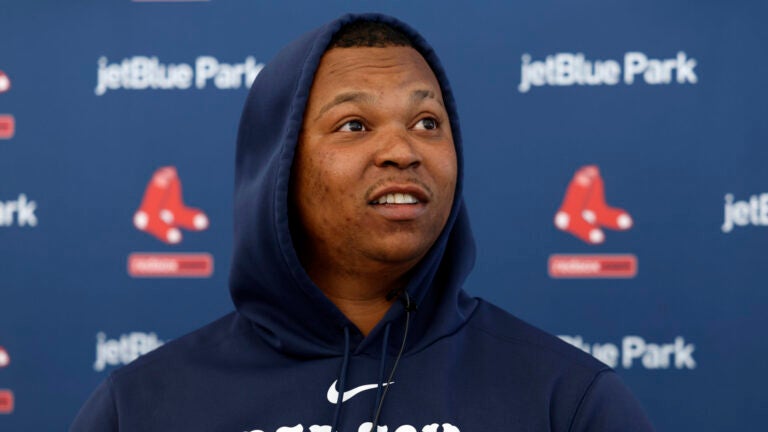
1. It would have been swell if Rafael Devers’s reaction to the Red Sox signing of Gold Glove third baseman Alex Bregman had been, “Welp, looks like ol’ Raffy here is about to be Boston’s best damned designated hitter since David Ortiz,” rather than his actual response, a casually defiant “I play third base.” But as colleague Peter Abraham noted in his column with his usual clear-eyed perspective, Devers’s reaction is understandable. He’s a proud and accomplished prime-of-career player who was told he would remain at the position when he signed his 10-year contract extension in January 2023. He’s not exactly Adrian Beltre over there defensively, but it’s understandable why the status of being a position player and not just a DH matters to him.
2. Anyway, it will all blow over. If Alex Cora does decide to play Bregman at third, relegating Devers to the status of a $30-plus million per year DH, what is he going to do about it? Quit the team? Refuse to swing? This whole situation reminds me somewhat of John Valentin walking out of Red Sox camp for two days in 1997 after manager Jimy Williams told him he was moving to second base to accommodate rookie Nomar Garciaparra. Valentin, also proud and accomplished – bet you didn’t know he led all MLB position players in bWAR (8.3) in 1995 – was furious. He said he wanted a trade and no longer would consider signing an extension with the Red Sox.
3. The whole thing was wild. Valentin left camp on Saturday, skipped workouts in protest on Sunday, and returned after the team had finished its work on Monday to tell reporters that he would be back the next day, would help Garciaparra all he could, but wanted out. (The Globe’s Tuesday, March 11, 1997, edition had a classic photo of Valentin passing Garciaparra as the latter was leaving the ballpark. Just a little awkward.) Valentin’s agent, Dick Moss, said of the Red Sox’ front office, “Not only are they mean spirited, but they’re stupid.”

4. So how did it play out? Garciaparra hit 30 homers, won the American League Rookie of the Year award, and of course, was way better than Derek Jeter. Valentin ended up playing 79 games at second, 64 at third, led the AL with 47 doubles, and hit .306 with 18 homers and an .871 OPS. It was a fantastic season by one of the more underrated Red Sox players of the last 40 years or so, and the whole thing was the very definition of Working Out For The Best. Oh, and Valentin signed a four-year, $25 million extension the following January.
5. For his part, Bregman has handled this in a way that should endear him to Red Sox fans – perhaps even including those reluctant to forgive him for his participation in the Astros cheating scandal, when some players and personnel would bang trash cans in the dugout like they were members of Blue Man Group in order to tip pitches to their hitters. Bregman knows he’s the superior third baseman, and so his easy-going willingness to move to second base – a position he has played for nine games and 32 innings in the big leagues – is an admirable first act here.
6. I would call Bregman – whom I wanted the Red Sox to sign and did not for a half-inning believe that they would – an excellent fit in assorted ways: as a much-needed righthanded bat, as someone who plays with an edge approaching Dustin Pedroia levels, as a slick fielder, as a postseason regular. And the contract – short-term, high average annual value – makes sense for both sides. This is the move the Red Sox had to make. I’m as stunned as you are that they did.

7. I wouldn’t, however, call Bregman a perfect fit with the Red Sox. There’s that overlap at third base with Devers, and we don’t really know how Bregman would fare at second, though Cora, who has more than a little experience and insight when it comes to infield play, is confident he’d excel defensively. And if Devers does end up DHing most of the time, what becomes of Masataka Yoshida, a train-with-square-wheels type of fit on this roster?
8. But those are pleasant and, in recent years, unfamiliar “problems” for the Red Sox to have. For the first time since Dave Dombrowski’s tenure, the Red Sox have quality almost all over the roster, and their depth options are mostly appealing. Yoshida might be a 1.5-tool player, but he can hit when he’s healthy. And the whole Bregman/Devers thing might just be determined by how ready Cora and his coaches determine Kristian Campbell to be.
9. This applies to the starting pitching, too, where the arrival of Garrett Crochet and, to a lesser degree, Walker Buehler allow each starter to slot into the rotation spot where they actually ought to be. Bryan Bello might just thrive now that everyone isn’t desperately trying to convince each other that he can emerge as the ace. If he does, bonus. But it’s no longer a desperate wish. Kind of weird, isn’t it, this unfamiliar feeling in February that the Red Sox are actually going to be good?





To comment, please create a screen name in your profile
To comment, please verify your email address
Conversation
This discussion has ended. Please join elsewhere on Boston.com