
Why Chris Sale’s Tommy John surgery might actually help the Red Sox
Freed from expectations of title contention in 2020-21, Claim Bloom is hopefully free to build whatever he wants.
COMMENTARY
John Henry, the owner of both the Boston Red Sox and Boston Globe Media Partners (including Boston.com), made much of his fortune by omitting emotion. His hedge fund, in his own words and in the simplest terms, spent 30 years making profits with a “mathematical approach” freed of the human element. Even the steadiest head can be driven to cash out quicker, or to let a loss run, than the data says is prudent.
Such models, people smarter than I say, have their own imperfections. Henry’s fortune, however, speaks volumes. As does his baseball payroll, in an inverse sense, given it carries more than $43 million for players whose 2020 seasons are over whether there’s a season or not.
“We do projections. We do the objective look at it. That’s part of our job. But sometimes there comes along someone who’s a little bit different,” said Sox GM Ben Cherington on July 24, 2013, surely echoing the thoughts of his superiors as he announced Dustin Pedroia’s eight-year contract.
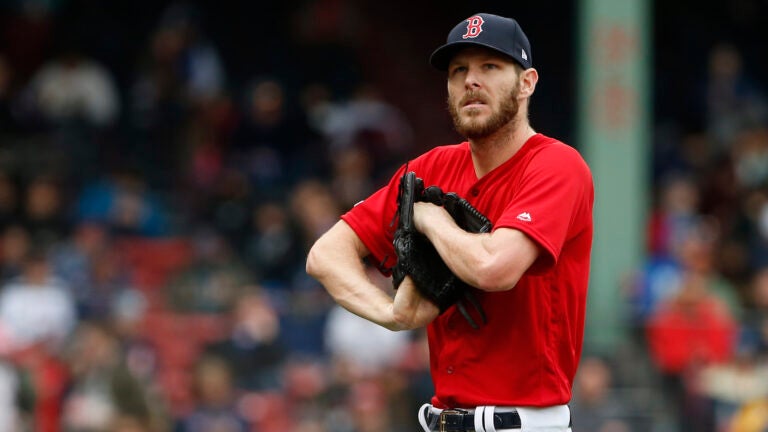
“We blew the Jon Lester, we blew that signing in spring training. For reasons that are pretty apparent now, which I won’t go into, but they’re apparent,” said Henry on Feb. 18, 2019, just more than a month before his Red Sox gave a different lefty ace, Chris Sale, five years and $145 million a full season before his free agency.
There’s admitted hindsight on the Pedroia deal, which was absurdly team-friendly; only catastrophic injury has made it an albatross. Sale’s was a puzzler from the start, given he’s built like a scarecrow and had largely been shut down with shoulder inflammation the preceding season’s final three months.
It didn’t mean Sale was destined for Tommy John surgery, or even that the deal was a mistake. But when that surgery decision was announced on Thursday night, a Tom Brady-esque shocker in that it stung more than surprised, interim manager Ron Roenicke wasn’t the only one drawing a long line back.
“He obviously was frustrated all last season. He didn’t feel like he pitched like he can from the get-go,” Roenicke said of Sale. “But even the year before, I don’t know whether it was halfway [through the season] or what that was, he didn’t feel like the year before he was right either. … I know he’s been frustrated with it, and he’s tried to do everything he can to build this thing up and rehab it enough to where he wouldn’t have to have surgery.
“For him to try to pitch the way he knows he can, I think all of us feel the surgery gives us the best opportunity for him to be that guy again, which is probably one of the top five pitchers in the game.”
Just as it is far too easy to immediately declare it all ultimately a good thing for Sale and the Red Sox, letting each shed the temptation of contention this season to get right for — in all reality — 2022 and beyond, chief baseball officer Chaim Bloom made the case it’s far too easy to declare the team dragged its feet on choosing surgery, both before and since he arrived in October.
“This is not something you want to rush into. Surgery is a big deal. It’s not something you want to do unless you really feel that that is, that you’re at the point where that’s what you need to do to return to field,” said Bloom, referring to Boston shutting down Sale in August 2019, and the subsequent meeting with Dr. James Andrews that determined surgery was still avoidable. “It seemed very reasonable to me to take that time off, to rest and try to strengthen everything and hope for a successful path forward. Up until that time in early March, there was every indication that he was doing great.”
And even then, Bloom pointed out, multiple doctors agreed the pain Sale was feeling after facing hitters on March 1 — the same pain he’d felt six and a half months before — still wasn’t necessarily more than a flexor strain in his elbow.
“If you operated on every pitcher who had a slightly abnormal [ulnar collateral ligament] on an MRI, you’d be operating on literally every pitcher,” orthopedist Dr. Christoper Geary told The Athletic earlier this month, referencing the ligament replaced in Tommy John. “He’s at a stage where it can be managed, and if it gets to a point where it can’t be managed, that’s where you have the surgery.”
That came Tuesday, when Sale felt the pain again during a session of catch on the field. Which circles us back, because this is the best thing for the Red Sox. I said it two weeks ago, and I’ll say it again after Roenicke reminded the starting rotation is Nate Eovaldi, Eduardo Rodriguez, Martin Perez, perhaps Ryan Weber, perhaps Brian Johnson, perhaps an opener …
“It’s a challenge, and hopefully we have the pieces here that somebody will step up … and it will be a great, I guess not surprise, but it’ll be a great thing to have somebody that can fill in and give us those innings,” Roenicke said.
Two weeks ago, and baseball in general, feels a million miles away today. It speaks volumes that a Thursday where thousands of us sheltered in our homes — schools cancelled, restaurants closed, sports in a deep freeze, work-from-home widely mandated — felt relatively normal at 5 p.m. (At which point the Sale news and Marcus Smart’s COVID-19 diagnosis landed within three hours.) As a society, it’s been a long time since we’ve needed a respite like we need one right now.
For 20 years, New England has gotten more than any fanbase could dream. Never forget from whence we came: On April 16, 2000, the day Bill Belichick made Brady part of his initial Patriots draft class, Carl Everett hit a walk-off homer at Fenway to win a game Ramon Martinez started, Rick Pitino’s Celtics lost the third-to-last game of a fifth-straight playoff-free season, Ray Bourque was midway through his first playoff series chasing a Stanley Cup with the Colorado Avalanche, and America was about six weeks from knowing what ‘Survivor‘ was.
Our teams have outplayed, outwitted, and outlasted everyone else’s just about every year since. That ride’s not necessarily ending, what with the Bruins leading the NHL in points and the Celtics a title contender with a young core, but it’s certainly evolving.
Back to what helped build it.
Bloom is a throwback. Funny to think given he’s just 37, but he was brought here to give this Red Sox picture an emotion-free look. Don’t be afraid of change, he inferred from the jump, something Mookie Betts in a Dodgers uniform no doubt makes clear.
“From an emotional standpoint it can be very difficult, especially when you spend time around guys and get to know them — you become really attached to them,” Bloom said in January. “You also recognize that you have a responsibility to do what’s best for your organization. That’s what our jobs are.”
His boss built life-changing wealth by divesting that attachment from his work, and we’ve time and again seen what can happen if it creeps back in.
Chris Sale, we can only hope, will be back to being Chris Sale in two years time. By which point Bloom, freed from the annual local expectation of a championship, will be well into crafting what we can only hope is the next great Red Sox team.
We live in a moment of thanking heaven for small favors. If the 2020 Red Sox were desperate for an accurate credo, they could do a lot worse than that.



To comment, please create a screen name in your profile
To comment, please verify your email address
Conversation
This discussion has ended. Please join elsewhere on Boston.com