Elite runners face new drug testing measures from Abbott World Marathon Majors
"There are no random tests in this program."
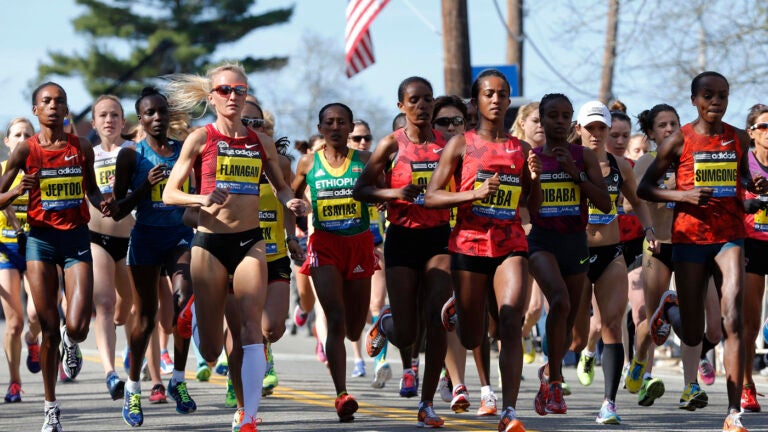
Abbott World Marathon Majors and the Athletics Integrity Unit, which has run the sport’s anti-doping program since its founding in 2017, Tuesday announced new developments for drug testing of elite runners who compete in the six world marathon majors, including the Boston Marathon.
Along with a financial boost for its anti-doping programs, the essence of the change will be a shift from random testing to a system informed by data and what the AIU calls “intelligence.’’
“They’re not just funding extra testing through this program,’’ said AIU head Brett Clothier. “They really realize that the future of anti-doping really requires investment in intelligence and investigations. So they’re specifically funding extra resources into this area.
“The whole premise of intelligence-led testing starts with the unfortunate premise and reality that testing alone can’t catch and deter sophisticated drug cheats. The conventional testing process will only catch the ‘dopey’ dopers.’’
Through advanced methods such as “micro-dosing,’’ athletes who are randomly tested can still avoid detection, according to the AIU. With increased resources, the anti-doping organization hopes to track each athlete throughout the year and design a specific testing program for individuals.
“There are no random tests in this program,’’ Clothier said. “So for the very high-risk athletes, our intel team creates really deep individual profiles, looking for meaningful patterns, meaningful associations. This is done through collecting open source information, human intelligence — people we have on the ground who can provide us information — and combining that all up with the scientific sports data. So this kind of approach can generate a specific testing plan, but also it can generate follow-up investigations as well.’’
Clothier pointed to the example of Kenyan runner Jemima Sumgong, who was originally suspended in April 2017 — just weeks before she was set to defend her title at the London Marathon — because of a positive test for erythropoietin (EPO), a banned substance. An additional investigation by the AIU discovered that Sumgong had not only lied, but attempted to use fake medical records to claim innocence. As a result, she was given a new eight-year ban.
Defining an athlete’s “risk’’ level for cheating is done through several factors.
“We look at their performance and any trends in their performance,’’ said Clothier. “We look at their [athlete biological passport] profile, and we look at things like their entourage, etc, and any behavioral patterns, and combine that altogether and determine if an athlete is high-risk or medium-risk or low-risk.’’
Boston Athletic Association CEO Tom Grilk praised the possibility of catching doping athletes whose dishonesty may have previously been an open — but unprovable — secret.
“It takes us to the next level of inquiry and enables us to get at the things that ‘everybody knows,’ when in fact no one has ever known,’’ said Grilk.
With both the Boston and London marathon taking place in April, increasing public confidence in the system of drug detection is a top priority for race organizers.
“For us in the individual races that comprise the Abbott World Marathon Majors, our real focus is on two groups: those who run and people who watch,’’ Grilk said. “We want people who run to know that they are in a fair competition with others. And for people who watch, we want them to enjoy extraordinary performances and not immediately wonder whether somebody was cheating.’’