
How To Recover From A Marathon
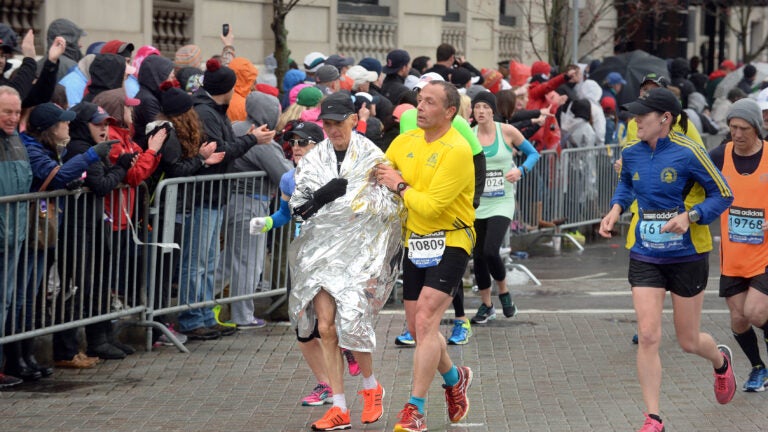
That last step on Boylston Street certainly feels like the end — but if you stop right after you cross the finish line, you’ll likely be sorry. That’s because after the marathon is over, the recovery begins. Here’s how to make sure you’re spending your time right in the hours and days following the big race.
Walk it out.
“Immediately after finishing the marathon, you want to continue walking,’’ says Ryan Sherman, M.S., a clinical exercise physiologist at Mass General. “Since you have been running for so long, most of your blood is in your legs, serving the working muscles. Therefore, stopping right after you finish running can make you feel lightheaded or even faint as the body tries to get blood back to the brain.’’ Walking for a few minutes can help circulate blood back to other parts of your body.
Fuel up.
“The post-marathon recovery should first focus on helping to rehydrate and restore electrolytes, and should also be low in fiber,’’ says Krista Austin, Ph.D., nutrition coach for 2014 Boston Marathon winner Meb Keflezighi. For the first three hours, focus on fluids with electrolytes. “ You will lose anywhere from 5 to 10 pounds during a marathon, so we’re probably talking about drinking 100 ounces of fluids before your body is ready for a meal,’’ says Austin.
You also want to make sure you get some carbs and a bit of protein in your prime recovery window of 30 to 45 minutes after the race. “This helps replenish the glycogen in the muscles and liver for later use,’’ says Jen Schwartz, M.D., a runner and sports medicine doctor at Beth Israel Deaconess. Foods that can start the recovery process without upsetting the stomach include Pediaylte, peanut butter and crackers, a low-fat turkey sandwich with nothing except meat and bread, and Popchips. Blood flow slowly returns to the gut after race, so you don’t want to overwhelm things or worsen gastrointestinal issues, Schwartz says.
After a few hours and proper hydration, you’re ready to process food again. It’s OK to go for your favorite meal, but stay away from overly fatty foods, says Austin. Instead of red meat, stick with light proteins like salmon and chicken, which are easier on the stomach and will help you sleep better, she says.
Cool off.
Muscle soreness lingers for one to three days after the marathon, a side effect of the repair process going on at a microscopic level within your muscles. The research on ice baths is mixed: Some studies suggest that ice baths do little for soreness and strength. But others suggest the practice can squash inflammation. Mahon’s in favor of the ice bath — for that very reason. “As soon as you get home, fill up a bathtub with cold water and add ice to your tolerance level but not colder than 55 degrees Fahrenheit,’’ he says. Soak waist-deep for 12 to 15 minutes. “This will reduce inflammation in all those muscles that you just used during the marathon. It will also speed up the circulation and lymphatic drainage process by getting fresh blood down to those fatigued areas.’’
Stretch it out.
Suffering from spasms post-run? Time to stretch, says Sherman. Just make sure to stick with active stretching so that you continue to promote circulation. You’ll also help free muscles from the metabolic waste that comes from such a long race, says Mahon. Don’t hold any stretch for more than 3 to 5 seconds. The goal is to do 10 to 12 reps for each muscle group and do two to three sets if needed, he adds.
Light activity will help to increase blood flow to your legs, which may help to remove toxins that were released due to muscle breakdown. A massage the day after the race can also help flush toxins, says Schwartz.
Skip the ibuprofen.
Trying to beat the soreness with ibuprofen may wind up causing pain to your kidneys since you’re already dehydrated, says Sherman. Instead, choose Tylenol right after the race: “It can help to relieve pain, but does not negatively affect the kidneys like ibuprofen.’’ After you’re fully hydrated, switch back. “Ibuprofen is an anti-inflammatory and may be more effective for treating muscle soreness during the post marathon week,’’ he says.
Build back slowly.
You’ve already done the hard work, so there’s no need for intense exercise in the days following a marathon. The evening of the race or the next day, try a gentle walk. The week after, rest or cross train gently. The next week, try easy running at a slower pace and gradually increase from there, suggests Schwartz. “You just don’t want to be completely sedentary as gentle blood flow to the area can help remove waste and bring nutrition to muscles,’’ Schwartz says.
Read more coverage of the 2015 Boston Marathon.




To comment, please create a screen name in your profile
To comment, please verify your email address
Conversation
This discussion has ended. Please join elsewhere on Boston.com