5 takeaways on the post-meeting Celtics
What we've learned about the team since players sat down to air their grievances.
COMMENTARY
It’s been a week since the Celtics’ much-ballyhooed team meeting, which followed a bad loss to the Bucks, and provided players with a 30-minute chance to air their grievances behind closed doors. Ultimately it ended with hugs, according to coach Brad Stevens, who characterized the experience as cathartic.
Since then, the Celtics have won two of three tilts — so has the meeting already started rendering results? Here are five takeaways from what the Celtics have shown since airing things out:
THE CONSISTENCY IS COMING
According to the players, addressing the inconsistency that has plagued the Celtics too often this season was a point of emphasis in the meeting – and thus far there’s evidence of movement in that direction.
In the loss to the Bucks that spawned the sitdown, Boston allowed Milwaukee to score 16 straight points to open a 26-point first-half lead it could never hack down to less than 10. Earlier that week the Celtics had managed just 41 second-half points against the Suns, one of the NBA’s worst defensive teams, and permitted the Pistons to seize permanent control by going four full minutes without scoring near the start of the fourth quarter.
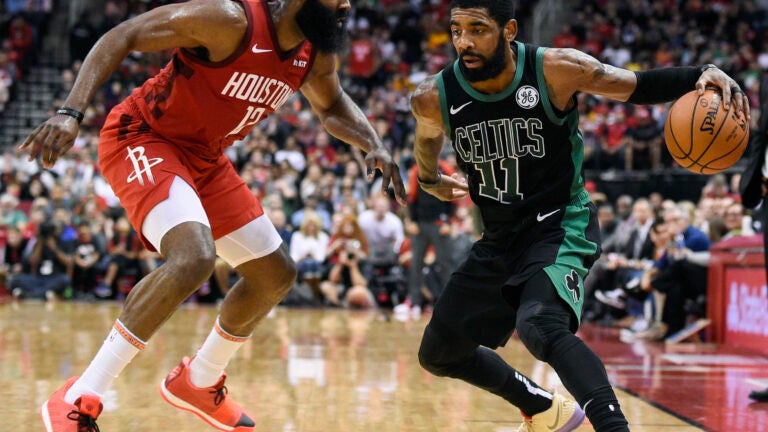
Runs are always part of the ebbs and flows on an NBA contest, and scoring surges come particularly quickly given the proclivity for the 3-point shot in the modern game, so there must be some preparation made for getting punched. Consistency comes in the way a team manages to punch back. On Christmas night, the Celtics got to overtime by answering each time the 76ers asserted themselves. Then, in Houston, they led for just 74 seconds all night but hung right with the Rockets until they couldn’t make James Harden miss over the deciding stretch of the second half.
Boston has scored at least 50 points in every half since its meeting, and has produced at least 24 points in 11 of the 12 quarters therein. The track record of Stevens suggests his team will generally deliver a consistent defensive effort, so if these Celtics can continue moving toward consistency on the offensive end – particularly in terms of maximizing individual minutes and collectively making things happen when the 3s aren’t falling – the results should follow.
SHARE THE BALL, SEE RESULTS
Over the course of those three losses that spoiled the gains of the eight-game winning streak that preceded it, the Celtics averaged fewer than 22 assists per game. That was down about 3.5 from their season average, so a correlation can be drawn between that dip and the fact those three games are the only instances since Nov. 24 that the C’s haven’t scored at least 113 points, and Kyrie Irving pointed to problems with ball movement after the loss to the Bucks
“At this point it comes down to cohesion, being able to trust the pass, trust what we have going on out there,” the guard told reporters that night. “Obviously some selfish play out there. … We have some really talented guys, but we’re better as a team sharing the basketball.”
Next time out, the Celtics totaled 30 assists on 43 field goals. Thursday night in Houston they assisted on 28 of 38 made shots. Against the Sixers, they totaled just 21 assists on 45 field goals, the first time in a month they assisted on less than half of their buckets, but survived on the strength of Irving’s 40 points and by capitalizing on the transitional opportunities created by Philly’s 19 turnovers.
What’s also worth noting about that Christmas classic was that Boston shot just 41.7 percent from the floor, its third-lowest field goal percentage since Thanksgiving. Was the lack of assists a result of a rough shooting night? Or do the shortage of assists reflect a stagnant offense that is forcing shots instead of making the proper pass? Against the Sixers, the ball movement wasn’t a glaring issue – but moving forward, as roles continue to emerge and evolve, it’s something to monitor.
ROTATION COMING INTO FOCUS
Surely there will be more tinkering, and last week’s insertion of Semi Ojeleye into the starting lineup serves to remind that matchups will occasionally dictate decisions. But it’s starting to look as though Stevens is settling into a more regular rotation.
Each of the last three games, Al Horford, Marcus Morris, Marcus Smart, and Jayson Tatum have joined Irving as starters. Tatum has started all 34 games this season, while Smart and Morris have been fixtures in the first five since Thanksgiving. Horford’s reinsertion came immediately after he returned from injury.
That configuration has played more minutes together than all but one assembled by Stevens this season, and the group has played well together. According to Basketball-Reference, it has outscored its opponents by more than 14 points per 100 possessions, and has recently been successful in getting the Celtics out to good starts.
Most noteworthy among that mix are the Marcuses – Smart adding his signature grittiness to a unit dripping with skill, and Morris seizing his chances to emerge as a core member of what this team is trying to accomplish. He’s shooting at a better clip than he ever has, he’s shown his versatility as a scorer, and he’s done almost everything at high efficiency. When Boston needs a basket, he’s as good an option as any they have other than Irving.
Ideally, and initially, Smart and Morris seemed to fit better off the bench. Stevens loves the energy Smart provides upon insertion, and Morris is a classic off-the-bench scorer capable of keying a second unit. But Boston has been better with them on the first team, while Gordon Hayward, Jaylen Brown, and Terry Rozier fill those reserve roles.
That part remains a work in progress. Those three were the centerpieces on the court when the Rockets took control of Thursday’s game in the late third and early fourth quarters, and Hayward has just made just two shots from the floor in each of the past three games. Rozier was a minus-16 in 15 minutes at Houston, the third straight game in which the C’s have been outscored with him on the floor. And after a couple of good defensive efforts, Brown finished Thursday night minus-22 despite scoring 18 points of his own.
If the rotation is indeed becoming established, perhaps that group will be more consistent, and more collectively effective, as they become more comfortable in their roles.
A HEALTHY HORFORD IS IMPORTANT
As Horford nursed a knee injury, the Celtics’ alternatives for his minutes looked mostly sufficient. Aron Baynes banged on the inside, Robert Williams blocked a bunch of shots, and Daniel Theis began to emerge as an offensive factor.
But since his return, the value of Horford – and keeping Horford healthy – has become apparent.
Baynes is out, Williams has been shuffled back to more a redshirt-type rookie season, and after a productive stretch, Theis struggled mightily at Houston. Horford, meanwhile, has resumed his role as the Celtics’ steadying force in the middle on both offense and defense, not quite filling up the stat sheet but bringing professionalism and reliability to the middle of what Boston wants to do at both ends of the floor.
The Celtics have survived rebounding deficiencies over the past few years, but this year their ability to clean the glass has been tied to winning on most nights. In wins they’re out-rebounding the enemy, but in losses they’re being out-rebounded, 49-42. Further, they’re giving up 2.5 more offensive rebounds per game in defeat, and Clint Capela provided a painful reminder of how impactful that could be during Thursday night’s loss to the Rockets. Houston pulled down 16 offensive boards en route to a 54-38 rebounding advantage. With that, the C’s are 2-5 this season when giving up at least 15 offensive rebounds, and 2-8 in regulation games where the opponent piles up at least 48 boards.
Horford won’t solve that by himself. But, as his time on the bench Thursday night painfully showed, compared to Boston’s other bigs he gives the Celtics their best chance of controlling the glass and commanding the area around the hoop.
THIS IS KYRIE’S TEAM … AND HE’S ENJOYING THAT
In an age where macho mugging and scary scowls are so often the visages of celebration, it was hard not to notice the smile persistently popping on to Irving’s face during Tuesday’s tussle with the Sixers.
In a week when he was the most open and honest mouthpiece about what needed to change in the wake of the team meeting, when he acknowledged that he, too, needs to sacrifice more to make things work, and when he continued to carry himself in ways consistent with his comments that he is committed to leading the Celtics to their next chapter of greatness, those smiles told a holiday audience that Irving has officially escaped the shadow of LeBron James. That he has his own team now. And that he’s enjoying the process of helping to lead it.
On the way back to the huddle for a timeout. As he was heading to the bench for a final time with 12 seconds left. As he was celebrating any of the dazzling moments that contributed to his monster night. He’s spent the month offering reminders that he’s among the handful of best players in the league, and since the team meeting he’s had exactly what the Celtics needed when they needed it – at least until Harden got too hot for anybody to keep up with on Thursday night in Houston.
The statistics suggest Irving has been one of the most impactful players in the NBA this season, and those are only getting better. But those smiles suggest even more reason to feel good about where the Celtics are going – both this season and beyond.