
What happened to the Celtics’ defense?
A top-10 unit last season now ranks among the worst defensive teams in the NBA.
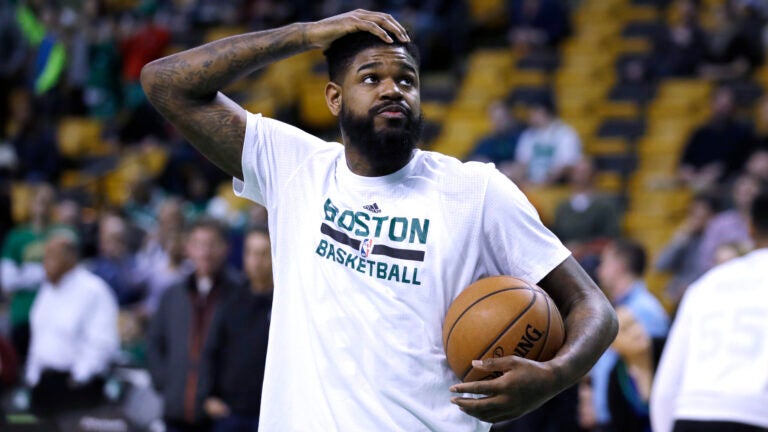
COMMENTARYThe Celtics entered the 2016-17 season with heightened expectations, particularly on the defensive end of the floor. The addition of Al Horford to a talented collection of perimeter defenders (Avery Bradley, Jae Crowder, Marcus Smart) created a belief that the Celtics’ defense would stand out among the league’s elite. “I feel like the sky’s the limit for us,” Avery Bradley said of the Celtics’ defense before the season began. “I’m hoping that we can be one or two in the NBA on the defensive end. If we all lock in and that’s our mindset going into every single game, I feel like it will not only help us win games but all our goals will come true being a top defense in the NBA.” While the Celtics are on a pace for a 50-win season, their defense has surprisingly proved to be more of an liability than a strength during that strong start. Boston has plummeted from the 5th spot in defensive rating last season (100.1 points allowed per 100 possessions) to 21st overall (106.6 points allowed per 100 possessions) this year entering play on Friday. Scoring is up across the league, which accounts for some of the drop off. Injuries to key contributors (Bradley, Crowder, Horford) have also played a factor, but that does not account for the team’s horrific numbers in the last month (29th in team defense since Dec. 27) as much of that stretch included a healthy core of the roster. All of this begs the question: What happened to the Celtics’ defense? And is there any fix looming on the horizon? I dove into the numbers to try to uncover some answers.A Change in PhilosophyIf you want to get to the root of the C’s defensive decline, you have to go all the way back to the 2015-16 season. While the Celtics finished among the league’s elite defenses for the entire campaign, the green saw some slippage after the midway point of the schedule. “Last year I thought we played our best defense early,” Celtics head coach Brad Stevens said last week. “We made a conscious decision to go smaller later, we became a better team, as far as wins and losses and offensively, but we dipped defensively in a big way. This started at the beginning of last year. But our numbers were so good that they held up.”The defensive metrics back up Stevens’ assessment. After the head coach opted to cut out David Lee from his team’s rotation and focus more on smaller lineups that spread the floor, the C’s numbers dipped. From February through the end of the regular season, the Celtics had a defensive rating of 103.8. That’s a mark that was still in the NBA top-10 over that stretch, but a sizable decline from their season rating of 100.9. Forced Turnover Drop OffThe small-ball defensive issues have been more dramatic this season, even after the inclusion of an elite defender like Horford. Outside of the small forward spot, the Celtics are arguably undersized at every position in the starting lineup. When Boston goes small (which has happened a lot), those problems are magnified even further. Opposing teams are shooting a bit better against the Celtics this year, but the bigger problem for Boston is a decline in forcing turnovers, dropping from third to 16th in the NBA in that department. “We just don’t have enough impact on the ball,” Stevens said earlier this week in Washington. “That’s the bottom line. We just don’t impact the ball enough, and I think that’s something that has been a strength of ours at times in the past. But for whatever reason we’re not doing that enough…We’re smaller. And that’s part of it. I think that we can be more aggressive with our hands. But I think that you’re going to have some of that [decline], probably.”The Rebounding Woes Got WorseLast year, defensive rebounding was the one glaring weakness for what was an otherwise superb Celtics defense. They grabbed 74.6 percent (26th overall) of all available defensive rebounds despite having one of the best rebounders in the league (Jared Sullinger) and an above-average rebounding wing (Evan Turner) at their disposal. One year later, both of those names are out of the equation and their rebounding has not been adequately replaced. Horford’s rebounding has been on the downturn for years and Turner’s replacements have neither the size (Terry Rozier) or rebounding instincts (Jaylen Brown, Gerald Green) to replace his contributions in that area. The end result is a team that ranked dead last in the NBA with a 73.9 percent defensive rebounding rate in 2016-17 entering play on Friday. “We’re going to have to get, get bodies on people every night, and there’s some nights where we’ll get rebounded over the top,” Stevens said Wednesday night. “We just can’t get killed, and that’s the bottom line. We just can’t get killed on the glass.”The year-over-year rebounding decline is not as dramatic as you might have expected, but the problem now is the Celtics are not making up for that deficiency in other areas of their defense. If you’re not forcing turnovers or limiting good looks at the basket at an elite level, giving teams an extra opportunity to score nearly one out of four times down the floor is not a recipe for a good defense. Put it all together and you have a team that is unexpectedly winning in spite of its defensive shortcomings. The question for Danny Ainge as the trade deadline looms is whether he can adequately help his team on the defensive end with the size and length it needs, without taking too much away from its offensive firepower (7th in NBA).All statistical information provided by Basketball-Reference.com unless otherwise noted





To comment, please create a screen name in your profile
To comment, please verify your email address
Conversation
This discussion has ended. Please join elsewhere on Boston.com