
The Celtics have a 3-point shooting problem (again)
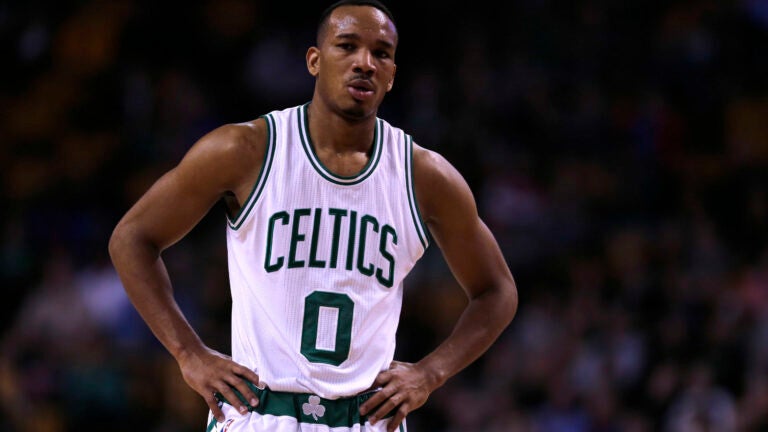
Three-point shooting has been a recurring problem for the Celtics during the Brad Stevens era. Boston finished 28th (33.3 percent) in the league from beyond the arc in 2013-14, not exactly a surprise given the team’s unbalanced roster in year one of the rebuild.
Despite last year’s midseason additions and surprising second half turnaround, the Celtics actually regressed slightly with their perimeter shooting, hitting a meager 32 percent from downtown.
Danny Ainge elected to bring back the vast majority of last year’s 40-win roster, along with big men: Amir Johnson and David Lee. One area he failed to adequately address through offseason additions is the team’s perimeter shooting woes. First-round pick R.J. Hunter is arguably the only “pure’’ shooter that was added to the fold, with Ainge betting on seeing improved shooting numbers from his young core in the meantime.
That progression has not been seen in the opening seven games of the 2015-16 season. In fact, the situation has gone from bad to worse for Stevens, who has watched his team connect on just 28.4 percent of their 3-point attempts thus far.
The subpar shooting has been a major factor in Boston’s slow 3-4 start out of the gate, as the team ranks just 23rd overall in offensive rating, a sharp contrast to its elite defense (5th in NBA) out of the gate.
Is the poor shooting just a slump, or are we seeing even more regression from last year? And who are the biggest culprits so far? Let’s examine the numbers to shine some light on the problem.
THE GOOD
Jared Sullinger has been the team’s most consistent contributor on both ends of the floor this year and that solid play has carried over to his shooting. He’s knocking down 44.4 percent (8-of-18) of his attempts so far, a stellar jump from his 28.2 percent career mark. No one expects Sullinger to sustain his current numbers, but if he can maintain numbers around the league average (34-36 percent) it would work wonders for Brad Stevens’ offense.
THE BAD
Outside of Jonas Jerebko (2-of-4) and Sullinger, no one else on the Celtics roster is connecting on more than 33.3 percent of its 3-point attempts. Even with a limited sample size, those numbers are alarming in a league where an average player hits 34 percent of those shots from distance.
Here’s a definitive look at the carnage thus far:
Avery Bradley: 33.3 percent (9-of-27)
Evan Turner: 30.8 percent (4-of-13)
Jae Crowder: 26.9 percent (7-of-26)
Isaiah Thomas: 25.6 percent (10-of-39)
Marcus Smart: 25 percent (5-of-20)
Amir Johnson: 25 percent (2-of-8)
Kelly Olynyk: 22.2 percent (4-of-19)
R.J. Hunter: 22.2 percent (2-of-9)
Terry Rozier: 12.5 percent (1-of-8)
Needless to say, Stevens has been busy in these first seven games trying to find lineups that can provide some shooting consistency. Without it, defenses are able to pack the paint more and limit Thomas on his drives to the basket. Ainge spoke about the domino effect of the shooting woes in an interview with 98.5 The Sports Hub’s Toucher and Rich show on Thursday morning.
“Teams are throwing different defenses at us that we’re not used to seeing, and it’s putting a lot of pressure on Isaiah. As a team collectively, we have to help him. We have to start hitting shots. If we don’t start hitting outside shots and opening the floor for Isaiah, we’ll be in trouble,’’ Ainge said.
The early slumps have also caused players to be more hesitant to pull the trigger on perimeter shots. Evan Turner talked about the repercussions of that tentativeness following the team’s loss to the Pacers Wednesday night.
“We passed on some shots we should have took which kind of bit us a little bit,’’ Turner explained. “I think we just have to really trust in our shots, trust in our plays and take the right shots. Sometimes passing up a wide open shot is going hurt the team more than taking a tough one.’’
With 75 games remaining in the season, the Celtics still have plenty of time to correct the issue. Some guys have proven track records (Thomas, Bradley, Johnson) and will likely revert closer to their career averages. Others like Smart and Crowder need to show some consistency and loom as threats to opposing defenses for Boston to be successful.
Currently, Boston is taking the sixth-most 3s out of any team in the NBA on a nightly basis. When you aren’t making 72 percent of those shots, you become a pretty easy team to defend. With Stevens’ offense regularly producing open looks from the perimeter, it’s on the players to turn things around before Ainge starts searching for some solutions on the trade market.
Photos: The greatest Boston Celtics of all time
[bdc-gallery id=”118766″]



To comment, please create a screen name in your profile
To comment, please verify your email address
Conversation
This discussion has ended. Please join elsewhere on Boston.com