
The Celtics’ best move this offseason was the one they didn’t make
COMMENTARY
In order to complete a successful rebuild, a franchise needs to show patience and make wise choices with its assets. To date, Danny Ainge has demonstrated the ability to do both since he elected to deal away Paul Pierce and Kevin Garnett in favor of rebooting the Celtics in the summer of 2013.
It’s hard to make a negative case against any of Ainge’s major rebuilding moves so far. He received an historic haul for Pierce and Garnett from the Brooklyn Nets. He garnered solid returns for Rajon Rondo and Jeff Green before the stock of both players dropped in their new destinations.
Ainge has also leveraged trade exceptions into useful rotation players like Tyler Zeller without having to sacrifice assets, and he’s used that salary cap flexibility to accumulate a hefty stockpile of future draft picks from trade partners as seen below.
[fragment number=0]
Until this point, the Celtics have hardly dipped into that treasure chest of picks. Boston gave up a protected first-round selection (via Cleveland) to land Isaiah Thomas from Phoenix, but the remainder of those picks have either been used in the draft or maintained for the future.
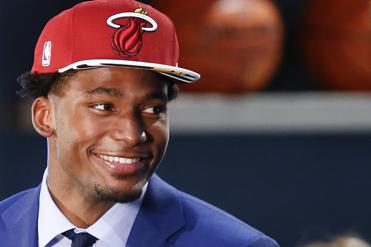
Even though the Celtics’ cupboard remains mostly full now, Ainge nearly used a notable chunk of the team’s assets on draft night. Boston was reportedly attempting to move up to the No. 9 spot in order to draft former Duke small forward Justise Winslow. Chris Forsberg of ESPNBoston reported last month that the Celtics were offering four first-round picks and a pair of second-round picks for the opportunity to land Winslow, but the Hornets turned down those overtures to select Wisconsin big man Frank Kaminsky.
That reported offer came back into the spotlight this week, as <a href=”
http://g
Zach Lowe of Grantland reported additional specifics about Boston’s monster offer on which Charlotte passed. The pieces included the 16th pick, No. 15 (acquired in a prearranged contingency deal with the Hawks), one unprotected future Brooklyn pick, and a future first-rounder from either the Grizzlies or Timberwolves, according to sources familiar with the talks. Two more second-round picks may have been included in the offer, as well.
While many have openly questioned why Michael Jordan and the Hornets would turn down a monster offer, few have questioned Ainge’s willingness to put so many assets on the table in an attempt to move up just seven spots in the draft. As the offseason has unfolded, it has become evident that the Celtics likely dodged a major bullet here with this deal’s failure. Let’s try to investigate why.
The Celtics were paying too high a price to move up.
Every NBA Draft is different. The talent level of college prospects varies every year. Team needs evolve as well, so you never quite know what the price is going to be to slide up a few spots in the draft.
With that said, the Celtics dug a little too deep into their pockets to produce sufficient assets to entice the Hornets. In fact, looking at a couple couple recent comparable draft night trades helps gauge how much the Celtics offer stood out. (Via: Basketball-Reference)
— 2014: Orlando Magic trade the No. 12 overall pick (Dario Saric), a 2015 second round pick and a future protected first-round pick to the Philadelphia 76ers for the No. 10 pick (Elfrid Payton).
— 2014: Chicago Bulls trade No. 16 (Jusuf Nurkic) and No. 19 (Gary Harris) and a 2015 second round pick to the Denver Nuggets for the No. 11 pick (Doug McDermott) and Anthony Randolph (small salary dump).
— 2013: Minnesota Timberwolves trade No. 9 (Trey Burke) to the Utah Jazz for No. 14 (Shabazz Mohammad) and No. 21 (Gorgui Dieng).
Compare those to the specifics of the Celtics offer for No. 9 in June:
–No. 16 pick (own)
–No. 15 pick (via Atlanta). The Celtics likely would have given up a young rotation player (Kelly Olynyk? Jared Sullinger?) and/or a future first-round pick to acquire this pick.
–-Unprotected future (2016 or 2018) Brooklyn pick. We’ll get into this selection more later, but any future pick of a non-contender is a hot commodity. This is arguably one of Boston’s top trade assets, including members of the roster.
–Future first-round pick from Memphis or Minnesota (both protected).
Clearly the Celtics valued Winslow very highly, perhaps as one of the best players in the whole draft to be willing to pay that kind of price. However, when you compare that package to what Utah gave up for No. 9 in 2013 or what Orlando gave up for No. 10 in 2014, it’s evident that Boston was sacrificing too much here, particularly because of the presence of the Brooklyn pick.
The Increasing Value of the Brooklyn Picks
The Celtics did not know how much the Nets’ future would shift on draft night, but it’s safe to say the revelation that point guard Deron Williams wanted out of New York may have swayed the opinion of Boston’s front office.
The Williams buyout did help the Nets cut costs and clear out salary room for the 2016-17 season and beyond, but I’d argue that this flexibility will not be as useful as GM Billy King might believe it to be.
With the salary cap skyrocketing next summer, nearly every team will have ample money to spend, and it’s hard to believe top players will be lining up to play alongside a core of Brook Lopez and Thaddeus Young. Joe Johnson will be a free agent in 2016 as well, and he may be looking to suit up for a contender as he enters his mid 30s, rather than re-signing with a mediocre Brooklyn roster.
The Nets have no incentive to tank, but they don’t have the means or young talent to make strides in an improving Eastern Conference. Knowing this, the Celtics should have been hesitant to move any of these selections for an unproven young talent, since these potential picks are Boston’s best chances at landing selections in the top half of the NBA lottery over the next three years.
If Boston is going to land a potential star piece like Kevin Love or DeMarcus Cousins via trade down the road, it’s not going to happen without promising young talent or elite picks to offer. The Celtics don’t have any young All-Star talent (yet) on the roster, so a bunch of potential lottery picks from Brooklyn make up Ainge’s most appealing asset at this point.
Sacrificing a healthy portion of that pick collection for the rights to Winslow would have been a risky decision. It’s too early to say definitely that Winslow was not worth Boston’s offer, but the 6-foot-6 wing has offensive limitations as a player (inability to create own shot, inconsistent outside shooting) make him far from a sure thing to develop into a core contributor on a playoff team down the line. He’ll be a rotation piece, but on a Celtics team that needs help scoring the ball consistently, he won’t be a reliable option for awhile.
The Celtics understandably wanted to make something happen on draft night, knowing it may be damaging to hang onto all of these assets for too long. Still, even Ainge admitted, after missing out on the deal, that he wasn’t broken up about it.
“Maybe we were going too hard at it,’’ Ainge said when asked about the team’s attempt to move up on draft night. “There was a time when I thought, ‘Whoa, this is getting a little out of control. We’re putting a lot of eggs in one young player’s basket.’ So I’m not frustrated. In the long run, maybe it’ll be for the best.’’
With the rebuild advancing ahead of schedule, it will remain a challenge for Celtics front office to stay patient and pick their spots as they attempt to climb up the Eastern Conference standings. Showing progress may help them become a relevant suitor in the eyes of free agents next summer. Luckily, Boston achieved upgrades by acquiring David Lee and Amir Johnson without sacrificing any key roster players or picks.
Still, the team’s best move of the summer may have been avoiding a blockbuster deal for Winslow that would have shrunk Ainge’s options on the trade front as the rebuild continues.



To comment, please create a screen name in your profile
To comment, please verify your email address
Conversation
This discussion has ended. Please join elsewhere on Boston.com