


Address Newsletter
Our weekly digest on buying, selling, and design, with expert advice and insider neighborhood knowledge.
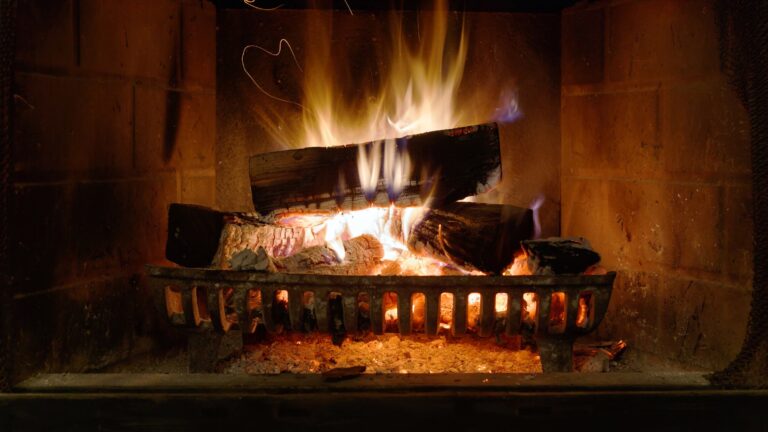
Nothing says cozy winter like a roaring fire. They are a lot of work in terms of maintenance and cleaning, but there is nothing like the warm crackle of wood — especially when sharing it with your family or with someone special. In this article we will look at some basic safety tips for wood-burning fireplaces as well as some gas alternatives.
The most important safety routine is chimney cleaning. This is not something that most — if any homeowner — can do properly, so hire a professional chimney sweep. Over time, all wood-burning fireplaces will leave creosote residues inside the chimney flue. Some woods will leave more than others — for example, pine leaves more than maple hardwood.
How often you have the chimney swept also depends on how often you use it. If you only have a few fires a season for special occasions, you can go years in between sweeps. If you burn wood regularly, yearly sweeping is recommended. There was a time that we had a chimney and fireplace division as part of Charlie Allen Renovations, and we would advise clients to burn a creosote-burning log just before a chimney sweep. The log would help loosen the buildup inside the flue, making for a better cleaning.

Many chimneys also have subpar flue liners that can be inspected during cleaning. Chimney sweeps can also inspect and clean the flues that are being used for your heating and hot water. These typically won’t have the buildup of a fireplace flue, but they can check on connections, including sealing flue pipe joints in the basement. It’s all time well spent since any appliance flue pipe issues could lead to carbon monoxide spilling into the house.
The damper that closes and opens when you are having a fire is something that should be inspected or changed completely. Many homes in New England still have the “throat damper,” which is a large steel flap just above the firebox that has a control on the outside of the fireplace. These are outdated and often do not open all the way anymore, which can lead to the chimney not drafting properly.
If you want to keep the throat damper, have the chimney sweep inspect that, too, and make sure it is operating as intended. For years, we have recommended taking those out and installing a spring-loaded pop-up damper at the top of the chimney. With the throat damper removed, you get a better draft out of the chimney, which is safer and makes for a nicer fire. The pop-up dampers will have a chain and a small wire handle that opens and closes the damper at the top of the chimney.
Not everyone can or wants to use the fireplace or chimney that was built along with the house. For those clients, we suggest a gas fireplace insert. The insert is a smaller, self-contained fireplace that fits inside the existing firebox. These need to have a gas line brought up to them, typically from the basement. The air intake and flue exhaust are PVC pipes that run directly outside the house or up through an existing chimney. The installation is straightforward, and together with the gas line is no more than a two-day project. They come in a variety of shapes and styles, from contemporary to traditional.
A cousin to the full gas insert is a gas log set. This is a set of logs on an andiron that just sits inside the firebox. Because these require a large enough room and adequate venting, they can be tricky, and a professional needs to do the calculations on the best fit, The air intake comes from the room itself, and the venting typically requires installing a pop-up damper. These can be quite nice, and if all the calculations work, they give a much more realistic loom to your existing fireplace.
It should be noted that neither the gas insert nor the gas log set needs to have the hearth extension or fireplace rug in front. Wood flooring can run right up to the fireplaces.
Finally, there is the gas-fired wood stove. These are a great option for a corner of a room, but they do take up a bit of real estate and in most cases, they have to vent directly out through the back of the unit. This can make placement a little tricky depending on proximity to windows. Like the other gas alternatives listed above, these can sit directly on the floor and do not need a hearth extension — although one can be added for ambience.
All to say, there are lots of great options out there to help you enjoy the glow of a fire when celebrating the holidays!
Mark Philben is the project development manager at Charlie Allen Renovations in Cambridge. Send your questions to [email protected]. Questions are subject to editing. Subscribe to the Globe’s free real estate newsletter — our weekly digest on buying, selling, and design — at Boston.com/address-newsletter.
Our weekly digest on buying, selling, and design, with expert advice and insider neighborhood knowledge.





To comment, please create a screen name in your profile
To comment, please verify your email address
Conversation
This discussion has ended. Please join elsewhere on Boston.com