
Address Newsletter
Our weekly digest on buying, selling, and design, with expert advice and insider neighborhood knowledge.
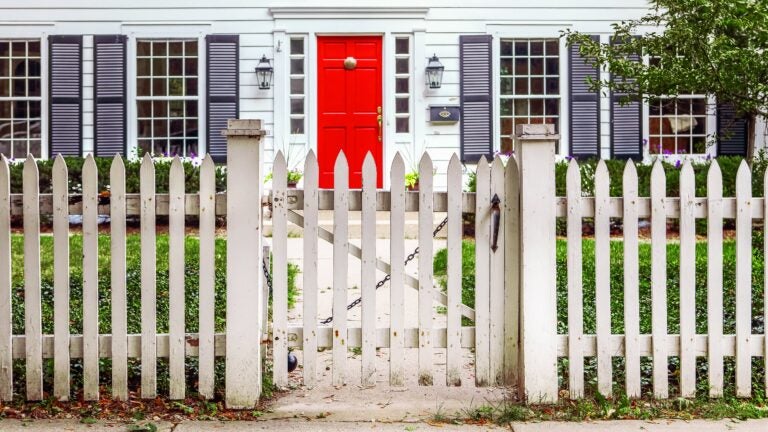
In 2020, just as the pandemic was taking hold, Luke Fraser purchased his first home in Framingham. Its large yard and close proximity to conservation land made it a perfect place to raise his new puppy. Fraser enjoyed spring weekends gathering supplies and working on his outdoor space. It all just seemed like something he was supposed to do.
“You’re saving to buy a house … because that’s just a standard you grew up with,” Fraser said.
But as life returned to a new normal, he missed being close to friends and family in Boston. After a few years, Fraser decided to invert what had seemed automatic and return to renting. It’s a different kind of real estate flip — one shaped by market factors, family circumstances, or the desire to just loosen one’s foundation for a while.
”I was really going back to the standards in my head of, like, when do you go from buying a house at my age to selling it and renting?” said Fraser, 35, who now rents in Charlestown. “That’s not what you’re supposed to do, right? You’re supposed to buy the bigger house.”
It’s an expectation shared broadly.
“Cultural context when it comes to renting versus buying a home is important,” said Rekha Sidhu, 45, who runs a communication agency. A first-generation Indian immigrant, Sidhu was born in England and moved to Boston in 2009. She owned a home in England with her ex-husband, which they eventually rented to tenants after they moved to the United States. In 2020, they purchased a South End condo to get more outdoor space. And through job and relationship changes, Sidhu again chooses to rent, citing flexibility as the higher value feature.
“I’ve been much happier in the last 15 years of my life as a renter rather than as a homeowner,” Sidhu said.
Most interviewed say they don’t miss the expensive and time-consuming trappings of home ownership. Prices continue to rise statewide, and first-time home buying is at an all-time low.
“The money I’m putting into this property every month with my rent, I’m not going to see it come back to me,” Sidhu said. “But I also am not liable when the shower breaks, or fireplace breaks — I just have to call my landlord.”
Many former homeowners now renting who spoke with the Globe described high prices driving them to buy farther away from work and family.
“As the world started opening back up, and [I felt] my social life changing a little bit, I was like, ‘Wow, I miss being in the thick of it; I miss being around people,” Fraser said.
The newfound flexibility can be refreshing, offering a clean slate.
David Graham, 46, said he married early in life, and prices drove him and his wife to buy in Hubbardston — more than 70 miles west of Boston. But after the marriage ended, Graham rented in Westford — about 35 miles from Boston, where his technical marketing office is located. It’s also served as a convenient place to host his high school- and college-aged daughters when they visit. He now splits his time between Massachusetts and a farm in Ireland — where his current wife lives — and is forming plans to relocate there. Meanwhile, renting is offering him some fresh air and solitude in between life stages.
“I kind of look at this as: This is my place to wreck,” he said. “It’s my place to screw up and to do stupid [stuff]. “It’s been a space to grow up, right? I think that’s been critical for me.”
To break the choice down to data points after attending more than 40 open houses, Kevin Vora, 43, who works in finance at Fidelity, built a comparison calculator site that projects long-term costs between owning and renting. Vora, who now rents in a Boston suburb with his family, saw owning a home as a poor financial investment compared with stocks.
“It’s really challenging, because I feel social pressure, and as well as pressure from family and parents, that we should buy a house. … That’s the measure of success,” Vora said.
He acknowledged the decision often comes down to more than just financials: The site also offers a tool to consider other factors. And for some, that territory — one in which stability, independence, and emotions all factor — is a trickier one to navigate.
Massachusetts has long been a national anchor for academic hiring, but once here, finding housing can still present a big challenge. While a graduate student in Indiana, Zachary Payne, 34, purchased a three-bedroom home with half an acre of land for $120,000. After accepting a job here, he sold that home and now rents in Chelmsford — a 30-mile trip to Boston but just a 7-mile hop to his job in Billerica.
“Buying here just seems basically not possible on my current salary,” Payne said. “I’m looking at houses that were the same as mine [in Indiana], basically for four or five times the price.”
An environmental chemist, Payne said he is concerned about ongoing job security because of federal funding cuts in scientific research.
“I’m unsure about my career position as a senior scientist, and I definitely do not want to blow through my savings for a down payment in the near future to purchase a home because of that,” he said.
Though he does not feel threatened by displacement, Payne said something about renting still feels less secure.
“Without a home, there’s not really any permanence,” he said.
That feeling can last longer than expected.
In 2020, Alex Schwartz, 33, and his wife moved from Portland, Ore., to Massachusetts, selling the home they had remodeled. They rented a loft in Easthampton — a location they thought would be temporary. Though its square footage is roughly equivalent to their Portland home, Schwartz said its layout feels much different. The garden is now a window box. And there’s more.
“There’s some psychic difference in knowing it’s your place and you own it versus being a renter. … That our rent could go up at any time,” Schwartz said.
Fraser thinks home buying will return to his sights eventually, but for now, he’s enjoying leaving the house to see people.
“I kind of like that my era of projects and Home Depot is on pause,” he said. When it comes to his living space, he’s limiting what he calls his “zone of control.”
“If I owned this place, I would be thinking about renovating the bathroom, in the kitchen, and doing the math and saving for that and planning for it, but I just don’t,” he said. “That’s not my job anymore.”
He isn’t moving quickly to take on what he anticipates could be a $5,000 to $6,000 monthly payment as a single person.
“It’s been about really checking my motives and not doing something because you think you’re supposed to do it,” he said.
Our weekly digest on buying, selling, and design, with expert advice and insider neighborhood knowledge.




To comment, please create a screen name in your profile
To comment, please verify your email address
Conversation
This discussion has ended. Please join elsewhere on Boston.com