
Address Newsletter
Our weekly digest on buying, selling, and design, with expert advice and insider neighborhood knowledge.

Cambridge residents will have at least two opportunities to learn about and weigh in on the proposal to end exclusionary single-family zoning in the city.
The city is hosting an online information session on Thursday, Oct. 24, from 5:30 to 7:30 p.m. The meeting will be held via Zoom, and you can register on the city’s website.
The City Council will host a public hearing on the matter on Tuesday, Nov. 12, starting at 6:30 p.m., according to the Community Development Department’s website.
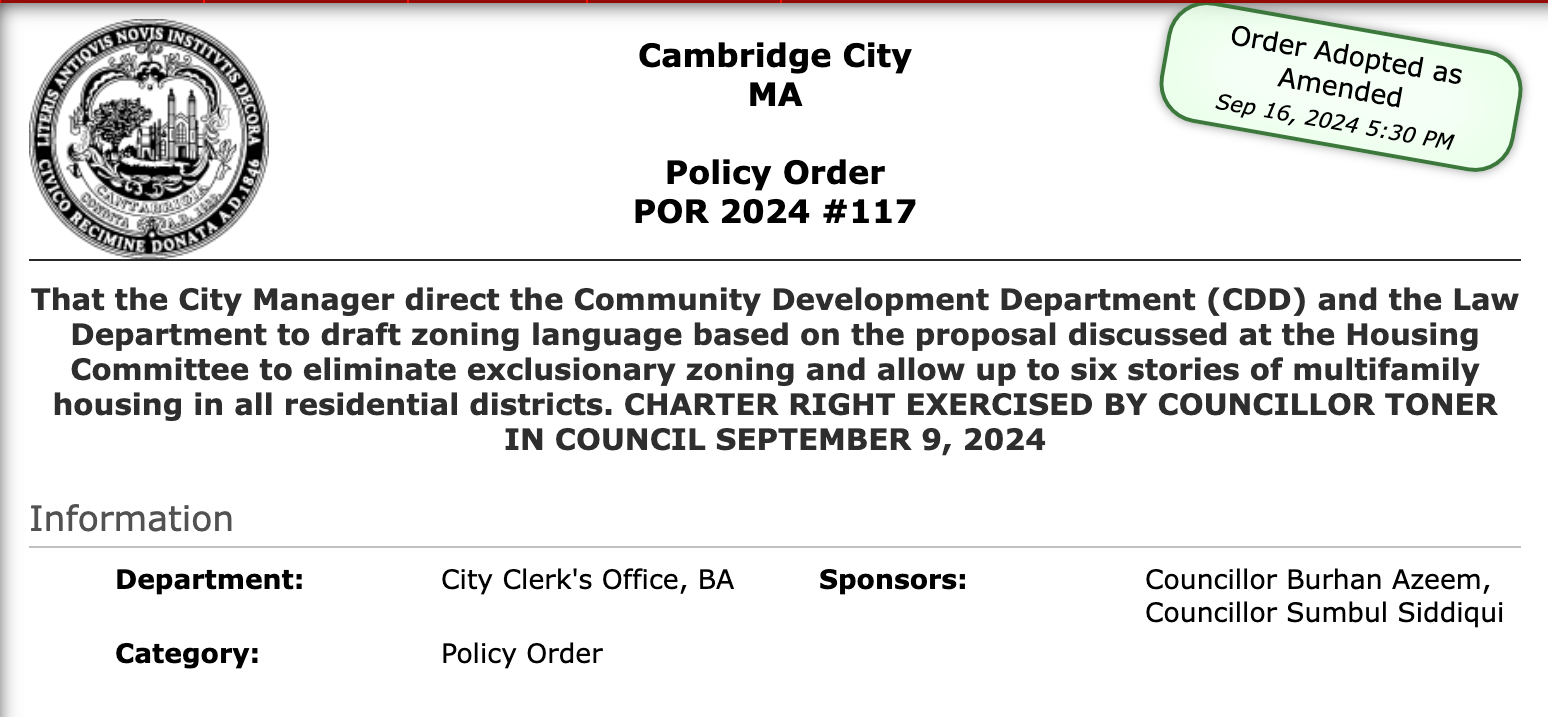
The push to allow multifamily zoning throughout Cambridge cleared another hurdle on Sep. 30, with an 8-1 City Council vote that sent the proposal to the Ordinance Committee.
In March, the City Council asked the Community Development Department and Housing Committee to create zoning language that promotes multifamily housing development, according to the Community Development Department.
“The purpose is to address the housing crisis that our city and our region is grappling with,” said Iram Farooq, assistant city manager for community development. This zoning change would facilitate the construction of more housing, particularly in the multifamily sector, Farooq added. “It also creates more affordable housing.”
City Councilor Sumbul Siddiqui, who is also cochair of Cambridge’s Housing Committee, said the goal is to allow multifamily housing developments throughout the city. “We want to focus on getting more inclusionary housing, which is a way to keep affordable housing in the community,” Siddiqui said.
City Councilor Burhan Azeem agreed. “Let’s say you want to build a triple-decker. You should be allowed to build one if you want to,” Azeem said, adding that this zoning change has been “a long time coming.”
He said the goal of this proposal is to build 5,000 units. Roughly 920 would be deemed “affordable.” This, he said, will increase the number of homes available and with hope make it easier for renters to afford housing.
This proposed change would also increase height limits and allow developers to construct multifamily buildings up to six stories, said Jeff Roberts, the city’s director of zoning and development.
“In Cambridge, we have size thresholds where in different districts if you are building more than 12 units, you might need to get a special permit. In some places if you are building more than, say, 20 units, you need to get a special permit. We are changing all of those rules,” Roberts said.
Siddiqui said it could take years, even decades, to see the full impact.
“I don’t think we’re going to see something overnight, and all of a sudden our city has six stories everywhere,” Siddiqui said.
Azeem said this proposal is meant to inform people what they are allowed to do, and not necessarily an indication of what they will do.
Roberts said the process typically takes several months: to schedule the hearings, hold the hearings, and then vote on the proposal.
This is what the zoning language suggests:
According to the Community Development Department’s website, the goals of the proposal are to:
The proposal would not ban the construction of single-family homes in the city.
In 2019, Minneapolis approved a “2040 Comprehensive Plan” and became the first large city in the nation to end single-family zoning, according to a report by the nonprofit Bipartisan Policy Center.
California had a similar go at ending single-family zoning. In 2021, a Senate bill was passed that ended single-family-home-only zoning in California. Earlier this year, a County Superior Court judge ruled that this law is unconstitutional, the Los Angeles Times reported on April 29.
The Cambridge Housing Justice Coalition, a group of the residents, workers, and activists, has expressed concerns about the city’s multifamily zoning proposal.
“Supporters of ending exclusionary zoning and building more private market-rate housing acknowledge that new housing will be very expensive, but they argue that increased supply will lead to lower rents for low-income residents in the short- or midterm,” the group said in an essay on the Cambridge Day’s website.
These claims are not backed by strong evidence, the coalition wrote, alleging that building new market-rate housing is often linked to more displacement and an increase in corporate ownership by entities that are not accountable to their tenants or the community.
“We agree that exclusionary zoning should be eliminated, but only with mechanisms in place to create affordable housing for the people most in need: those making less than 50 percent of AMI(Area Median Income),” the coalition wrote.
Our weekly digest on buying, selling, and design, with expert advice and insider neighborhood knowledge.





To comment, please create a screen name in your profile
To comment, please verify your email address
Conversation
This discussion has ended. Please join elsewhere on Boston.com