



Address newsletter
Get the latest news on buying, selling, renting, home design, and more.
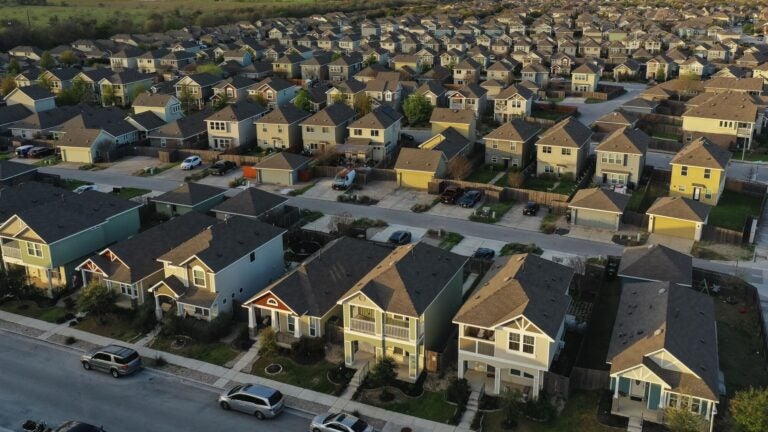
Millennials are ditching the city for the ’burbs, and it may not be just another pandemic trend.
Researchers at the Harvard Joint Center for Housing Studies reported millennials are leaving urban areas at a rate similar to previous generations, even though they’re living in the city at a greater rate than Baby Boomers and Gen Xers did at their age.
“And the way that those can both be true,” said Riordan Frost, a senior research analyst at the center and one of the study’s authors, “just because it’s such a large generation. And a lot of suburbs are going to kind of feel the effects of a lot of these millennials moving, but there can kind of still be this like smaller share that stay behind in these kind of urban areas” or move to different urban areas.
The researchers used U.S. census data to study migration patterns. Millennials, it said, opted to leave areas ripe with amenities such as restaurants and parks for those with larger and less expensive housing.
“Millennial suburbanisation seems to be associated with housing affordability and demand for larger homes,” the study reads, “as the population shift was more pronounced in the metros that have lower housing affordability and a lower share of larger homes in their central urban neighbourhoods.”
The survey results come after Massachusetts real estate prices broke records in January. That month, real estate marketplace Point2 reported that it’s harder for young prospective home shoppers to buy a property in Boston than in all but two major Northeast cities. The report ranked Boston No. 88 out of 102 major cities.
According to the Harvard center’s “Urban Studies” paper, Boston is within the 10 most expensive metro areas and 20 metros with the smallest share of housing with three or more bedrooms in central urban neighborhoods, out of the U.S.’s 50 most populated metropolitan statistical areas.
“What we were looking at specifically with … bedroom size and affordability is that in metro areas like Boston,” Frost said, “that have a very unaffordable city center—that have a city center that doesn’t really offer kind of what we would call like maybe family-sized units, like larger units—then you see even more suburbanization in those metro areas than you do other metro areas.”
Still, millennials drove a “back to the cities” movement that extended from the 2000s to the early 2010s, Frost said, populating some urban areas that were declining in the later parts of the 20th century. Scholar Markus Moos came up with a hypothesis that the cities “youthified” to attract and retain young adults, Frost said.
“And that is actually something that we talked about in our paper as a reason why they might not be as good at retaining millennials now,” he said, “ as their kind of needs change because the cities kind of youthified and have smaller apartment sizes and amenities more targeted towards young adults.”
The researchers categorized neighborhoods by their degree of “urban or suburban character as well as their geographic centrality or peripherality within metropolitan areas,” the study reads. They then identified those where the population of millennials grew the most and compared the trends to previous generations, such as Baby Boomers and Gen Xers.
“While it is tempting to link these millennial population gains and losses with the recent media narratives of an unprecedented urban exodus, the suburbanisation of early millennials in the 2010s is similar to that of Gen Xers in the 2000s and late baby boomers in the 1990s,” the study reads.
The suburbanization trends noted in the media after March 2020 pre-existed the pandemic, Frost said.
“A lot of people pointed to the pandemic and said like, ‘Oh, it’s the reason for X, Y, and Z different migration trends,’” he said. “The pandemic definitely had an effect on migration, but there were a lot of kinds of pre-pandemic trends that just were maybe accelerated in the pandemic and just … continued in the pandemic.”
Gen Z moved into urban areas behind millennials, Frost said, which fits into Moos’s idea of “youthification.” The study noted that as older generations move out of city centers, new ones move in.
Amenities grew in the suburbs that millennials moved to, the study said, although not implying that the generation caused the ballooning options of establishments like restaurants and parks in these communities.
“If … there’s demand to kind of have similar types of amenities” as cities, Frost said, “then I could really see that being really affecting these kinds of suburban areas and making them more kind of amenity-rich and making it so that … businesses or whatever want to go to kind of meet people there.”
The study said millennials will shape neighborhoods for years to come, “and planners will likely need to encourage affordable, right-sized housing and amenity development to attract and retain this population.” Frost said the MBTA Communities Act marked some progress in Boston’s suburbs.
“But a lot of these areas … don’t have a lot of inventory,” Frost said. “There’s a lot of these areas [that] have not really been building a lot of housing which is just gonna force people to go even farther out.”
Get the latest news on buying, selling, renting, home design, and more.





To comment, please create a screen name in your profile
To comment, please verify your email address
Conversation
This discussion has ended. Please join elsewhere on Boston.com