
‘Cool pavements’ could reduce summer heat by 3 degrees in Boston, MIT study finds
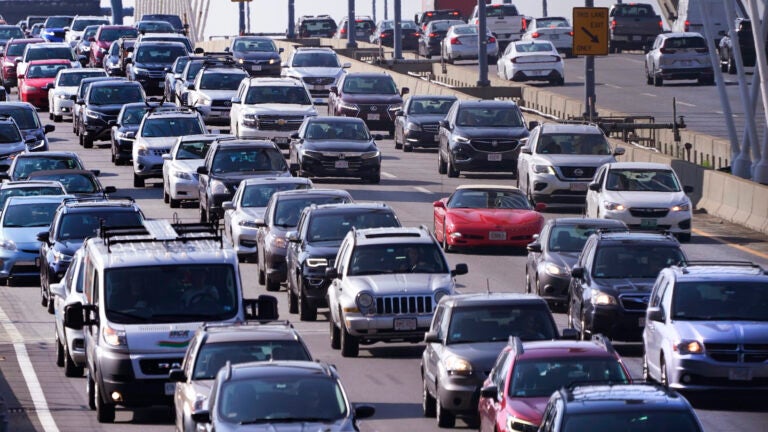
Record-breaking heat waves this summer have made walking outside in cities almost unbearable for many residents. Not only is the weather itself scorching, but the asphalt used on roads can heat up so much that doctors have warned pedestrians are getting burned by the surfaces that can reach 170 to 180 degrees Fahrenheit under a baking afternoon sun.
In order to counter the rising extreme temperatures on paved surfaces, researchers at the MIT Concrete Sustainability Hub (CSHub) examined using ‘cool pavements’, which they found emit less heat by reflecting more solar radiation.
The main objective of the study, led by postdoctoral associate Hessam AzariJafari, was to assess the effectiveness of cool pavement strategies for reducing the temperature and urban heat island effects in Boston and Phoenix, as well as assess how they could help with greenhouse gas mitigation in the cities. In both cities, researchers observed and tested three different types of cooling techniques on pavements.
In Boston, they found that replacing asphalt pavements with cool pavements would reduce the air temperature in the summer by 1.7 degrees Celsius (or 3 degrees Fahrenheit), while in Phoenix it would be reduced by 2.1 degrees Celsius (or 3.7 degrees Fahrenheit). They also found the cool pavements would reduce the carbon dioxide emitted in the cities, improving the impact of cars on climate change and lowering carbon footprints.
“Our group is generally trying to push the boundaries of how to do a better job of understanding the environmental impact of technology choices in buildings and infrastructure, that’s what we do,” Randolph Kirchain, co-director of MIT CSHub, told Boston.com. “And so this was just sort of the next biggest challenge.”
The team focused on looking at the impacts of reflective asphalt, concrete and reflective concrete, but also examined the interconnections between pavements and other aspects of the city, such as the shadows and reflections from nearby buildings and the vehicles driving on the pavement.
According to the study, they developed a metric to measure how reflective each surface was and how much light was absorbed in each type of pavement. They found the material used in the cool pavements had the ability to reflect much higher levels of radiation and sunlight, and living up to its name, emitted much less heat than normal asphalt concrete. The surface of the pavements also impacted excess fuel consumption, meaning that “pavements with smooth surfaces and stiff structures cause less excess fuel consumption” for vehicles on the road, according to MIT News.
Studying two cities with different climates throughout the year was a first for the research on pavements, according to the MIT researchers. Studies on asphalt concrete have been conducted in cities such as Phoenix and Los Angeles, where the pavements get notoriously hot in the summer, but not in climates similar to that of Boston, where temperatures are cooler in the winter.
“I think [for] a lot of people, it might not occur to them that this pavement, which seems to be just this rock, sitting there passively, in fact, has an influence on the cars that drive on it and on the buildings that sit adjacent to it,” Kirchain said. “So I think that we thought it was pretty exciting challenge to see if we could capture all those effects.”
Following this study, the team hopes to inspire other cities to conduct similar research that will provide them with adequate information to propose cool pavements in urban areas, mitigating the effects and impact on climate change. Since pavements cover almost half of the surface areas of cities, AzariJafari said it is important to consider the whole life cycle of the materials’ emissions.
“One of the most important things that we observed is that there is a net zero goal defined by different cities,” AzariJafari said. “We think cool pavement can be a part of this solution to achieve net zero goals for cities.”




To comment, please create a screen name in your profile
To comment, please verify your email address
Conversation
This discussion has ended. Please join elsewhere on Boston.com