
What is it like to live in Berlin?
Timothy Wheeler's family has operated Indian Head Farm in this Worcester County town for seven generations.
Timothy Wheeler’s family has grown in Berlin — quite literally. The Wheelers have run Indian Head Farm for seven generations. Its mission has varied since its inception, with the most recent focus on small fruits and vegetables.
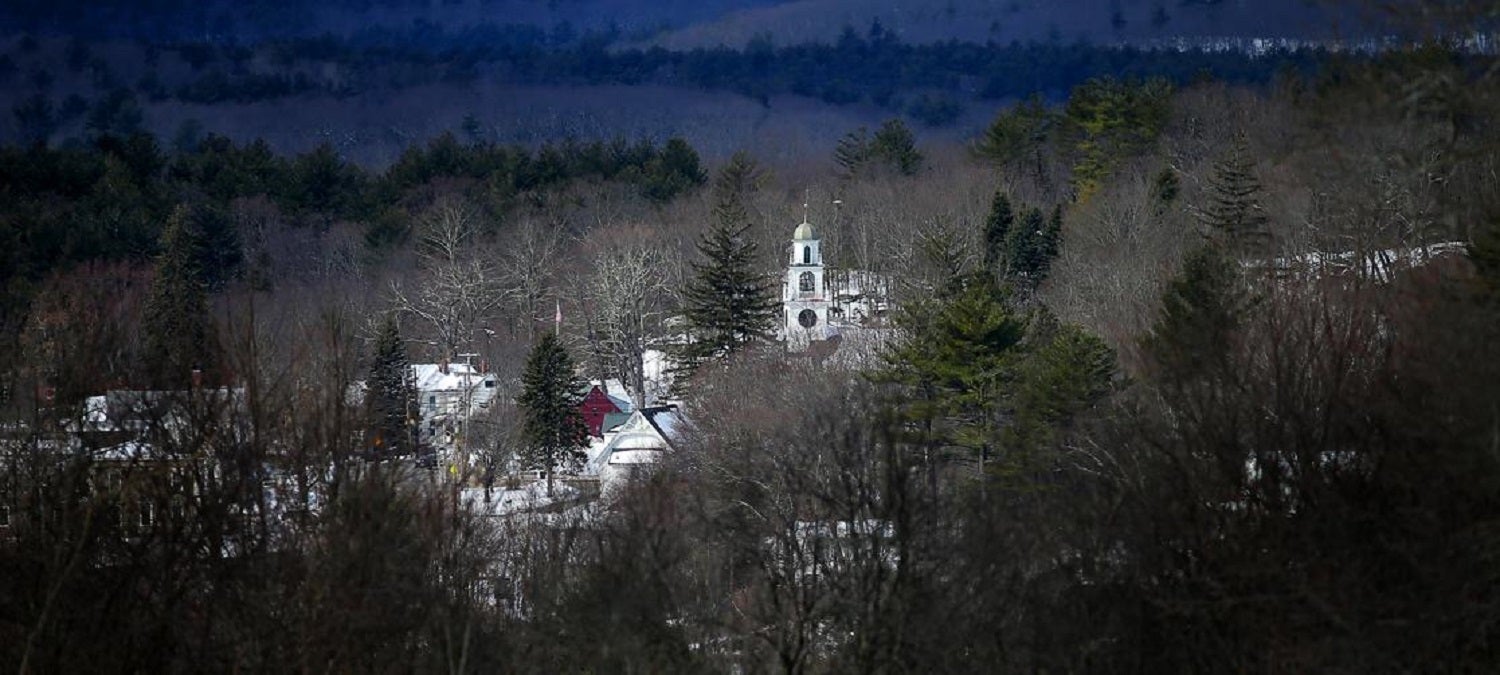
Berlin — “pronounced like Merlin the magician,’’ not like the capital of Germany, Wheeler noted — has also grown over the years, especially with the arrival of interstates 495 and 290. Interstate 495 runs right through town, while I-290 is just to the south.
“When those two highways were completed . . . it created the possibility of living here and hopping on the highway to go elsewhere,’’ he said. Boston is about an hour away, while Cape Cod and Maine are within 1½ hours, he noted.
Berlin has seen a moderate amount of development in recent years — more than 30 percent of its tax base is nonresidential, which is unusual for a town of its size, according to Wheeler — with an emphasis on affordable housing and some mixed-use developments. But given the two highways, “we’re surprisingly rural,’’ Wheeler said.
Having such a small population (nearly 3,000) leads to a dedicated cadre of contributors.
“A tremendous number of people have to participate in town government, volunteer, and pull their weight to make this town work,’’ said Wheeler, who sits on the Planning Board and serves on a town management study committee that is considering the creation of a town administrator position.
Given their commitment to the community and the family business, the Wheelers aren’t leaving town anytime soon.
“The cemetery we’ll be laid to rest in used to be part of the farm,’’ Wheeler said. “If we go anywhere, it will be just over the wall.’’

BY THE NUMBERS
1870
The year Berlin’s Town Hall was constructed. The town is retrofitting the building with an elevator. Once the building reopens, it can be rented out for parties, dances, theatrical productions, meetings, and more, with town organizations paying no fee to use it. Although it’s called Town Hall, the town offices are not in this building.
41,000
The number of bunches of asparagus Berlin’s farmers sent to market in 1885. The town, settled in 1665 and incorporated in 1812, has long been agricultural. During the 19th century, its farmers grew mixed hay grains and raised cattle. By 1940, chickens were producing 83,600 dozen eggs annually, according to the town’s website.
1887
The year in which the former Methodist Episcopal Church in the center of town was built. The Gothic Revival building had fallen into disrepair, but thanks to the work of dedicated volunteers, it was renovated and recently opened as 19 Carter, a nonprofit that operates it as a space for performing arts and community-oriented affairs.
$395,215
The average assessed value of a single-family home in Berlin in 2018, per the state Department of Revenue. There are 787 single-family properties in town, with homes carrying an average tax bill of $5,770.

PROS & CONS
PRO
Take it or leave it
Looking to clean house or acquire new-to-you goods? Jones Road Mall, housed in a barn, is open on Wednesdays, Thursdays, and Saturdays and offers free donated clothing and home products, including furniture. There is a five-item limit per car but no restriction on the number of things that can be donated. Additional rules apply.
CON
Few large annual events
Life is quiet in Berlin, with fewer holiday-oriented gatherings than in many towns. That said, churches hold annual fall fairs, 19 Carter hosts events, and a summer Home Day helps bring the community together.
Rachel Lebeaux can be reached at [email protected]. Subscribe to our newsletter at pages.email.bostonglobe.com/AddressSignUp.





To comment, please create a screen name in your profile
To comment, please verify your email address
Conversation
This discussion has ended. Please join elsewhere on Boston.com