
Built largely by and entirely for the African-American community, these meetinghouses have much to reveal
New England has a rich African-American history, often underappreciated by the majority of its residents and visitors.
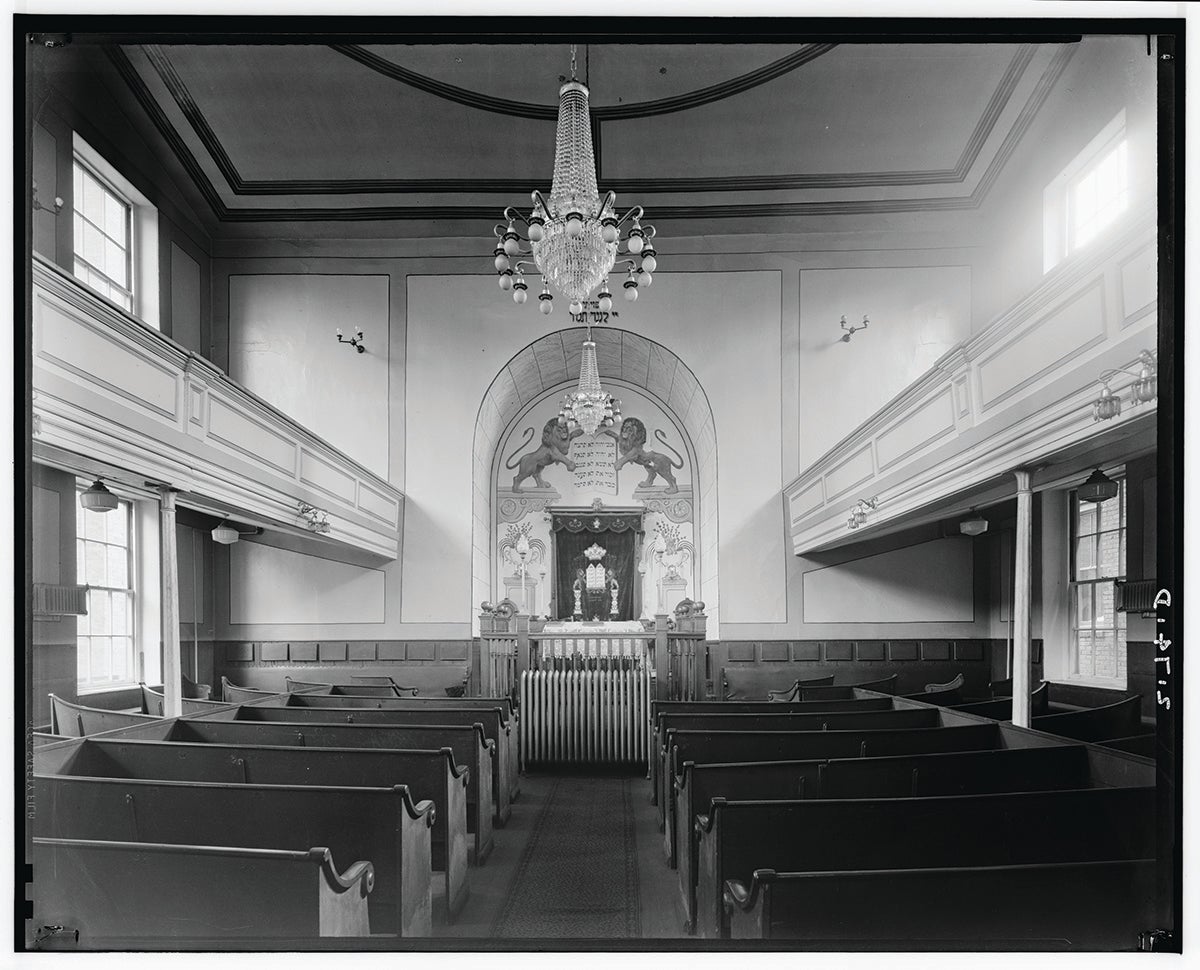
Being black in America has never been easy, but as the country emerged from the Revolution and began the task of setting its own course as a nation, African-American life was particularly fraught. Blacks found themselves in the middle of a national drama. With the ethics of slavery on its collective mind in the early 1800s, the United States saw the rise of the abolitionist movement (particularly in the Northern states, the last of which outlawed slavery in 1804) and heightened tensions between North and South, culminating in passage of a strengthened Fugitive Slave Act in 1850. Being free did not mean having equal rights, and more often than not, Northern black communities were deliberately kept separate from and less empowered than those of whites.
Such was the case in early 19th-century Boston, when the north slope of Beacon Hill (the side today bordered by Cambridge Street) was home to a well-established population of more than 1,000 black Americans. Historically the less desirable side of the hill, with numerous brothels and unlicensed taverns frequented by sailors, the area was nonetheless a place where free blacks and working-class whites socialized. They even worshiped together, though blacks did not have a vote in church and sat in segregated seating. It was perhaps the need for a place and voice of their own that led a building committee in 1805 to purchase a 49-foot-by-59-foot lot on a short passageway (now Smith Court) off Belknap Street (now Joy Street) where soon would rise, according to an exhaustive historic structure report published for Boston’s Museum of African American History by John G. Waite Associates, Architects, in 2004, “the first structure in North America built largely by and entirely for the cultural needs of a burgeoning early African-American community.”

Initially called the First African Baptist Church in Boston, the brick building may have been inspired by Asher Benjamin’s “The American Builder’s Companion,” a popular pattern book published in 1806. Simple yet elegant, the building cost $7,691, with $365 going toward the purchase of material, including the wood pulpit, salvaged from Boston’s old West Church, which was being rebuilt at the time. Moneys were raised in both the white and black communities, and Cato Gardner, a native of Africa, is commemorated with a plaque on the building for single-handedly contributing $1,500. While black craftsmen are understood to have done the bulk of the construction, there’s also a good chance that white builders and suppliers were involved.
Initially, the church had 24 members. By 1808, an “African School” was established in the building’s basement, one of the few places in Boston for black students to get an education. They learned spelling, penmanship, geography, mathematics, and American history, and the Bible was used as a textbook. The city recognized the school in 1812, granting it $200 a year.
But it was as a center of abolitionism that the African Meeting House, as the church was soon named, gained wider fame as the “Black Faneuil Hall.” William Lloyd Garrison founded the New England Anti-Slavery Society at a meeting there in 1832, declaring, “We believe that Slavery is contrary to the precepts of Christianity, dangerous to the liberties of the country, and ought immediately to be abolished.” In 1853, Frederick Douglass spoke on school integration in Boston; during the Civil War, he and others would use the building as a recruitment center for the famous African-American 54th Massachusetts Regiment.

Meanwhile, out on Nantucket Island, an equally vibrant African-American community was also providing for its own needs. In New Guinea, a segregated neighborhood south of the main town, residents put up a small post-and-beam building in 1827 on York Street, where it still stands, using it as a church, school, and meetinghouse. Among those behind the project was Absalom Boston, who five years earlier had become the country’s first black whaling captain, leading his ship Industry on a six-month voyage that returned with 70 barrels of whale oil and its entire all-black crew alive.

The Nantucket African Meeting House anchored the New Guinea community, whose roots went back to Absalom Boston’s father’s purchase of a plot of land there in 1774. For Seneca, a black man and a former slave, to purchase land nearly a decade before slavery was abolished in Massachusetts is remarkable. L’Merchie Frazier, director of education and interpretation at the Museum of African American History, which has offices on Beacon Street and owns both the Boston and Nantucket meetinghouses, puts it this way: “To have, to hold, and to build — these were major ownership accomplishments that defied the odds of the time.”

Seneca’s land stayed in the hands of his descendants for nearly two centuries. In 1920, it was purchased, along with a classic 19th-century house on it, by Florence Higginbotham, a black woman who worked on the island as a domestic and cook for white families, “a hustler who knew how to make a penny,” according to Diana Parcon, the museum’s director of capital improvements and facility operations. She soon cast her eye on the historic meetinghouse next door, purchasing it in 1933. By the late 1980s, it was deteriorating and being used as a bicycle repair shop. Purchased by the museum, it was completely restored in the late 1990s. Higginbotham’s house, as well as the meetinghouse’s three outbuildings, are currently undergoing renovations. The barn will be an education center for visiting scholars, the cottage will be a visitors center, and the chicken coop will become restrooms.

New England’s third-oldest African meetinghouse faces restoration challenges of an even higher order. The Portland, Maine, Abyssinian Meeting House was built in 1828, serving the city’s black community in a fashion similar to those in Boston and Nantucket and founded for similar reasons: Blacks in the community were tired of being second-class members of area churches. It was one of the few buildings to survive the city’s devastating 1866 fire, but it never recovered from the blow of losing 19 of its members in a winter storm in 1898; they were working as crew aboard the steamship Portland when it sank off Gloucester, Massachusetts. According to Stephen Bither, treasurer for the nonprofit Committee to Restore the Abyssinian, the building became a livery stable, a junk shop, and eventually a boardinghouse. About the only trace of its origins are holes left in the floor from where the pews were. Undaunted, the group has so far raised enough money to replace the roof and restore clapboard siding, but, as with all the sites in this article, it is seeking more support.
New England has a rich African-American history, often underappreciated by the majority of its residents and visitors. As the United States reevaluates its monuments and their meanings, visiting one of these iconic locations can be a bracing reminder that there’s a lot more to understand.





To comment, please create a screen name in your profile
To comment, please verify your email address
Conversation
This discussion has ended. Please join elsewhere on Boston.com