
See how an American sculptor’s Gloucester home, studio formed vibrant art colony
Paul Manship was first among equals as the most famous of the slew of sculptors that descended on the village of Lanesville in Gloucester, Massachusetts, in the late 19th and early and mid-20th centuries.
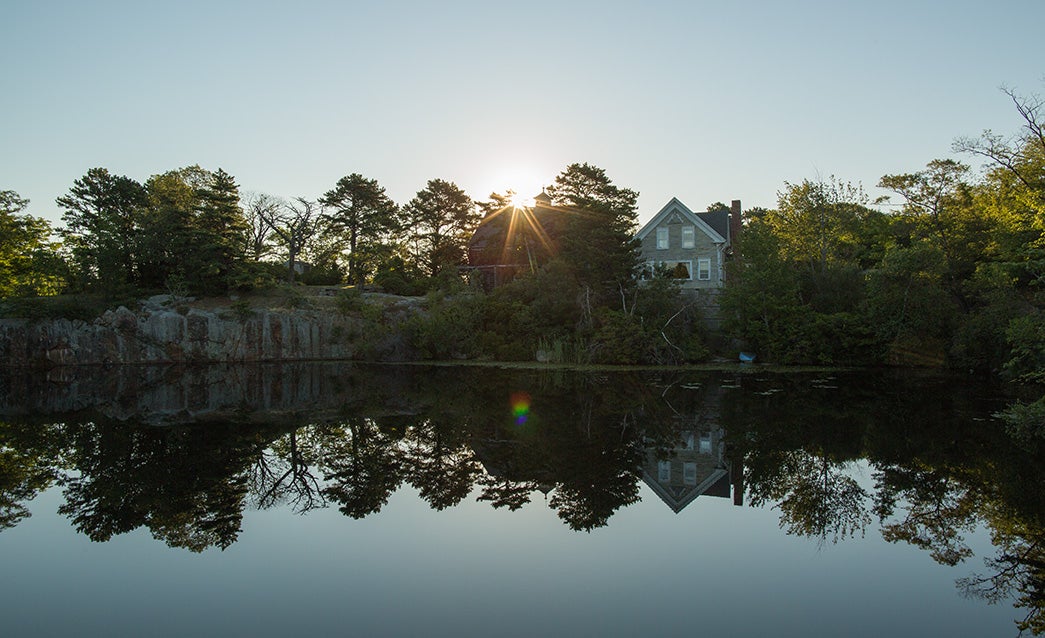
Paul Manship was first among equals as the most famous of the slew of sculptors that descended on the village of Lanesville in Gloucester, Massachusetts, in the late 19th and early and mid-20th centuries. His studio and summer home perched at the edge of two abandoned granite quarries was the center of a vibrant art colony that included sculptor Walker Hancock, the Hale family of artists, Macedonia-born George Demetrios, children’s book author and Folly Cove designer Virginia Lee Burton, and Charles Grafly, sculpture instructor at the Pennsylvania Academy of the Fine Arts. Manship displayed his Art Deco–styled sculptures cast in bronze against a dramatic natural backdrop, and art collectors traveled to Cape Ann to marvel and place orders.
Now, 50 years after Manship’s death, his house, barn turned studio, and 15-plus acres of natural splendor begin a new life as an artists residence and retreat. “This is the only extant home and studio of a major early-20th-century artist,” says Rebecca Reynolds, board president of the Manship Artists Residency + Studios (MARS). “We have a wonderful opportunity to preserve the Manship legacy while making his studio space available to the artists of today.”
Manship, born in 1885, first visited Lanesville in 1915 with his friend, artist Maxfield Parrish, whose father, Stephen, began to paint there in the 1880s. By the time Manship arrived, the village was crawling with sculptors. Anna Hyatt Huntington — creator of compelling animals and a monumental Joan of Arc, versions of which are found in Gloucester, New York City, and elsewhere — had been spending summers here since her birth in 1876. Grafly built a vacation house in the pretty coastal enclave in 1902.
The granite quarries that pockmarked Lanesville had stopped operation by the Great Depression, and the massive holes left filled with water. Walker Hancock, among the famed Monuments Men who helped recover artwork looted by the Nazis, had established his studio at the edge of one, and in 1944, Manship one-upped his fellow sculptor, buying 15-plus acres that included not one but two quarries.
Wartime made building materials scarce. However, Manship received a special permit from the U.S. Department of War and, with help from his friend architect Eric Gugler (designer of the Oval Office for Franklin Delano Roosevelt), he bought and moved an early-19th-century house from a nearby village to his property, where he set it at the edge of the smaller quarry. A year later, he brought an 1856 oxen barn from Rockport, Massachusetts, to the site to serve as his studio. Into its wall overlooking the larger quarry, he installed an enormous Palladian window. On a terrace between the house and the studio, he built an arbor supported by massive lengths of a derrick boom and mast found in the quarry. Manship had a sense of humor and declared the columns represented not the Doric or Ionic orders of ancient Greek architecture but the Derrick Order.

Manship maintained an apartment in New York City, where he died in 1966. After his death, his son, the artist John Manship, and his wife, the sculptor Margaret Cassidy, lived and worked in the Lanesville home and studio. John, who was named for painter John Singer Sargent, his father’s friend, died in 2000. Following Cassidy’s death in 2012, the nonprofit MARS was founded with the goal of preserving the estate and continuing its use as a studio for artists. “Often, the best way to preserve a historic place is to use it,” says Rebecca Harris of the National Trust for Historic Preservation in Washington, D.C. “The National Trust looks forward to sharing this as a model for how to activate and protect a significant historic place in a creative and sustainable way.”
Today, the compound is home to workshops, classes, exhibitions, installations, lecture series, and an artist-in-residence program. This fall, the Addison Gallery of American Art at Phillips Academy in Andover, Massachusetts, will feature the works of four photographers working at the site, including Cuba-born Abelardo Morell. To honor the man who created this place, Butman’s Pit will be renamed Manship’s Quarry.
Shortly after Paul Manship died, his son, John, found a scrap of paper in the pocket of his father’s dressing gown, on which was written, “The primary impulse in the Arts is to give permanence to the fleeting moment, to bid it stay, because we cannot bear to lose it.” When today’s artists work in a studio so full of creative history, the MARS founders hope that they, too, will strive to give permanence to the fleeting moment.
See more photos here:
Manship Artists Residency + Studios (MARS), P.O. Box 7071, Gloucester, MA, 01930; manshipartists.org.





To comment, please create a screen name in your profile
To comment, please verify your email address
Conversation
This discussion has ended. Please join elsewhere on Boston.com