
The Center for Maine Contemporary Art opens new possibilities for Rockland’s renaissance
Can a faded industrial seaport be rejuvenated with a $3.5 million art center? The new Center for Maine Contemporary Art, which opened in June along the harbor in Rockland, Maine, suggests it can. This handsome addition to the lobster capital’s art-driven renaissance is a triumph of intelligent and thoughtful design
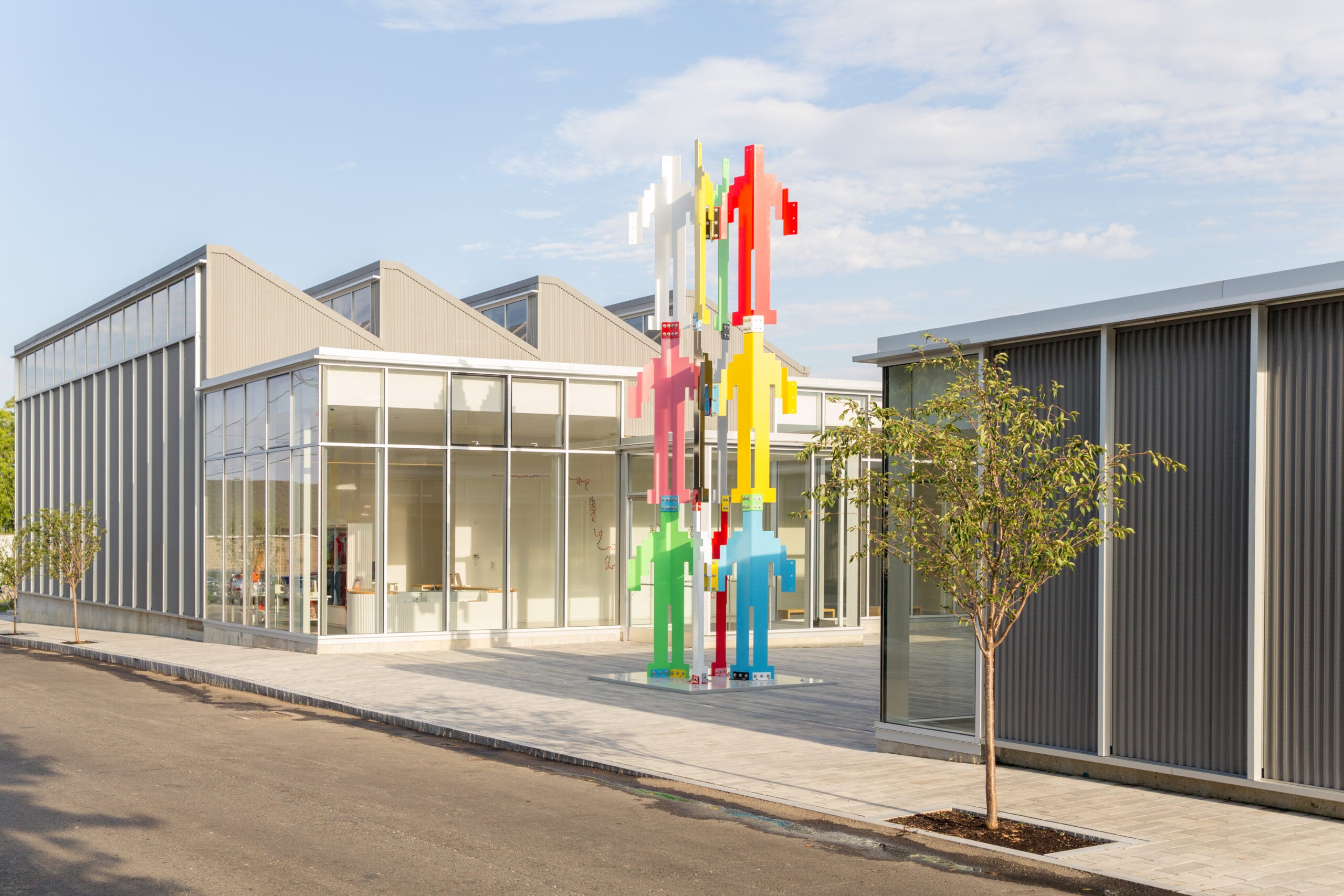
Can a faded industrial seaport be rejuvenated with a $3.5 million art center? The new Center for Maine Contemporary Art, which opened in June along the harbor in Rockland, Maine, suggests it can. This handsome addition to the lobster capital’s art-driven renaissance is a triumph of intelligent and thoughtful design.
A brochure that solicited contributions for the 11,000-square-foot building reveals an organization with a lighthearted sense of itself. Printed on a medium-gray paper that echoes the color of the building’s corrugated metal exterior, the brochure can be folded into the shape of the four skylights that flood the chief gallery. The profile of the distinctive roofline has been adapted as CMCA’s logo.
This homage to the saw-toothed roofs of countless New England factories met resistance when the design was first shown to residents. Such an important downtown attraction, they argued, should be built of the ubiquitous brick that forms most of Main Street’s businesses, including the Farnsworth Art Museum (part of which is in a former Woolworth’s). There was further concern about locating the CMCA down a side street toward the docks and away from other museums, shops, and restaurants.

Founded as Maine Coast Artists in 1952 and without permanent staff for 15 years, the artists’ cooperative occupied a former firehouse and livery stable in nearby Rockport. It was there that artistic luminaries such as Louise Nevelson, Robert Indiana, Alex Katz, and Jacob Lawrence showed their work; the group offered a counterbalance to a long tradition of naturalistic Maine seascapes. The new art center has been embraced as an important addition to Rockland, one that adds an exciting experimental component to the community’s reputation as an arts destination.
“Creating an architecturally significant space in the heart of Rockland’s downtown arts district,” says Suzette McAvoy, CMCA director, will allow the organization “to pursue its core mission of showcasing well-known and emerging Maine artists.” The new museum, says Dudley Zopp, an installation artist who moved to the area from Kentucky 20 years ago, “will make a tremendous difference for artists and for Maine’s place in American art, bringing contemporary art into the state’s historical mix.”
Architect Toshiko Mori, whose firm Toshiko Mori Architect is in New York, designed the museum, creating a thoughtfully wrought, sophisticated work of art from this unremarkable site (“everything is functional, like a boat,” McAvoy says).

There are three galleries, offering 5,500 square feet of exhibition space, a reception area and gift shop, a classroom called the Art Lab, administrative offices, and an outdoor courtyard. Forgoing a permanent collection, CMCA provides a place for contemporary Maine artists to exhibit their work and for the pubic to interact with it. The galleries are sensibly contiguous, so the center can offer a variety of exhibit configurations. The smaller galleries have 12-foot ceilings, and all can be closed off to serve as lecture halls, with easy projection for displaying media on the walls.
The largest gallery, the one with the skylights, is 50 by 52 feet, with a 20-foot-high wall on the street side. “The space of the main gallery,” says Mori, a summer resident of nearby North Haven, Maine, “is like none other because of its proportions and the north orientation to get that special Maine light.” Those subtle proportions are based on “a 4-foot invisible grid,” which Mori acknowledges is “a design technique that comes from my Japanese DNA.”
Given the budget, money raised entirely through private donations (CMCA operates with no endowment and a professional staff of only four), Mori crafted a museum based on flexibility rather than attitude. Constructed by Jay Fischer of Cold Mountain Builders of Belfast, Maine, who had worked with both the museum and Mori before, the new facility was meant to offer a home for artists while providing a hands-on experience for students and expanding programs beyond the museum.

The side street location is not a beautiful site, nor did it offer an amazing view to which the architect could respond. In an area of parking lots and warehouses, Mori skillfully employed clerestory windows to provide edited views. Known for her spare and elegant Modernism, Mori embraced the lack of funds to her advantage, honoring Rockland’s maritime aesthetic. She used economical, non-custom materials. “Materials are materials,” she says, “no matter how humble,” recalling a similar arts center she built in Senegal, where “I had to work with thatch made out of grass and mud bricks made on the site.”
Here, walls are plasterboard, floors are polished concrete, and structural elements are left exposed. The only material extravagance was Starphire Glass — the clearest architectural glass available — for all the windows and glazed walls to intensify the amount of light passing through. The corrugated “marine-friendly” zinc that wraps the exterior was one of the building’s most visually controversial design aspects. Its use, however, reinforces Rockland’s working-class flavor and provides context amid the working waterfront.
Mori wisely sacrificed some interior space to insert an open courtyard that, McAvoy says, “gives the building a front and a presence.” The courtyard pavers continue beyond the center, becoming the sidewalk, integrating it with the streetscape. This open area also separates the center’s public and business functions while offering additional exhibition space. If there were any doubt about the rolled-up-sleeves nature of this space, the loading dock opens right onto the street.
Ours is an age of extravagantly costly new museums designed by superstar architects. In a refreshing contrast, Toshiko Mori and her artist clients have created a stunningly handsome work of Modern architecture that is as timeless and as frugal as a Maine lobster boat.

(i) Center for Maine Contemporary Art
21 Winter Street
Rockland, ME
207-701-5505, cmcanow.org.





To comment, please create a screen name in your profile
To comment, please verify your email address
Conversation
This discussion has ended. Please join elsewhere on Boston.com