
These city neighborhoods have gotten expensive much faster than suburbs since 2000
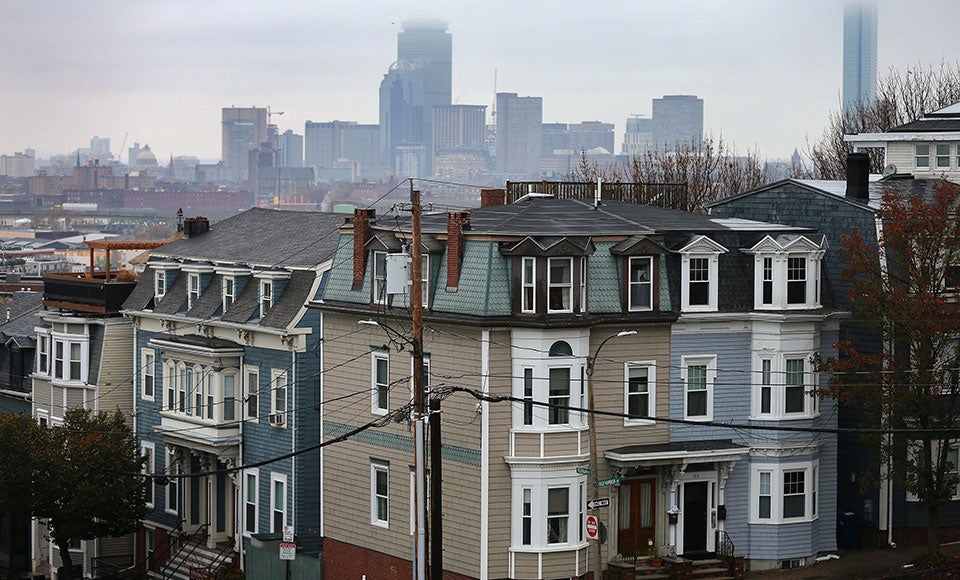
From 2010 to 2015, the median home value in Boston increased 37.1 percent. During the same time period, home values in the suburbs increased 20.5 percent, just over half as much, a recent Zillow report found.
Those numbers mirror a national trend: If you bought a home in the city even just a few years ago, it has probably appreciated more than it would have if you lived in a comparable suburb.
Now, Constantine Valhouli, the cofounder of NeighborhoodX, a neighborhood-specific reporting and data startup, has taken the analysis a step further by comparing specific Boston neighborhoods to suburban counterparts.
“We tried to find pairs of city neighborhoods and suburbs that had almost identical prices per square foot in 2000 so that we could see, given this common starting point, how prices diverged by 2015,” Valhouli said.
And not so surprisingly, Boston neighborhood prices appreciated a lot more than suburban prices did over the past 15 years.

(Follow this link to see an interactive version that includes price-per-square-foot figures for each neighborhood and suburb.)
“[City homeowners] have built disproportionate equity compared to a similarly priced suburb,” Valhouli said.
Take the South-Boston- versus-Salem comparison on the chart: The areas had a $144 and a $143 median purchase price per square foot, respectively, in 2000. But by 2015, those numbers had diverged drastically, with Southie’s median price per square foot rising to $411 and Salem’s only rising to $199.
Many of the Boston neighborhoods Valhouli looked at, such as South Boston, East Boston, and Dorchester, have been among the most gentrified areas of the city over the past 15 years. As people with higher incomes and more education move to these historically working-class neighborhoods, prices have increased quickly, while their suburban counterparts have not.
Why the current difference in price?
Valhouli thinks there has been a “shift in taste and demand.”
“The cities themselves have changed,” he said. “Most people have always wanted that experience of being able to walk to work and get to everything without a car. People are sick of commuting and cities became safer and more fun.”



To comment, please create a screen name in your profile
To comment, please verify your email address
Conversation
This discussion has ended. Please join elsewhere on Boston.com