
How the world of real estate changed in Greater Boston this year
From Seaport development, to new affordable housing laws, to huge home sales, it has been a big year.
The Greater Boston real estate market this year has been a doozy. Dorchester saw its first million dollar home sale, and Somerville had pricy purchases and had some of the city’s first luxury condos being built.
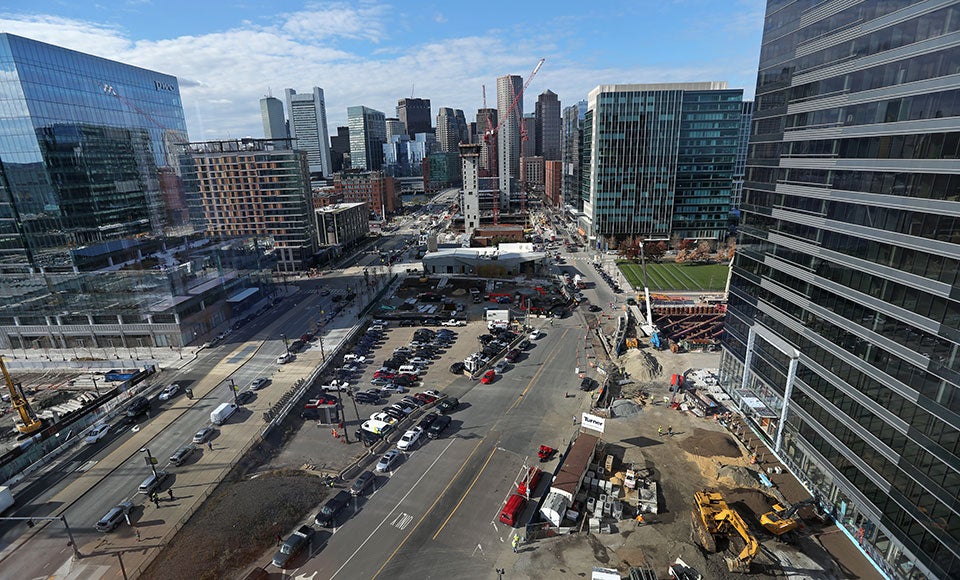
The Seaport has continued to grow, as cranes line the skyline, while Bostonians have questioned if the neighborhood will ever have the character the others have.
Prices in the suburbs have risen in the Greater Boston area, and Boston had its most expensive home sale in history for $14.5 million in Back Bay.
But these expensive sales and new developments really just show that the Greater Boston economy is doing pretty well right now – unemployment is down and people want to live here.
To keep you in the know, Boston.com rounded up some of the most tossed-around phrases, movements, and shake-ups in the 2015 housing market:
1. Prices have risen a lot and vacancies are very low
Demand for living in Boston is extremely high, causing rent and mortgage rates to skyrocket. According to the 2015 Greater Boston Housing Report Card, titled “The Housing Cost Conundrum,’’ Greater Boston housing prices rose 7.2 percent in 2013, another 6 percent in 2014, and though the numbers aren’t all in yet, analysts are predicting prices rose another 6 percent in 2015.
The report concluded that as of June 2015 vacancy rates in Boston were only at 0.7 percent, which is the lowest since 2004 and much lower than the rate for all other U.S. metro areas – therefore the people that are selling homes can do so for high costs.
2. Developers catering to empty nest city-dwellers
Realtor.com recently named Boston as the city people aged 65 to 74 will most likely want to live in 2016. Though on first glance this might seem out of the ordinary, since Boston is frequently noted as a place for young college student and grads, the city is becoming more of a destination for empty nesters.

Some local developers are even building new residences that cater specifically to older empty nesters. For example, 311 Highland Avenue in Somerville will have seven single-floor units with 2,000 square feet of living space.
3. Huge home sales in Boston and talks of a bubble
In a year when Boston had its largest home sale in history, it only makes sense to discuss a potential bubble. Zillow asked housing experts about potential real estate bubbles in a variety of major cities. Zillow Chief Economist Dr. Svenja Gudell said a bubble is basically when “home values go up and then they drop down.’’
Gudell noted that though Boston has seen a spike in home values, she thinks it is just the sign of a healthy market – at least for now – and thinks prices will slow down in 2016.
4. Building reuse into luxury apartments/condos
In a major city like Boston, where buildable land is not always easy to come by, developers sometimes have to get creative, using buildings that once had a different purpose.

You can see this all over the Fort Point neighborhood, where old industrial lofts have been turned into luxury apartments. A big trend this year was also turned abandoned churches into condos that end up having intricate details you might not get anywhere else.
And sometimes, old buildings can even be the greenest.
5. High cost of development and not enough new construction
There is about $7 billion in construction happening in Boston at the moment, but almost all of it is taking place in a few neighborhoods, especially downtown and the Seaport. Even statewide, most of the new housing permits were only issued in a few cities.
But development costs are high, and many cities and towns have building restrictions that make getting permits difficult. High development costs and less permitted construction mean prices are up, both in and around Boston, as the Greater Boston Housing Report Card confirmed.
6. The Seaport neighborhood is changing really fast
Back in April, The Boston Globe asked readers the million-dollar question: “Will the Seaport district ever have the soul of a real neighborhood?’’ They were even bold enough to call it Uberstan, a place that people only visit.

Though the number of residents has been increasing at a pretty fast rate, area restaurants have been struggling, especially on the weekends. Currently there are more than four restaurant seats for every home in the area, according to the Globe.
But the people are coming – more and more high-rise apartment and condo buildings are being built.
Story continues after gallery.
See how much Seaport/Fort Point has changed:
7. Steps toward affordable housing in the city
In October 2014, Mayor Marty Walsh called for more affordable housing in the city of Boston and 2015 was off to a pretty good start.
In May 2015, Walsh said he would allocate close to $39 million to affordable housing developments in the city.
A few weeks ago, Walsh also announced that developers looking to build in popular neighborhoods would have to almost double the fees they currently pay to defray the cost of providing affordable housing throughout the city
8. Bidding wars pushing prices above asking
This year in Boston’s hottest neighborhoods, buyers very frequently paid more than sellers were asking for. A report back in August found that for the month of July, condo sellers received offers that averaged 101.1 percent of the original listing price. Low inventory contributes to these bidding wars.
Some of the hottest neighborhoods were Central Square in Cambridge, Franklin Field South in Boston, Cambridgeport, West Cambridge, and Hyde Square in Jamaica Plain.





To comment, please create a screen name in your profile
To comment, please verify your email address
Conversation
This discussion has ended. Please join elsewhere on Boston.com