
Boston’s super old, super green buildings
If we really want to understand how to use less energy, a new report suggests there are lessons to be learned from those boring old buildings that went up a century ago.
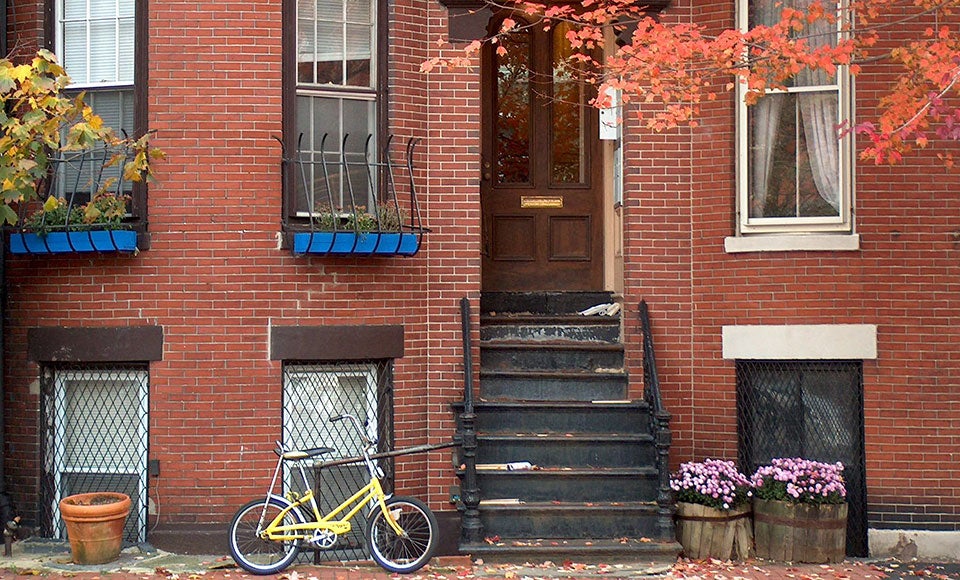
Large luxury apartment buildings are continuing to pop up around Boston – a stark contrast from the historic brownstones and triple-deckers that have been making their mark on the city since its founding.
The newcomers are modern and sleek, and many are making a point of including the latest in energy-efficient building design. But if developers really want to understand how to use less energy, a new report suggests there are lessons to be learned from those boring old buildings that went up a century ago.
The report
The city of Boston recently released a report with energy information from many of the city’s buildings over 50,000 square feet, culled after the Building Energy Reporting and Disclosure Ordinance of 2013 mandated that big-building owners disclose their energy and water use to the city.
One of the metrics used in the study is the ENERGY STAR score, which is a number between 1 and 100 that shows how a building’s energy consumption compares to other buildings with similar uses across the country; a higher score means the building uses less energy. The national median is 50.
Looking at the data, something becomes clear about residential buildings: newer is not always better.
Story continues after gallery.
9 questions to ask when viewing an apartment:
The city notes that among office buildings, structures “over 70 years old – those constructed in the 1940s and earlier – have the lowest energy use per floor area.’’ Data shows a similar trend among residential structures. Dozens of the multi-family housing buildings with above-average ENERGY STAR scores were built before 1950.
Michael Gevelber, associate professor in the department of mechanical engineering at Boston University, said it can be hard to know exactly why these specific buildings did so well, but there are some common trends.
The current crop of developers may not like all the lessons to be learned.
First off, he mentioned that newer buildings tend to provide more space per person, and that many include modern conveniences, like central air conditioning and heating, which burn through energy.
“Especially when you go into luxury,’’ he added.
Gevelber also added that newer, luxury properties have a lot of windows (some of which are floor-to-ceiling), as this is a big selling point people who like to have naturally well-lit apartments.
“Lots of glass work, even if its triple pane, is bad for energy use,’’ Gevelber said. “Part of that change has been just in the standards by which we are building these properties.’’
Greg Galer, the director of the Boston Preservation Alliance, agreed that the increase in windows can contribute to newer buildings getting worse energy scores than their predecessors.
“It’s also an issue of quality of materials with construction,’’ Galer told Boston.com. “Many of the older buildings were built with very high quality and durable materials. They were designed to last a long time and for periodic refurbishment.’’
Galer added that there is a lot of pressure from modern window companies to replace old windows – but the preservation community thinks differently.
“You need to replace every fifteen years [with new windows]. But refurbish [the old ones] and they will last more,’’ Galer said. “[Older windows] are from older grown timber and have much higher insulation.’’
Galer points to data from the National Trust for Historic Preservation, which looked at the financial and environmental benefits of retrofitting windows over replacing.
As far as making the Boston’s data actionable, Gevelber said the city should be “applauded just for doing this,’’ but added that other metrics, such as more specific information about where the energy is being used and how many people are living in each building, would be needed to give more specific analysis on how builders can improve and what they are already doing well.
“We are very excited to start connecting buildings with energy efficient programs,’’ Nikhil Nadkarni, the Climate and Building Program Manager for the project told Boston.com. His team is still going through all the data to figure out a game plan for how to use it all.
In the meantime, Galer, of the Preservation Alliance, shared his own motto building with energy efficiency in mind.
“The greenest building is the one that is already there,’’ Galer said.




To comment, please create a screen name in your profile
To comment, please verify your email address
Conversation
This discussion has ended. Please join elsewhere on Boston.com