
The Boston University Castle is an architectural time machine
225 Bay State Road went from a private home, to the Boston University president’s home, to an event space and a pub – but not much has changed.
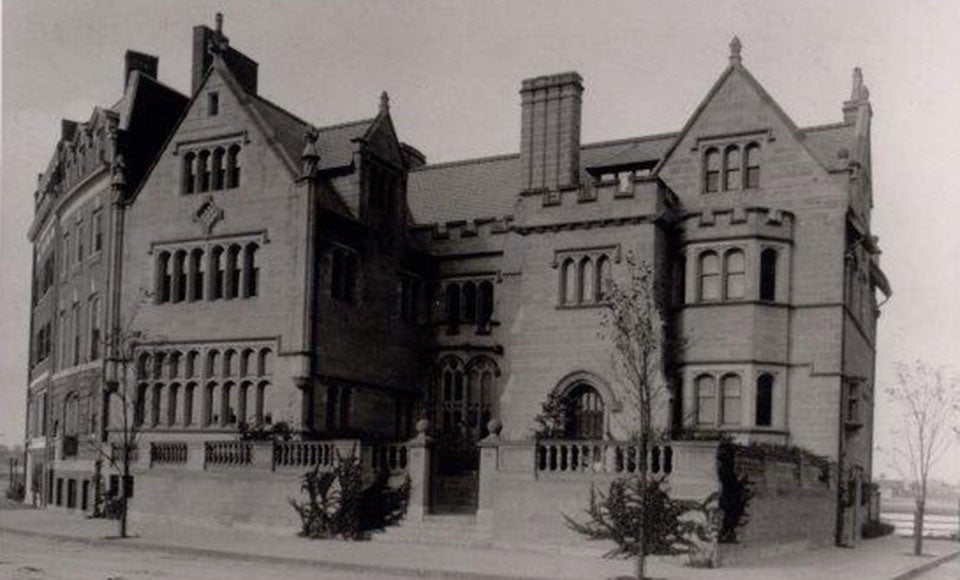
Ever wondered what Tudor England would have been like? Step inside the Boston University Castle and get a peek into the past.
Though Bay State Road is lined with brownstones, historic homes, and preserved buildings with views of the Charles River, the castle at 225 Bay State still stands out.
It’s an outstanding example of a period in the city’s architectural history, but with twists that only its original owner would have included.
History
The Boston University Castle was originally built for William Lindsey, a successful Boston businessman (and a poet and playwright), who was inspired by medieval mansions, according to Boston University.
Lindsey’s Back Bay home was completed in 1915, costing half a million dollars. He even hired craftsmen from Europe to construct the home.

After changing hands several times, in 1939 it was donated as a gift to Boston University, where it served as the president’s home until 1967.
Now the BU Castle is home to lectures for students, events, weddings, and the Boston University Pub.
Style
“If ever a house reflected its owner’s personality, it is this picturesque Tudor Revival mansion,’’ according to Nancy Lurie Salzman in Buildings and Builders: An Architectural History of Boston University.

“It’s a building that most people would consider a Tudor Revival structure,’’ Keith Morgan, director of architectural studies at BU, told Boston.com. “We know Lindsey had visited a major English country house [called] Athelhampton House in Dorset that was built in 1485 in the beginning of the Tudor dynasty and is typical of last medieval architecture. And it begins to engage more regular forms of the Renaissance.’’
Tudor Revival was a popular style in New England in the first half of the 20th century, especially, as The Boston Globe reports, in Brookline and the upper Commonwealth Avenue section of Boston.

You can see it’s of the Tudor-style, according to Morgan, from the numerous windows, “often characterized by gables or dormers and widows with drip molding.’’
“When you come inside the BU castle the great entrance hall [has a] double staircase and balcony,’’ Morgan said. “That may be the principle section that reflects the Tudor inheritance.’’
Though the castle would be characterized as Tudor Revival, it’s not the only style throughout the home.
“As was typical of houses of this period, other rooms had different architectural statements,’’ Morgan said. “The dining room is more 18th century with wooden panels, and the parlor on the Bay State side is very light in pallet — that’s more reflective of the eclectic mix you find in the houses of the very wealthy in the 18th century.’’

Many of the decorative facets of the building are still original as well, according to the BU archives. The Lindsey coat-of-arms is still carved into the wood above the fireplace and the large Oriental rug in the main hall has been in the house since the beginning.
“It’s a very important part of the BU landscape and the city,’’ Morgan said. “It’s publicly accessible and feel free to wander in!’’
See these New England castles that used to be private homes:





To comment, please create a screen name in your profile
To comment, please verify your email address
Conversation
This discussion has ended. Please join elsewhere on Boston.com