
The most expensive areas of Mass. are also at the highest risk of natural disasters
Living in an area considered prone to hurricanes and other natural disasters can bring its share of problems, but falling home prices isn’t one of them.
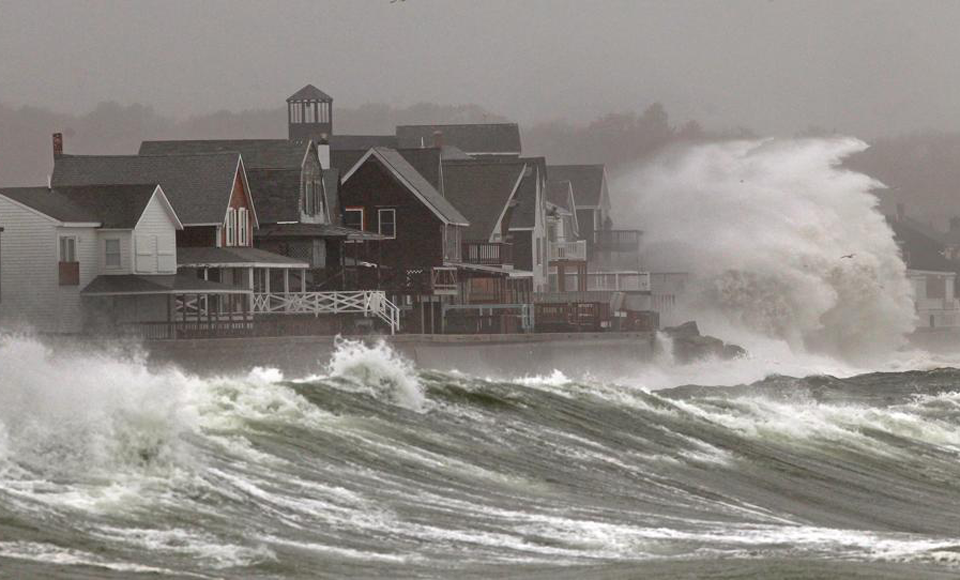
Living in an area considered prone to hurricanes and other natural disasters can bring its share of problems, but falling home prices isn’t one of them.
Areas of the country at “high risk’’ for natural disasters of one sort or another, such as Suffolk County, home to Boston, have seen home prices jump more than 16 percent over the last three years, RealtyTrac reports.
Meanwhile, the wider Boston area weighs in at No. 4 in the country among cities facing the greatest impact from hurricanes, with 1.1 million homes and condos at “high risk,’’ RealtyTrac reports.
That beats out storm tossed Tampa, where 953,000 homes face an elevated risk from storm damage.
New York was No. 1, with 3 million homes potentially in the path of a mega storm, followed by Miami (1.9 million) and Washington, D.C. (1.8 million), according to RealtyTrac.
Overall, nearly 30 percent of all homes and condos in the country are in areas with a high risk or a very high risk for hurricanes.
“Homebuyers in high risk areas for hurricanes like Boston and New York tend to attract more speculative buyers because they are simply more well-known, sexy markets,’’ noted Daren Blomquist, vice president at RealtyTrac, in an email. “However, every home buyer and investor should consider natural disaster risk when buying a home, especially given how easy it is to find this information.’’
Depending on where you live in Massachusetts, your natural disaster risk may be lower or higher.
Some parts of Eastern Massachusetts, including the South Shore, the Cape and the Islands, earned higher natural disaster risk scores than others, RealtyTrac reports.
Martha’s Vineyard and Plymouth County both earned natural disaster scores – mainly hurricane risk – of 75 apiece, firmly placing them in the high-risk category. (For point of comparison, Newport was also at 75.)
Along with being at high risk for getting hammered by hurricanes, Plymouth County also faces flooding risks, RealtyTrac notes.
Neighboring Nantucket came in at a somewhat lower 60, while Boston and the western suburbs were a notch below that, at 55, RealtyTrac finds.
Story continues after gallery.
The safest towns in Massachusetts:
Still, if you suffer from disaster phobia, moving to an area with a low risk for any sort of natural disaster may not be very practical, either.
The closest areas to the Boston that are considered to be at a “very low risk’’ of a natural disaster are literally hours away in some of the most remote regions of the Northeast.
Aroostook County, way up in the northeastern corner of Maine, has a super low disaster score of 10. Then again, there are only 1,692 homes and condos in the entire county, and, safe to say, very few jobs.
Vermont’s Essex County, hard by the Canadian border, also gets a 10.
Still, if you can’t live in a disaster-proof area, it can’t hurt to at least know all the risks out there, RealtyTrac contends.
“There is no reason homebuyers need to be surprised with natural disaster risk information when wading through a stack of disclosures at the closing table,’’ Blomquist stated.





To comment, please create a screen name in your profile
To comment, please verify your email address
Conversation
This discussion has ended. Please join elsewhere on Boston.com