
Tear Down or Renovate? That is the Question
An amendment in Needham may make it easier to add a half-story addition to older homes.
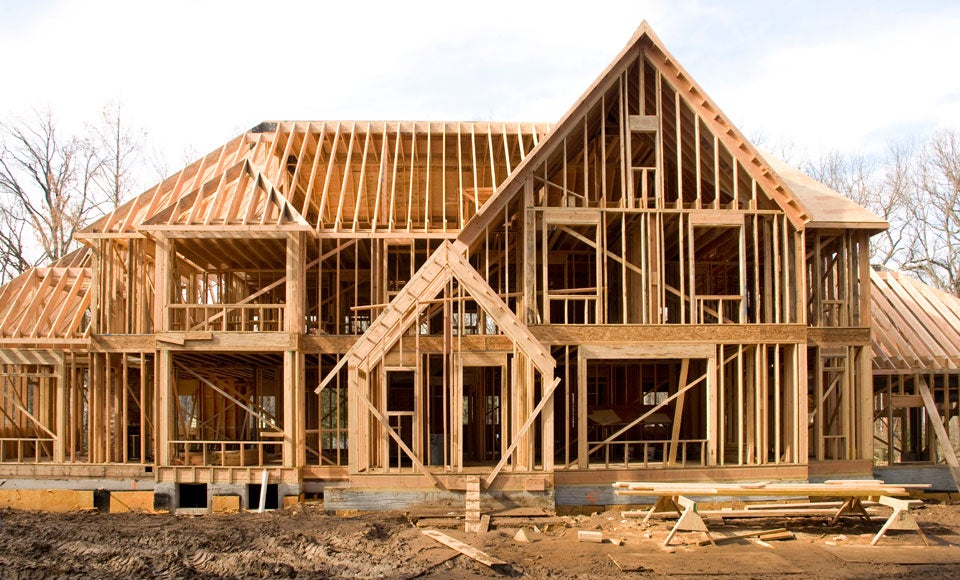
A Needham group wants to give residents the option of expanding the homes they have, instead of tearing them down to build something bigger.
The Large House Study Committee, formed by the town last year, has spent months studying teardowns, a phenomenon that is steadily replacing older and more moderately priced homes with outsized residences that come with price tags well over a million.
A total of 146 new homes and residential units were built in Needham in 2013 and the first half of 2014. Of these, all but 20 were new homes built on lots cleared by teardowns, according to a planning department memo.
Now members of the volunteer committee have drafted a zoning amendment that will go before Town Meeting in early May, one that is designed to give homeowners more flexibility when adding a half-story addition, notes Lee Newman, the town’s planning director.
Still, while the committee is weighing a number of measures to deal with the teardown issue, most won’t be ready to go before Needham voters until the fall, Newman notes.
In the meantime, the town’s planning chief believes that making the half-story additions more attractive will at least give homeowners additional options when seeking more space. The half-stories could be particularly helpful for owners of older two-story colonials that are in reasonable shape.
“People are concerned about the large houses that are being built in their neighborhoods that are not in scale with what is around them,’’ Newman said.
Still, some say teardowns fill a market need as families move to town in search of spacious new homes, not older properties that need work.
Buyers now are looking for larger kitchens, great rooms, and other features that can’t be found in a 1950s or 60s cape or colonial. On top of that, these homes are often in need of substantial work that can require a major investment.
“For the most part, the homes I see being demolished really don’t have a future,’’ said Ned Mahoney, an agent with Keller Williams in Needham. “People want new homes and you can come to Needham and get that. That is why it is so popular.’’
However, one problem with teardowns, Newman noted, is that the homes that replace them are significantly larger, yet the yard is the same size as it was before. This can result in a much larger house shoehorned onto a modest lot and taking up a large part of the space.
The Large House Study Committee took an in-depth look at 42 homes torn down in Needham through the first five months of 2014. The homes that were leveled were, on average, 1,536 square feet, compared to 5,314 square feet for the new homes that replace them.
These new homes built on the teardown sites also occupy a substantially larger proportion of the lots they sit on, covering, on average, 40 percent of the property, and, in some cases, more than 60 or 70 percent, according to town statistics.
Drainage can also be a problem with some of these new homes as well, with water running off into neighboring properties, Newman said.
Beyond aesthetics and drainage, there is also the issue of changing demographics and families getting priced out of town, Newman notes. Developers are snapping up homes in the $500,000 to $700,000 range and tearing them down to make way for homes worth twice as much, she said.
The median price of a single-family home in Needham now tops $915,000, a nearly 19 percent increase over early 2014, according to The Warren Group, publisher of Banker & Tradesman.
A dearth of buildable lots is another factor driving the trend, Newman said. Land available for new housing is rare, which often means the only way to build a new home is to tear down older property.
“Needham is pretty much a built-out suburb,’’ Newman said. “There isn’t the availability of land to do subdivisions.
Mahoney, the Needham real estate agent, also agrees that land for new buildings is scarce in town. And he doesn’t dispute that the new, more expensive homes are raising “the level of entry to get into the community. That is the market.’’
But he contends that as more new homes replace Needham’s older housing stock, complaints about oversized houses are likely to fade.
While sometimes a new home can be badly designed, it’s not the norm. Developers and homeowners typically spend significant amounts of money on architects and on design.
“I think as the neighborhoods mature with these new homes, they will begin to take on a new look,’’ he said.
However, the debate is likely just starting to heat up, with the Large House Committee also exploring changes in the town’s zoning rules that would rein in some of the big house excesses.
One possibility is reducing the floor area ratio, or the percentage of a particular lot that can be covered by a new house, Newman said. Another is increasing setback requirements for new homes.
More substantive proposals like these will require more discussion and debate, though, and won’t be ready until the fall, she said.





To comment, please create a screen name in your profile
To comment, please verify your email address
Conversation
This discussion has ended. Please join elsewhere on Boston.com