
Celebrate Women’s History Month At the Otis House
Take a trip to Beacon Hill’s Otis house this weekend to learn the stories about the influence women had on the house.
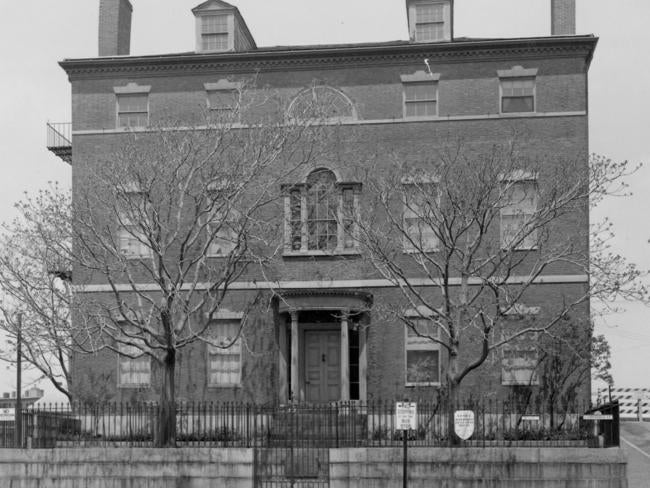
There’s more to one of Beacon Hill’s most historic homes than one of its owners.
Harrison Gray Otis, a U.S. Senator who became Boston’s third mayor in 1829 was first a prominent lawyer. Otis commissioned architect Charles Bulfinch to build a home for him and his family in 1796 in the Beacon Hill area, and that house, referred to as the Otis House, is a National Historic Landmark.
Otis’s wife, Sally Foster Otis, along with other women who were associated with the house after her, played an important role in the home’s history, too – one that is not always prominently stated.
Historic New England will be hosting a hour-and-a-half tour of the house for women’s history month called “Ladies of the House,’’ where they focus on the role women played in the home’s history on Saturday, March 14 from 10-11:30 am.

“You get a sense of these women’s lives,’’ Shira Gladstone, the Otis House and Lyman Estate Site Manager, said of the tour. “You don’t often see them interpreted in other spaces. It’s not just wealthy women but a whole range of women to see what it was like living in Boston.’’
The majority of the tour will be focused on Sally Foster Otis and her late 18th century life in the house.

“She didn’t have a job outside of the home,’’ Gladstone said. “Her husband was away often after he was elected a congressman, so he was in Philadelphia or Washington, DC.’’
Though the Otis’s did have servants, Sally Otis had a huge hand in raising their children and in planning events at the house.
Gladstone referred to her as, “a perfect politician’s wife.’’
Though the tour is mainly about the Otis family, it delves into other female connections to the home.
“We talk about the Otis’s,’’ Gladstone said. “But we also put it in a larger context of people in their class at the time, so people that lived or worked there.’’
The tour will go into detail about the British doctor Elizabeth Mott, who rented out part of the Otis House with her husband in the 1830s to run a medical practice called Mott’s Patented Medicated Champoo Bath.

“It was more homeopathic medicine,’’ Gladstone said. “People would sit in a chamber, steam would come in, and they would put oils and herbs. They thought it could cure anything.’’
Mott treated most of the female patients that came to the Otis House, one of which inspired Harriot Hunt to join the medical profession herself. Hunt’s sister was treated at the Otis House and it spurred Hunt to apply to Harvard Medical School. According to Gladstone, she was the first to ever do so and later moved into the Otis House with her mother.
According to the Harvard Medical School website, Hunt sent Dr. Oliver Wendell Holmes a letter asking to attend Harvard, but she was not accepted.

The last people that will be discussed on the tour are the Williams sisters – four unmarried women who rented the house in 1945 and turned it into a boarding house.
“It was a very nice, highly respected boarding house,’’ Gladstone said. “They still lived in the home. Boarding houses were comfortable and it was not unusual for the area.’’
The house is a now a museum.
Other Events Happening About Women’s History
– Salem’s Women’s History Day (Sunday, March 29, 11:00 a.m. – 4:00 p.m.): The staff at the Phillips House in Salem will provide guided tours to tell the stories behind the women who were associated with this house, similar to the tour being given at the Otis House.
– Boston Women’s Heritage Trail: There are guided and self-guided tours in specific neighborhood to learn some often overlooked history of the impact women made in the city of Boston.




To comment, please create a screen name in your profile
To comment, please verify your email address
Conversation
This discussion has ended. Please join elsewhere on Boston.com