
One of the Oldest Homes in Watertown Played Major Role in Founding of US
Samuel Adams, John Adams, and Paul Revere visited Watertown’s second oldest house in the late 18th century.
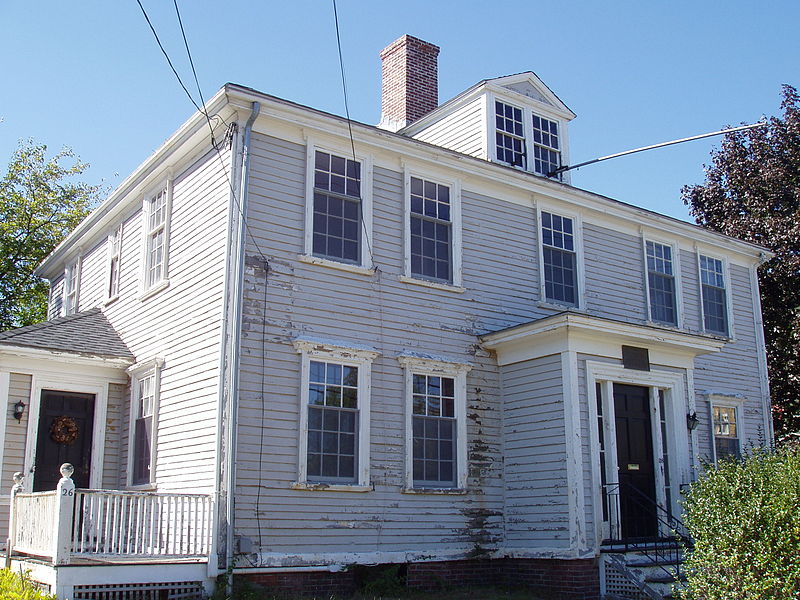
Built in the 1772, The Edmund Fowle House is the second oldest house in Watertown, according to the Historical Society of Watertown. That may not sound like much of a distinction, but the house also played a critical role in the founding of the U.S. government and country.
Edmund Fowle II had the grand two-story house built with two staircases and six fireplaces at the site where Mt. Auburn Street meets Marshall Street. In the 1780s and 1790s, Edmund Fowle served Watertown as a highway surveyor, constable, and tax collector.
Some things you might not know about the Edmund Fowle House:
1. The Executive Council met there during the American Revolutionary War.
After Britain imposed the 1774 “Intolerable Acts,’’ which closed the Port of Boston, and allowed the housing of British troops in the town of Boston, the General Court (Massachusetts Bay Colony’s governing body) fashioned itself into the first Executive Council of the Provincial Congress, forming a plan to govern the province independent of Britain.
Then the battles at Lexington and Concord broke out in April 1775, signaling that the Revolutionary War was underway, and the 28-member Executive Council needed a place to meet. On July 22, 1775, a committee tasked with finding the perfect spot for the Council chose the Fowle House: It had a large unfinished second floor that they must have found sufficient.
Members of the Executive Council included John Adams, Samuel Adams, and James Warren. They and other council members met at the Fowle House to discuss the war’s progress. Watertown Historical Society councilor Joyce Kelly said in the minutes the Executive Council kept, she sees mention of the men interrogating prisoners and discussing an urgent need for blankets and gunpowder for Revolutionary soldiers.

“There’s a lot of reference to ‘His Excellency,’ George Washington, but he never showed up,’’ Kelly said. General George Washington was the leader of American forces during the war.
It’s unclear whether Edmund Fowle lived in the home while the Council met there, or whether he stayed somewhere else.
The Council would continue to meet at the Fowle House for the first year and a half of the Revolutionary War in 1775 and 1776.
2. Samuel Adams & Co. was a pretty rowdy bunch.
Provincial Congress President James Warren wrote to John Adams from the Fowle House on October 20, 1775: “After an interval much longer than I ever designed should take place, I now sit down to write again. The multiplicity of business, and the crowd of company here, must be my excuse. Every body either eats, drinks or sleeps in this house, and very many do all…’’
Even the Founding Fathers had to cut loose now and then.
3. They even broke furniture.
An invoice from 1775 found in the state archives shows that Edmund Fowle submitted requests for payments for battered furniture “to the Honorable Council and the Honorable House of Representative of the Colony of Massachusetts.’’
A memo laid out some of the allegations made in Fowle’s invoice: “…the Secy of the Congress & the Clerk of the House have kept office in [the Fowle House]. That they have occasioned extraordinary inconvenience and trouble to him…That his furniture has sustained considerable damage…That he has not yet received any pay…’’
In January 1776, the Council paid Edmund four pounds and 10 shillings for the damaged furniture and “the burning of wood & candles.’’
Hey, at least they paid for their boisterous behavior.
4. The first international treaty of the newly formed United States was signed here.
The Treaty of Watertown was signed in the Fowle House on July 19, 1776, just 15 days after the signing of the Declaration of Independence. The treaty was between the U.S. and the MiqMaq and St. John’s tribes of Native Americans in Nova Scotia in New Brunswick.
The treaty symbolized friendship and alliance, but also helped secure the northern border of the United States.
5. Paul Revere visited to get his printed money signed.
After fleeing Boston, Paul Revere and his wife and six children lived at the John Cooke House in Watertown, near the site of what is now the intersection of Watertown and California Streets, according to the Watertown Historical Society. There, Revere printed Colonial Notes to pay for the war effort.
Before the money could be used, Revere had to get the notes signed by the Executive Council, so he made regular trips to the Fowle House from 1775 to 1776.
Today, the Fowle House is home to The Watertown Historical Society, which has owned the property since 1922. It’s open for tours the third Sunday of every month from 1 to 4 p.m.



To comment, please create a screen name in your profile
To comment, please verify your email address
Conversation
This discussion has ended. Please join elsewhere on Boston.com