
Want To Know the History of Your Home?
The Boston Public Library and other local resources can help.
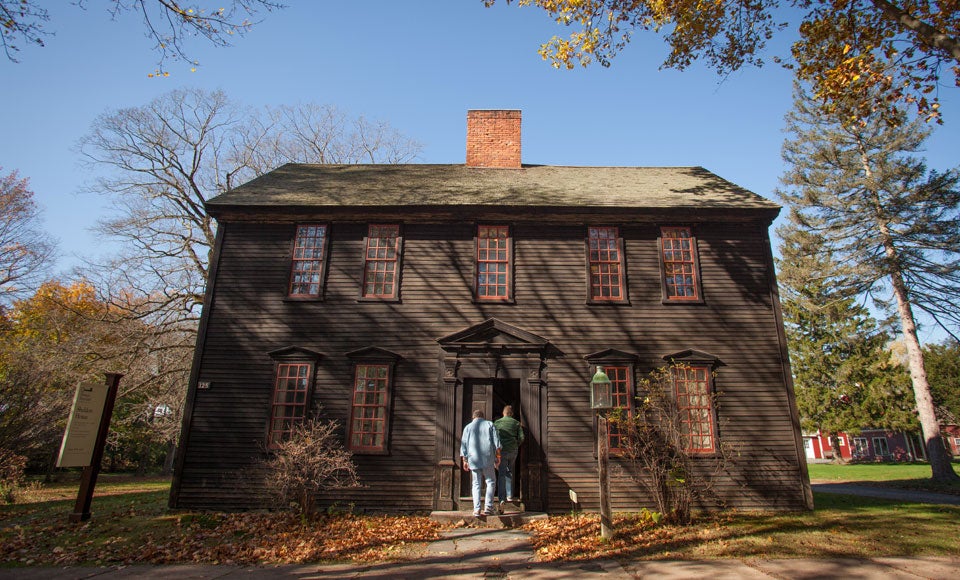
Ever wonder who lived in your home before you did? If you’re a Bostonian, the Boston Public Library has answers for you.
The BPL website says that researching information about your home is pretty similar to tracing your genealogy, “but with architects and builders instead of parents, and original occupants instead of an original immigrant.’’
If you live outside of Boston, the Massachusetts Historical Commission or your local commission might have some answers.
In a 2014 lecture about researching homes, Boston Public Library Curator of the Microtext/Newspapers department Henry Scannell said that people often have a variety of questions, including where their ancestors lived.
Some of their other questions include who has lived in their homes, who owned their property, what their neighborhoods were like, and how their homes were constructed.
If you’re interested in doing the research, know there won’t be a one-click solution to get information – it will take some time and maybe some help – but there are resources and many of the records have now been digitized.
Why should you do this?
First off, it can be fun – a little mystery of sorts.
“You never know what cool thing you are going to find,’’ Sally Zimmerman, senior preservation services manager for Historic New England, said. “You find out how it connects to the past, but to the actual people in the past.’’
“[Houses] do change over time,’’ Zimmerman said. “But they will always tell you how they have changed when you look closely enough and if you do enough research. That’s a very valuable thing to have to better appreciate your building.’’
Doing the research can also give you a look into the past to help you learn how to do things in the present or the future. In an article for Old-House Journal, “Researching Your House History,’’ David Baker wrote:
“Once you have immersed yourself in the history of your home, it takes on a new personality. Often the desire to remodel diminishes and the wish to restore increases; it becomes more and more difficult to make dramatic changes in a house that has meant so much to so many…somehow its history strengthens our desire to improve it.’’
Zimmerman noted researchers need to watch out for “bad surprises’’ like unknown issues with the house or inaccurate dates in records.
“If you have an old house you don’t want it to have a big surprise,’’ she said. “You want to know what you are dealing with.’’
Zimmerman said just the other day someone asked for her opinion while considering the demolition of part of a particularly historic house. It turned out that the structure was 100 years older than they originally imagined.
By doing the proper research, homeowners can help keep renovation costs lower, find similar materials to ones used in the construction of the original house, and learn specifically what should not be removed.
Doug Hanna, president of S+H Construction, said that it is important for architects or contractors know the history of the house or building. Oftentimes, photographic evidence of the building’s history can help.
“We can go back to the historical commission and find photographs of older homes and see details on those homes that are no longer there,’’ Hanna said. “We can replicate them somewhat from that. That’s important, it’s good to know just generally the age of the building and the architectural style.’’
Here are some resources you might not have known existed that could help you do a little research:
Massachusetts Cultural Resource Information System (MACRIS)
This group, run by the statewide Massachusetts Historical Commission, lets you search for your home online by town and address. It then gives you information including original architectural styles, when it was altered, builder, and architect
Microtext Department (BPL)
The Microtext Department at the Boston Public Library has a variety of databases that might be a good place to begin your research if you live in Boston. They have microfilm directories where you can search by name (if it is a record from 1789-1929) or even by address if it is from 1930 on. Listings after 1957 even show if the people living at the home had a telephone. Most of this can be done at the BPL, but Tufts University has digitized some of the Boston directories.
Social Science Department (BPL)
The Social Science Department at the Boston Public Library has lists of Boston residents (many of which are digitized and can be accessed online). These books are organized by street name and the homes’s residents are listed alphabetically with their house number, job, and age.
Maps (BPL)
Want to see what your street looked like hundreds of years ago? The Boston Public Library has a maps department for that. Images are not digitized, but they can point you in the right direction to find one either at the Copley branch or another library near by. According to the
BPL’s website, some of the maps and atlases have information on construction materials and building details for individual houses.
Newspapers, Deeds, and Tax Lists (Various Sources)
Though these are harder to search, newspapers, deeds, and tax lists can all be resources for getting bits of information. For these, it might be easiest to have a research librarian to help you out.
Building permits, plans, and other architectural resources (BPL)
The BPL Copley branch has you covered here as well. You can do searches for building permits, building plans, demolished buildings, and architectural periodicals.
Other Resources
The Boston Public Library is very Boston specific and likely will give you the detailed information you desire, but there are some other places you can get some help from as well: The National Archives and Record Administration, local preservation groups such as Historic New England or the Boston Preservation Alliance, and the Massachusetts Historical Commission.




To comment, please create a screen name in your profile
To comment, please verify your email address
Conversation
This discussion has ended. Please join elsewhere on Boston.com