
How to prep your home for a blizzard
Here are some tips for preparing your home for snow.
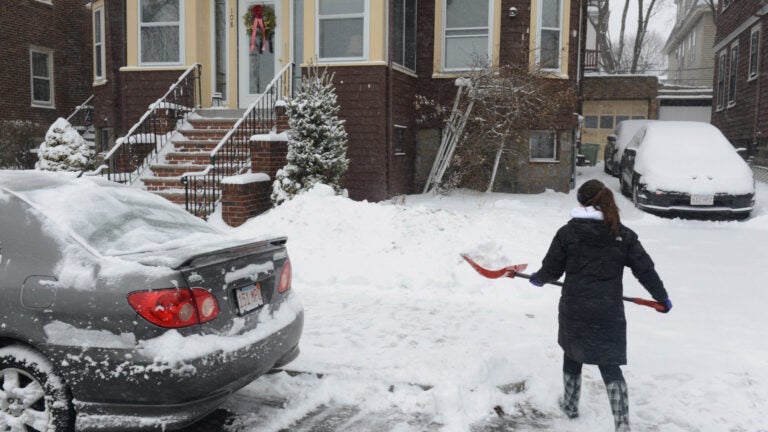
Major snow storms are nothing new in New England, but they are always a pain, leading to possible homeowner headaches like frozen pipes, power outages, and even blown-away shingles or siding.
Here are some of the things that can happen to your home in a blizzard, and ways to prepare for the worst.
1. Frozen pipes
When water freezes, it expands, and this can put a lot of pressure on your pipes. If the pressure becomes too great, your pipes can break – a messy and expensive issue.
You can sometimes figure out whether your pipes are frozen by turning on a faucet. If only a trickle of water comes out instead of a steady stream, they might be on their way to frozen. If this happens, keep your faucet on while applying heat to the section of pipe using an electric heating pad, portable space heater, or hair-dryer. Once the water pressure is restored, stop applying direct heat and keep your faucet on at a trickle.
Pipes most susceptible to freezing are those exposed to extreme cold, like water supply lines in unheated areas like a basement, attic, garage, or crawlspace, according to the American Red Cross.
It’s a good idea to notch up the temperature on your thermostat a little higher than you normally would. Sure your heating bill might be a higher, but you could help keep your pipes warm and avoid a far more expensive problem in the long run. And if you have a garage, make sure your garage door is closed to keep the cold air from freezing any water supply lines.
If you want to take extra precaution, consider installing products like “pipe sleeves’’ or “heat tape’’ on any exposed water pipes, which you can buy at any hardware store like Ace or Home Depot. Think of it as a little sweater for your pipes. Even a little bit of newspaper can help with insulation.
2. Power outage
In a heavy snow storm, it’s quite likely that downed tree limbs or strong winds could cause you to lose electricity.
Other than making sure trees near power lines are well trimmed, there isn’t a whole lot you can get your energy service provider to do before a blizzard.
If you do lose power, there are some steps you can take to stay safe (and sane).
Turn your refrigerator to its coldest settings to preserve your perishable foods. Try not to open your refrigerator and freezer doors much to keep in the cold air, and eat your perishable food first if you think the storm might be a lengthy one. So even though it might be tempting to dive into the potato chips, it’s a smarter move to go for the fruit, milk, and vegetables.
If you’re using a generator, make sure you aren’t running it from your garage or inside your home, because they can produce deadly carbon monoxide fumes. Only run it from an open, ventilated space. And connect your appliances directly to the generator, not to your home wiring, or you could create a dangerous “back feed’’ into utility lines that could kill someone trying to get the power back on.
Stocking up on flashlights and batteries can provide you with some much-needed light. Without TV and Internet, you might as well get around to finishing Jonathan Franzen’s “Freedom.’’
Finally, power surges become more common during a power outage, and they can destroy your appliances, according to AccuWeather. A good way to prevent this is to unplug all your appliances except one light (so you know when power is restored).
3. Blown-away shingles, siding, and/or outdoor furniture
Winter storms are just as likely as those in any other season to come with nasty wind. This could potentially lead to shingles or siding blowing off your house. Damaged roofs and siding should be repaired by roofing and siding services immediately after the storm has blown over to prevent leaks.
Bring any outside furniture indoors so it doesn’t blow away.
4. Flooding
If your rain gutters aren’t clean, ice dams can form and could flood your home. Make sure your gutters are clear and straight!
Now that your home is prepped, what items should you have on hand?
In addition to flashlights and batteries, having a car charger (provided you have a car) is also a good idea. Then you can always re-charge your phone for emergencies.
A battery-powered radio is also a good winter storm purchase. It’s a good way to keep track of power outages and storm conditions from the safety of your home. And when you’ve been without power for over a day – trust me – your local news stations will become as riveting as the latest “Serial’’ podcast.
It may seem obvious, but having a solid supply of non-perishable food, water, and blankets on hand is very important. The Red Cross recommends at least a three-day-supply of both food and water per person. For water, the average person needs three quarts per day. A little extra water is advisable, though – for washing your hands, preparing food, and flushing your toilet in case the water is shut off.
Without power, it could get very cold, very fast, and you’ll need that extra can of tuna for sustenance. But make sure you have a simple can opener.
Just don’t try bravely walking to Trader Joe’s once the storm hits. That’s dumb – they’re probably not even open and whiteouts are a real thing.





To comment, please create a screen name in your profile
To comment, please verify your email address
Conversation
This discussion has ended. Please join elsewhere on Boston.com