
Historic Boston Has Its Fair Share of Historic Homes
Did you know William Lloyd Garrison’s home is in Roxbury?
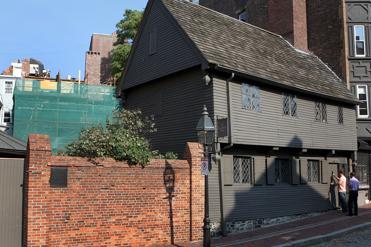
Everyone knows Massachusetts is a beacon for history lovers. It has a plethora of historic landmarks, walking trails, restaurants, buildings and even private homes. Here is a list of some of Boston’s off the beaten path residences that have a pretty cool history.
James Blake House, 735 Columbia Road, Dorchester
Built in 1661, the Dorchester Historical Society claims that this is in fact Boston’s oldest house and apparently is almost a one of a kind. The historical society says that this house is one of a few examples left of the West England country home style, which involved the use of timber framing. Its original owners were James Blake and his wife Elizabeth. In the late 1800s the house was set to be destroyed and the Dorchester Historical Society saved it by convicting the city to move the house a few blocks away. It is listed on the National Registry of Historic Places.

Paul Revere House, 19 North Square, North End
One of the more famous houses in Boston, the Paul Revere house is situated in the North End of Boston. This is the house Revere left to go on his famous “midnight ride’’ alerting the townspeople that the British were coming. This is downtown Boston’s oldest building; Revere lived there from 1770-1800. After adding some shops below and some restorations to the house, it is now open to the public for tours.
William Lloyd Garrison’s Home, 125 Highland St., Roxbury
This was the home of famous abolitionist, William Lloyd Garrison, which he bought in 1864. Garrison called the house “Freedom’s Cottage’’ according to his papers, but the house is often referred to as Rockledge, because it was at one point owned by the Rockledge Association. The house is now owned by the St. Margaret Convent and is often used as a conference center. It is not open to the public.

Loring-Greenough House, 12 South Street, Jamaica Plain
This Georgian Colonial home was originally built in 1760 for Joshua Loring, who was in the English naval forces. He fled during the American Revolution, leaving the house to local authorities that would make it into a military hospital. Shortly after the war, the Greenough family would own the home until 1924 when the Jamaica Plain Tuesday Club would take over when the home was threatened with demolition. The Club, which was founded in 1896, was meant to be a space for women to discuss matters of interest in the community. Now open to both men and women, the club is in place to still the center of community events, historic preservation and educational activities.

Gibson House Museum, 137 Beacon Street, Back Bay
The Gibson House describes itself as “a time capsule of Back Bay domestic life from the mid-nineteenth to early-twentieth centuries.’’ Constructed in 1860, the house has been hardly touched or altered since then. It is a National Historic Landmark and was designed in the Italian Renaissance style, still containing original furnishings. This was built in the time of Back Bay’s transition from marsh to a well-to-do residential neighborhood. It opened as a museum in 1954.




To comment, please create a screen name in your profile
To comment, please verify your email address
Conversation
This discussion has ended. Please join elsewhere on Boston.com