
How Did Boston Buildings Get Their Names?
Who was Faneuil anyway? The history behind the names of some of Boston’s most iconic buildings.
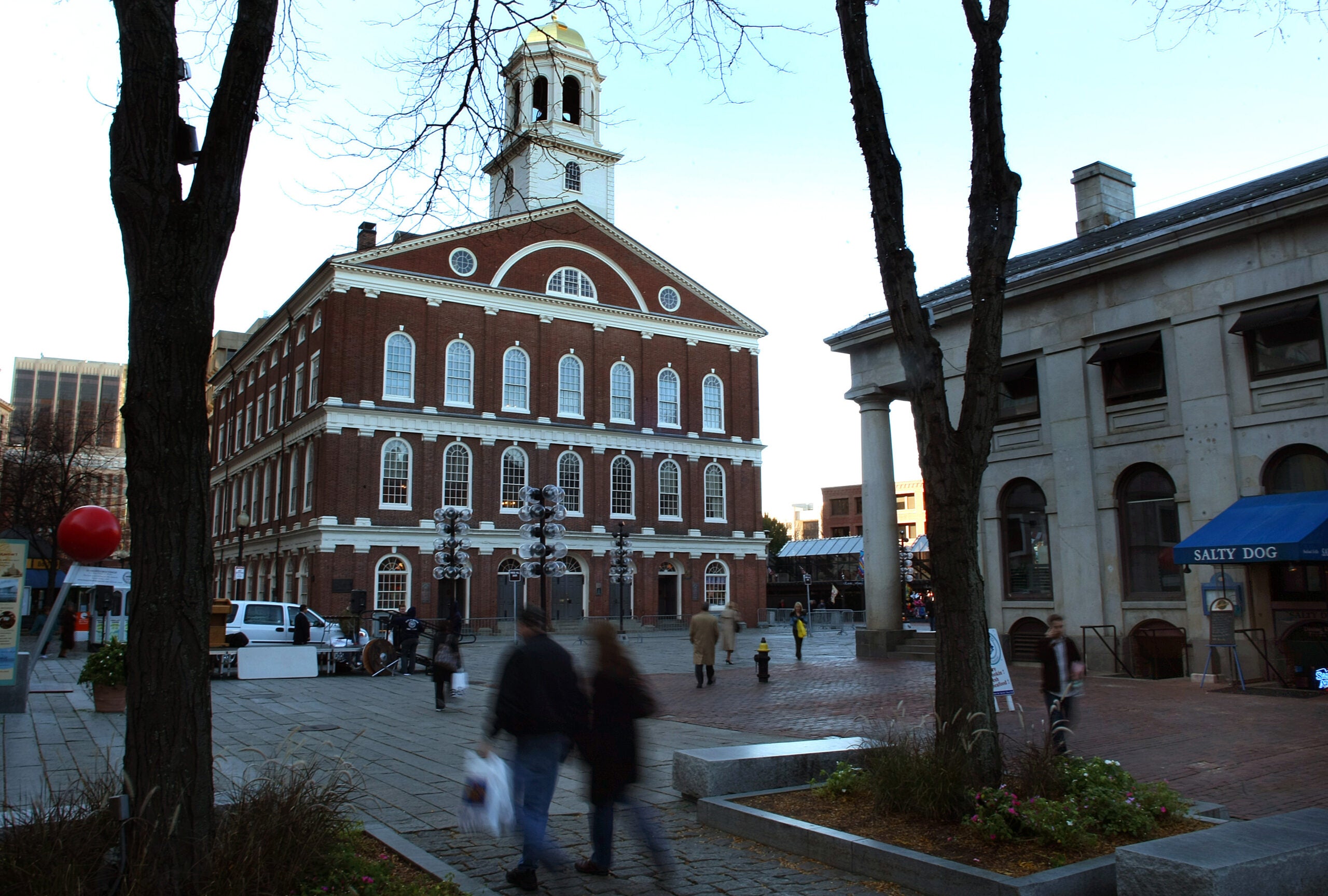
Have you ever wondered why Faneuil Hall is called Faneuil Hall? Or why Quincy Market is called Quincy Market?
For some of Boston’s most iconic buildings, the history behind their names is pretty obvious: The Paul Revere House? Yeah, he lived there. But after this list you’ll be a trivia pro about less obvious names, too.
1. Faneuil Hall: You may have never heard of Peter Faneuil, but he was a wealthy 18th century merchant. In 1742, he built the iconic downtown market as a gift to the city. It was originally home to meat, produce, and fish sellers, but now you probably know it as a tourist and shopping destination.

2. Quincy Market: It’s more than just a great place for a quick cup of clam chowder. There once was a Boston mayor named Josiah Quincy. In 1826, in an effort to expand Faneuil Hall for shoppers, the huge Greek Revival style structure was built. “Quincy Market’’ was born.

3. Prudential Center: Built in Boston’s Back Bay in 1965 for offices, apartments and shopping, the Pru is one of the largest mixed-use skyscrapers in New England. It was designed by Charles Luckman and Associates for Prudential Insurance, hence the name.

4. Old North Church: This Episcopal church was originally called Christ Church, but it’s located in the North End, so it seems geography beat out religious nomenclature in this instance. It gained its fame on April 18, 1775, when two church members hung two lanterns from its steeple – a message from Paul Revere that the British were coming by sea.

5. Symphony Hall: The current home of Boston Symphony Orchestra, located on Massachusetts Avenue, was constructed in 1900. It earned its harmonious name because it was the “first auditorium designed in accordance with scientifically derived acoustical principles.’’ It’s widely regarded as one of the best concert halls in the world.

6. Union Oyster House: Well, the historic restaurant is located on Union Street, and has served up chowder, fish and oysters since 1826 – not much mystery there. Its oyster bar has seen diners as famous as John F. Kennedy and Franklin Roosevelt.

The bottom line: Buildings are usually named after the people holding the purse strings. In most other cases, buildings seem to be named for their purpose or location.




To comment, please create a screen name in your profile
To comment, please verify your email address
Conversation
This discussion has ended. Please join elsewhere on Boston.com